Your China & Yunnan Travel Experts

 Ask a Question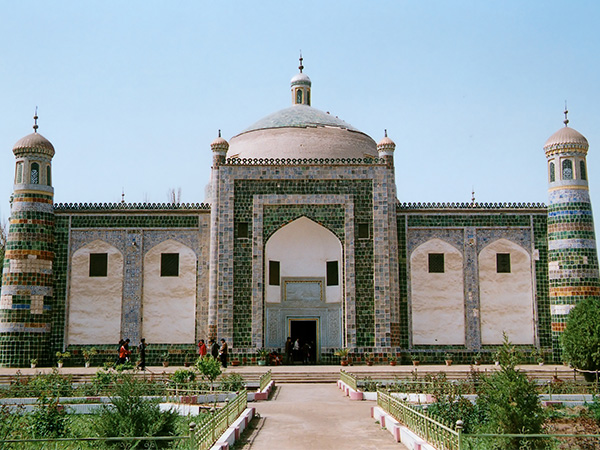
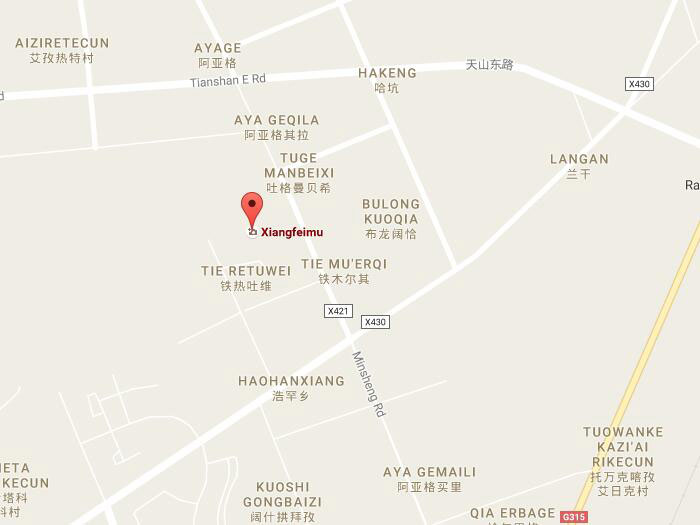
Haohan Village, Kashgar City, Kashgar Prefecture, Xinjiang Uygur Autonomous Region, China.
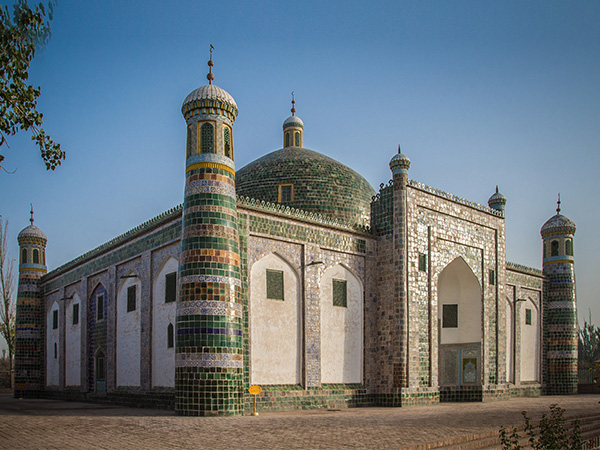
Building group with Islamic style.
Xiangfei Park tells the legendary story of Xiangfei from birth to death, from Kashgar to Beijing, from Xiangxiang Princess to imperial concubine. At the Xiangfei Park, you can see the former residence of Xiangfei(Xiangfei Garden) and know more about Xiangfei's love story. And you can also feel the unique customs of Kashgar and experience the folk culture of the western regions.
At the Xiangfei Park, there are tourist service center, Xiangfei Stone, Xiangfei welcoming ceremony, Western Regions Folk Culture Center, Xiangfei's former residence, Uygur folk wedding, the love tree, Xiangfei embossed wall, Baoyue Building, Wenxiang Pavilion(Fragrance Smelling Pavilion), Mirror Pool, Hundred Fruit Garden, Kashi old Bazaar, Xiangfei Park Gallery, non-legacy exhibition area, and ancient Uygur countryside.
Apak Hoja Tomb is located about 5 km east of Kashgar. Built in 1640, it is the tomb of Apak Hoja and the families. As the largest Islamic mausoleum in China, Apak Hoja Tomb covers an area of 20,000 square meters, composed of gate tower, great mosque, small mosque, scripture hall and main tomb chamber.
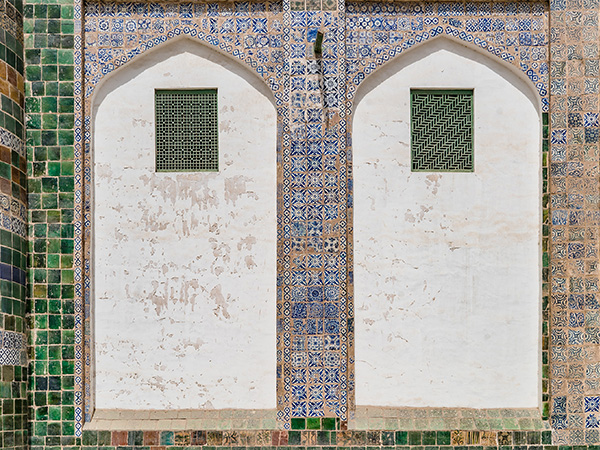
Abakh Khoja Tomb consists of five parts: a gate tower, a chapel, a large worship temple, a hall for learning scripture and a tomb chamber. The tomb chamber is mighty and splendid. The walls of this chamber are decorated by green marble bricks with yellow and blue tiles enchased among them. The gate of the tomb is located to the south of the chamber.
Bao Yue Building is a building with the characteristics of western regions. It was modeled after the Bao Yue Building built by Emperor Qianlong at that time to comfort Rongfei's homesickness. Rongfei entered the palace at the age of 27 and lived in the palace for 28 years. During her life in the palace, Rong Fei treated the Emperor Qianlong with sincere respect.
The legend goes that a lady called Yiparhan, Hoja's descendants, was once a concubine of Qianlong Emperor in Qing Dynasty. She was commonly-known as the “Fragrant Concubine” because of the rich delicate fragrance of flower sent forth by her body. After she died, her remains was escorted back to Kashgar and was buried in the Apak Hoja Tomb.
Another legend is said that the first generation buried here was Yusuf Hoja (1640), a celebrated Islamic missionary. After he died, his oldest son Apak Hoja carried on his father's missionary work and became the leader of the famous Islamic faction of Baishan during the seventeenth century which seized the power of the Yarkant Court for a time. Apak Hoja died in 1693 and was buried in the tomb. His reputation was greater than his father's, so the tomb was renamed “the Apak Hoja Tomb”.
The best time to visit the Xiangfei Park and Kashgar is spring and autumn with comfortable temperature and less crowds. In spring, the Kashgar Ancient City are full of life. In autumn, many fruits in Kashgar are mature like grapes, pomegranate and ficus carica. Xinjiang boasts the sweetest foods in China, you can taste the fresh and sweet fruits in Kashgar in autumn. During spring and autumn, you can experience the charm of Kashgar Ancient City as well as enjoying the surrounding beautiful natural scenery.
The summer in Kashgar is hot. If you plan to visit Kashgar in summer, please get prepared for the heat in summer and the crowds of the peak season in Xinjiang.
Xiangfei Park is located about 4 kilometers from Kashgar downtown, and you can takeb taxi to Xiangfei Park from Kashgar downtown.