Your China & Yunnan Travel Experts

 Ask a Question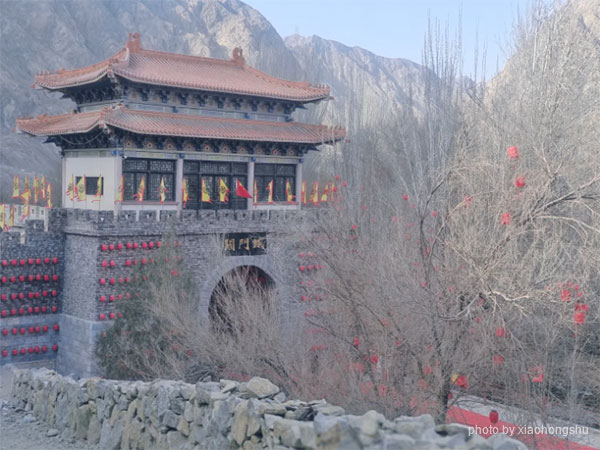
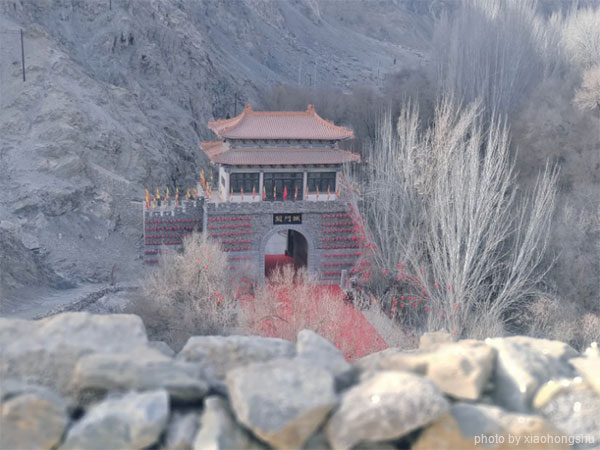
Following the gorge of the Peacock River, the Iron Gate Pass, also called Tianmen Pass, connects the Yanqi Basin and Tarim Basin in central Xinjiang. The main settlements linked by the pass are the town of Yanqi to the nor th and the city of Korla in the south. It was of strategically historical significance because it formed a vulnerable bottle-neck on the Silk Road. A military checkpoint was established at the pass during the Tang Dynasty.
Nearby there are two graves in which a couple that died for love and freedom was buried. Tzuohla, Princess of the ancient Yanqi .The viperous premier tried to kill Tayir. While trying to escape, the couple fell down the gorge.
As early as two thousand years ago, during the initial development of the Western Regions, the ancients discovered that this deep canyon in the upper reaches of the Peacock River was a natural passage connecting the Tianshan Mountains and the northern and southern Xinjiang regions. Due to the sheer cliffs on both sides and the extremely dangerous terrain, the rulers of the Jin Dynasty built a pass here and set up defenses. Because of its characteristics of being “as solid as iron and easy to defend but difficult to attack”, it was officially named Iron Gate Pass, making it the most famous choke point on the ancient Silk Road.
With the Tang Dynasty's deep involvement in the Western Regions, the Iron Gate Pass entered its most glorious period of military and trade. It was not only a heavily guarded military post under the jurisdiction of the Anxi Protectorate, but also an essential route for merchants, monks, and poets. The famous frontier poet Cen Shen once left behind poems here, filled with lofty aspirations and loneliness, imbuing this pass with a profound Han and Tang cultural heritage and the prosperous imprint of the Silk Road civilization amidst the solemnity of war.
Throughout the long Middle Ages and early modern period, despite the changes of local regimes and frequent wars, the Iron Gate Pass remained a strategically vital gateway. It was not only a chessboard for military maneuvering, but also a place where poignant love legends such as “Tahir and Johera” circulated among the people. These stories imbued the cold stone walls with warmth, making the Iron Gate Pass not only a military symbol, but also an important symbol of freedom and pursuit in the local culture.
After entering modern society, the Iron Gate Pass has evolved from a simple military defense system into a transportation and energy hub. A smooth national highway has been built next to the ancient plank road, and the rushing Peacock River has been dammed to create a hydroelectric power station that benefits the local area. Even a new city named after it has emerged not far away. This evolution from “isolation” to “connection” and from “pass” to “link” fully outlines the continuous trajectory of this land from an ancient fortress to modern development.
1. Iron Gate Pass Tower
This gate tower is not merely an isolated structure, but the soul of the entire canyon defense system. The existing tower adopts a typical Han and Tang style, with a double-eaved hip roof and vermilion-lacquered pillars, appearing extremely solemn against the backdrop of the gray-yellow rocks of Korla. A closer look reveals that the tower's base is towering, and the platform is wide and thick—a design that provided the defenders with an excellent vantage point in ancient times. The best vantage point is the open space directly in front of the tower; shooting from below captures the imposing presence of “one man guarding the pass, ten thousand cannot pass.” If you arrive at dusk, the setting sun's glow on the plaque inscribed with the three large characters “Iron Gate Pass” will instantly evoke a profound sense of historical vicissitude.
2. The Tomb of “Tayir and Johra”
This site, comprised of a tomb and a memorial statue, is the most culturally significant location in the entire canyon. Legend has it that Johra, the daughter of the ancient King of Yanqi, fell in love with a commoner youth named Tayir. Due to their vastly different social statuses, the king erected numerous obstacles at the Iron Gate Pass. Ultimately, the two refused to compromise and committed suicide here. This story is widely circulated among the Uyghur people and has been adapted into several operas. The atmosphere around the tomb is tranquil, and locals and tourists often come to pay their respects. It is not merely a scenic spot, but also a protest against the class divisions of the ancient Silk Road era and a hymn to free love, adding a layer of literary depth to this war-torn military fortress.
3. Ancient Silk Road Relics
A Historical Journey Measured on Foot This isn't just a paved road; it's a true testament to history. The relics preserve the cobblestone paths trodden by camel caravans and horses. Walking on them, with towering cliffs on either side and millennia-old stones beneath your feet, offers a sensory experience unmatched by city parks. Stop here, close your eyes, listen to the wind, and imagine the caravans from Chang'an, Xuanzang's westward journey, or Cen Shen's army—all traversing this narrow path, less than two meters wide. Every stone here may be a witness to history.
4. Stone Inscriptions from Past Dynasties
Along the cliff face and in the specially designated stone inscription corridor, you will find a wealth of written records. These inscriptions cover writings from the Tang to the Qing dynasties, including records of military exploits and terrain descriptions left by generals who guarded the pass throughout history, as well as reflections from scholars and poets who faced perilous situations. Lin Zexu, during his exile to the Western Regions, also left a written record. You can search for the characters blurred by age, reflecting the varying degrees of control exerted by the Central Plains dynasties over the Western Regions at different times. These inscriptions are like ancient “bullet screens,” layering emotions spanning millennia onto this narrow pass.
5. A Modern Water Conservancy Marvel
The Feat of Taming the Peacock River The Tiemenguan Hydropower Station, located adjacent to the ancient pass, represents a redefinition of this ancient land after the founding of the People's Republic of China. In ancient times, the Peacock River was an obstacle for travelers, forcing people to build roads along the mountains due to its swift current. Now, however, people utilize this vastly different water level to generate electricity. The dam is magnificent, with enormous amounts of water gushing from the sluice gates, its roar contrasting sharply with the silence of the ancient pass. This landscape showcases how Korla transformed from a small border town into a prosperous “oil city and oasis city,” symbolizing the leap of human civilization from “fearing nature” to “utilizing nature.”
Autumn (September-October, preferred): The climate in Korla is extremely comfortable at this time, the vegetation in the canyons turns golden, and it's the season for Korla pears to ripen. You can experience the double enjoyment of “beautiful scenery + delicious food”.
Tips to avoid: Try to avoid midday (12:00-15:00), as the rocks in the canyons absorb heat, making the perceived temperature high.
Recommended Xinjiang Tour: 11 Days Tour of Desert Highway in Xinjiang
(Destination: Urumqi-Turpan-Korla-Minfeng-Hotan-Kashgar-Urumqi)
From $ 521
From on request
From on request