Your China & Yunnan Travel Experts

 Ask a Question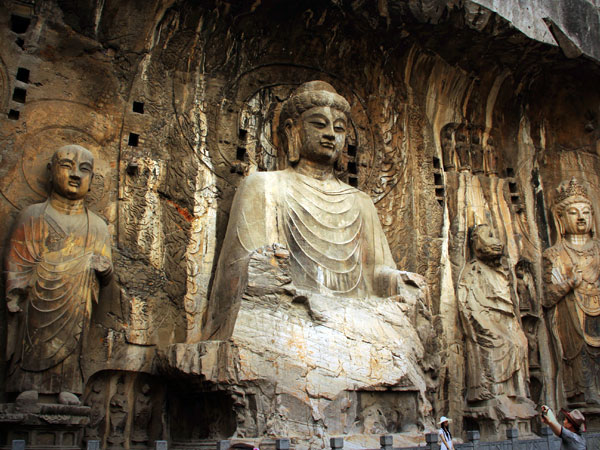
Banks of Yihe River, Luolong District, Luoyang, Henan Province, China
One of the finest examples of Chinese Buddhist art with tens of thousands of statues of Buddha and his disciples
【Fengxian Temple】
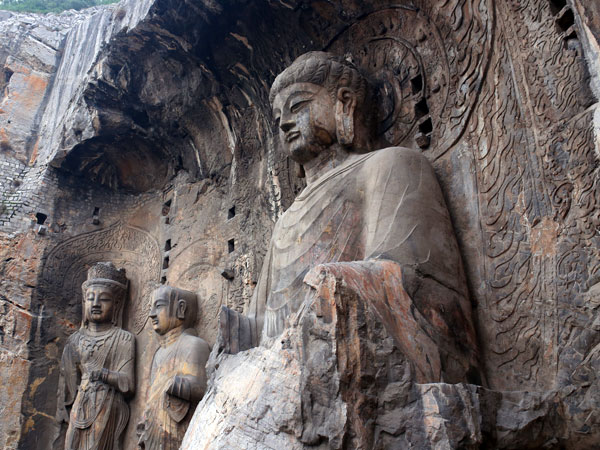
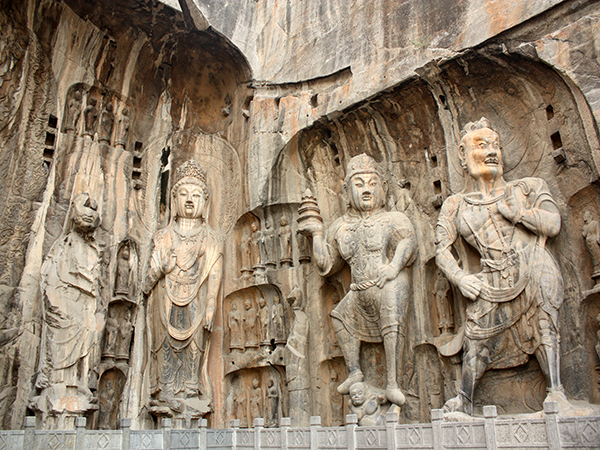
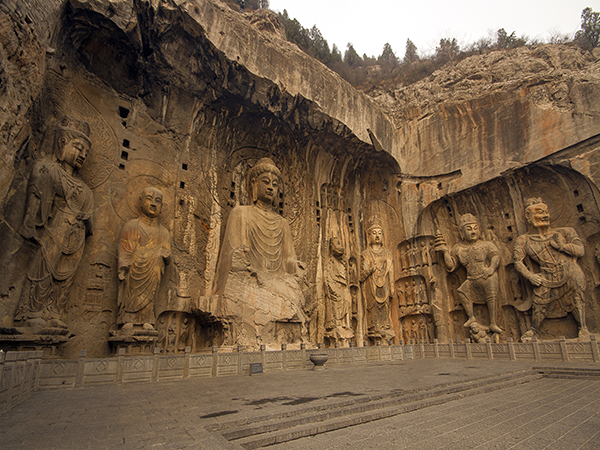
Fengxian Temple houses the largest and the most exquisite group of cliff-type sculptures in Longmen Grottoes area. The large art sculptures in Fengxian Temple is known for its grand scale and exquisite stone carving art and have become a model for Chinese stone carving art. It has become a symbol of this great era of the Tang Dynasty. The cave is 30 meters long and 30 meters wide. Buddhist statues in the cave shows evidently artistic characteristics of Buddhist statues of the Tang Dynasty, well-shaped with drooping ears, serene, gentle and kind.
【Qianxi Temple】
Qianxi Temple is a large cave on the northern edge of the west hill. It is 9 meters high, 9 meter meters wide and nearly seven meters deep. It was constructed about thirteen hundred years ago, during the early Tang Dynasty. On caisson of the cave is a large carved lotus. The cave has a statue of a huge, seated, early Tang Buddha (Amitabha Buddha), flanked by statues of the Bodhisattvas Avalokitesvara and Mahasthamaprapta. The statues are carved with a sophisticated expression typical of Tang style. It may have been sponsored by the Nanping princess, with the beneficiary being Gaozong, her recently deceased father.
【Binyang Cave】
Binyang hole is a representative cave of the Northern Wei Dynasty. “Binyang” is intended to mean meeting the birth of the sun. Binyang caves were dig in the Northern Wei Dynasty by Xuanwu Emperor, to make making merit for his father. The construction started in 500 AD and lasted 24 years.
【Ten-thousand Buddhist Cave
It houses 15,000 Buddhas carved in small niches, different from each other, with the smallest Buddha being 2 centimetres (0.79 in) in height only. They are neatly sitting in north and south sides of the cave.
【Guyang Cave】
Guyang Cave is recorded as the oldest Longmen cave with carvings in the Northern Wei style, typically of slim and emaciated figures. It is also the largest cave located in the central part of the west hill. It was originally a natural limestone cave. Many of the sculptures inside the cave were contributed by royalty; religious groups supported this activity. The cave has three very large images – the central image is of Sakyamuni Buddha with Bodhisattvas on either side. There are about 800 inscriptions on the walls and in the niches inside the cave, the most in any cave in China. There are two rows of niches on the northern and southern walls of the cave, which house a very large number of images. Decorative carving of niches is also very beautiful, especially manifested in the design of shape, lintel and tablet of niches, colorful and varied.
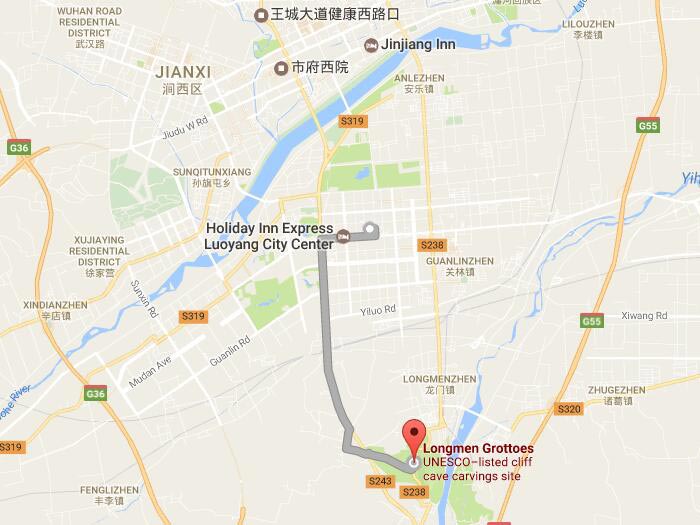
It is only 12 km south of Luoyang city and enjoys convenient transport. You can take Public Bus No.81 to get there direct, which takes about 45 minutes. Taking taxi should be the easiest way to get there.
From $ 300