Your China & Yunnan Travel Experts

 Ask a Question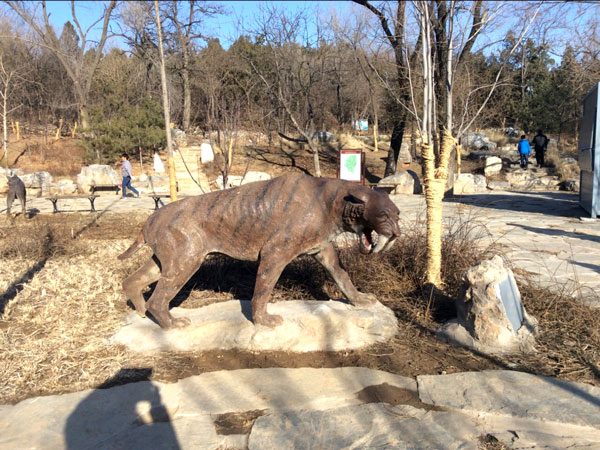
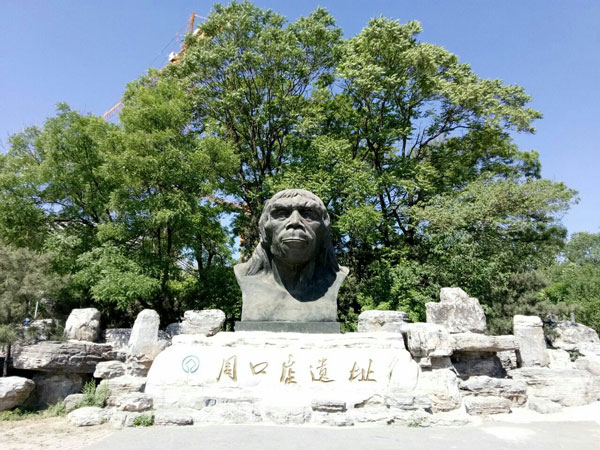
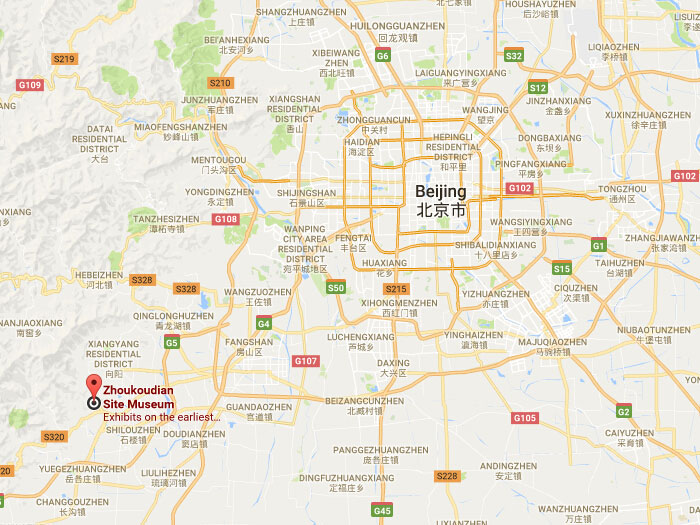
Zhoukoudian St., Fangshan District, Beijing, China
World cultural heritage
The discovery of Zhoukoudian dates back to 1918, when Swedish geologist Johan Gunnar Andersson learned from local villagers that “chicken bones” could be found on a nearby hill, later named Chicken-bone Hill. These were actually rodent fossils, leading to the site's first scientific survey.
In 1921, Andersson and Austrian paleontologist Otto Zdansky conducted further exploration at a nearby location known as Dragon Bone Hill (Longgushan). Their work led to the unearthing of two human-like teeth — a discovery that stunned the world, as no comparable ancient human fossils had ever been found in Asia before.
Soon after, Canadian anthropologist Davidson Black examined the fossils and named the species Sinanthropus pekinensis, later popularly known as Peking Man. This groundbreaking find marked the beginning of China's paleoanthropological research.
Between 1927 and 1937, Chinese scientists including Pei Wenzhong, Yang Zhongjian, and Jia Lanpo led systematic excavations, uncovering an astonishing wealth of fossils and cultural relics.
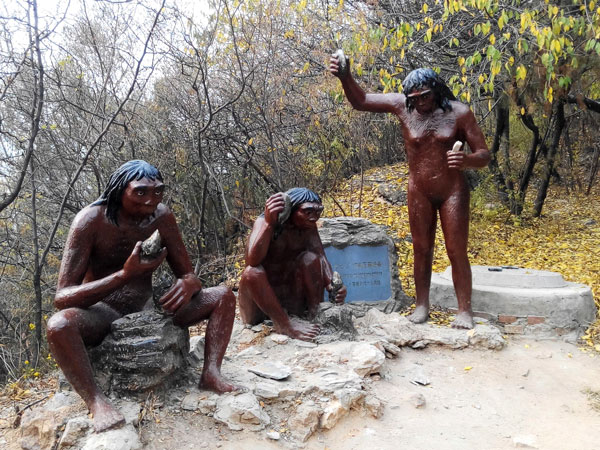
Human Fossils: More than 40 individuals of Peking Man were unearthed, including skulls, mandibles, teeth, and limb bones, dating from 700,000 to 200,000 years ago. These remains offered direct evidence of early human existence in East Asia.
Stone Tools: Over 100,000 stone artifacts were found, crafted mainly through striking, hammering, and anvil techniques — demonstrating early humans' creativity and technical skills.
Evidence of Fire Use: The site revealed thick ash layers, some up to 6 meters deep, containing burnt bones and stones. This pushed the timeline of human-controlled fire use back to around 400,000–500,000 years ago, a milestone in human cultural development.
Animal Fossils: Nearly 200 species of extinct animals were found, such as Cervus grayi (Gray's deer) and Equus sanmeniensis (Sanmen horse), revealing the Pleistocene ecosystem of North China.
The Zhoukoudian site is not a single cave but a cluster of over 27 localities, covering about 5.14 square kilometers. Among them, three are particularly significant:
1. Peking Man Cave (Locality 1)
This is the core area where Peking Man once lived — a natural limestone cave with stratified deposits over 40 meters thick. Each layer records geological changes and human activities. In 1929, Pei Wenzhong discovered the first complete Peking Man skullcap here, providing crucial evidence supporting Darwin's theory of evolution. Today, visitors can view the excavation area, ash layers, and interpretive exhibits showing how early humans lived, hunted, and used fire.
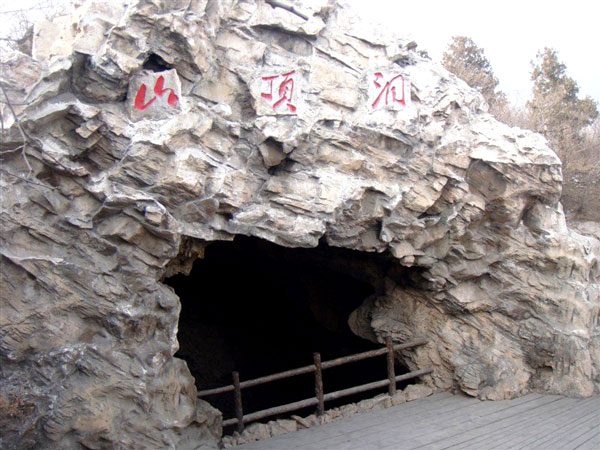
2. Upper Cave or “Shandingdong” (Locality 26)
Located on the top of Dragon Bone Hill, this site was discovered by Pei Wenzhong in 1930 and excavated in 1933. Fossils of Upper Cave Man, dating back about 18,000 years, were found here along with stone tools, bone needles, and decorative ornaments. These remains belong to Homo sapiens, indicating advanced skills and artistic consciousness — the dawn of modern humanity in East Asia.
3. Tianyuan Cave (Locality 27)
Discovered in 2001, Tianyuan Cave yielded fossils of Tianyuan Man, whose DNA studies revealed close genetic ties with modern humans in East Asia. This finding supports the multiregional evolution hypothesis, suggesting continuous human development across regions rather than a single-origin migration.
The Zhoukoudian excavations, ongoing for nearly a century, have shaped modern paleoanthropology in China. In 1929, the establishment of the Cenozoic Research Laboratory provided an institutional foundation for interdisciplinary research involving geology, anthropology, paleontology, and environmental science.
Subsequent discoveries by scientists such as Jia Lanpo in 1936, who uncovered three more skulls, and by later generations in 1966 and 2023, have kept Zhoukoudian at the forefront of human origins research. The site's stratigraphy, fossil record, and fire-use evidence together present a detailed picture of human adaptation, technology, and social life hundreds of thousands of years ago.
Today, Zhoukoudian stands not only as a monument to China's scientific heritage but also as a global center for prehistoric research and education.
In recent years, the Chinese government has launched major preservation projects to protect the fragile limestone caves. In 2015, a large protective shelter was constructed over the Peking Man Cave, covering more than 3,700 square meters. The structure uses advanced materials to shield the site from rain, snow, and temperature fluctuations while harmonizing with the surrounding landscape. This innovative design won multiple domestic and international architectural awards.
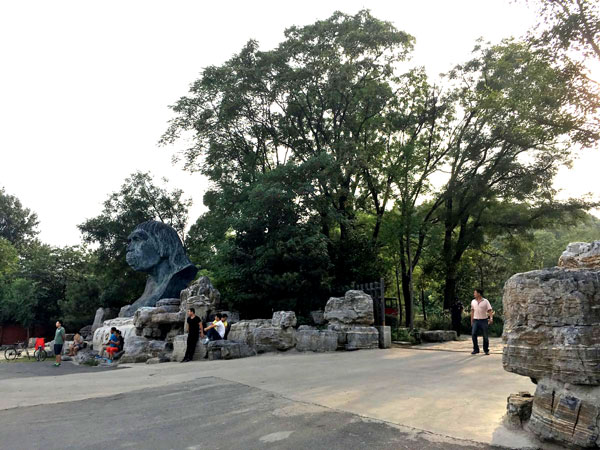
The Zhoukoudian National Archaeological Site Park now integrates excavation, conservation, exhibition, and education. Within the park, the Zhoukoudian Site Museum houses over 7,000 artifacts, including human fossils, tools, and animal remains. Interactive exhibits, immersive digital displays, and reconstructed life scenes vividly present the daily life of Peking Man and the progress of human evolution.
Recommended Visit Route
Zhoukoudian Site Museum – Begin here to understand the background of the site through multimedia exhibits and real artifacts.
Peking Man Cave (Locality 1) – Explore the excavation area, view original dig sites, and learn about early human life.
Upper Cave (Shandingdong) – See where early modern humans once lived and appreciate their advanced craftsmanship.
Scientists' Memorial Garden – Visit the resting place of pioneers such as Pei Wenzhong and Jia Lanpo, who devoted their lives to human origins research.
(Optional) Tianyuan Cave Trail – A scenic walk for those interested in more recent discoveries and panoramic views.
Tickets: 30 RMB for the Site Museum, 30 RMB for the Archaeological Park, or 48 RMB for a combined ticket.
Opening Hours: 9:00–16:00 (October 11–March 31, ticketing ends 15:30).
Transportation: Take Metro Fangshan Line to Raolefu Station, then transfer to Bus F80 to “Peking Man Museum Stop.” Driving is also convenient, with parking available near the entrance.
Suggested Duration: 2–3 hours for a full visit.
Accessibility: Some cave paths are uneven; wear comfortable shoes and bring water.
Zhoukoudian is not merely an archaeological site — it is a living classroom of human civilization. The exhibits and park are designed to engage both scholars and the public, particularly families and students. Through interactive displays and 4D films, visitors can trace the long journey “from ape to man,” witnessing how early humans evolved, adapted, and learned to master nature.
From on request
From $ 306

From on request