Your China & Yunnan Travel Experts

 Ask a Question
Reviewed August 28, 2026. Islam in Qing China cannot be reduced to a simple story of early tolerance followed by late suppression. The empire governed different Muslim communities through local law, military administration, frontier policy and negotiations with religious leaders. Conditions in Beijing, Gansu, Xinjiang and Yunnan often diverged, so this guide separates court policy from local experience and avoids treating every Muslim community as one political bloc.
The Qing ruled from 1644 to 1912 over a vast multiethnic empire. Hui communities in interior provinces, Turkic-speaking Muslims in Xinjiang, Salar groups in the northwest and other Muslim populations had different languages, institutions and relationships with the state. “Muslim” describes a shared religion here, not a single ethnicity or uniform historical position.
For travelers, the most reliable evidence is material and local: an inscription, a mosque repair record, a tomb, a former government site or a museum label. A surviving building may be much newer than its congregation. Use the China mosque guide to compare architectural layers without assuming that one façade represents the whole Qing period.
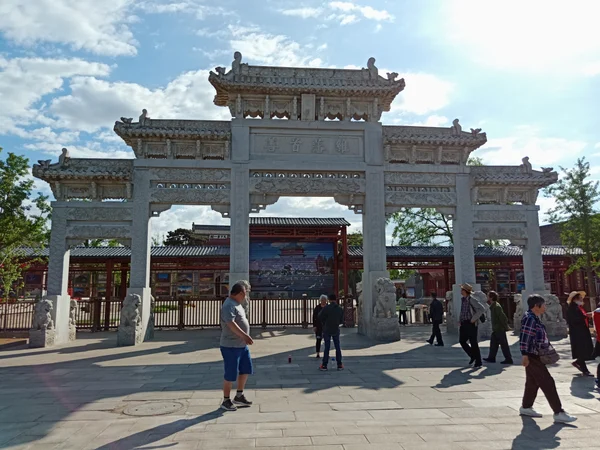
After the conquest, Qing rulers relied on a mixture of continuity and supervision. Officials used existing county institutions, community leaders and military households while watching groups they considered politically risky. Religious practice was not administered through one empire-wide “Islam policy”; decisions were shaped by place, security concerns and the conduct alleged in a particular case. County magistrates, provincial governors, banner authorities and frontier commanders did not always frame a problem in the same way. Reading only an imperial edict can therefore hide how policy was interpreted, delayed or intensified by officials much closer to a community.
The 1648–1649 Muslim-led uprising in Gansu, associated with Milayin and Ding Guodong, arose amid the wider disorder of the Ming–Qing transition. Some Muslim commanders opposed the new dynasty, while other Muslims served Qing forces or remained outside the conflict. That divided record is important: faith alone did not determine political allegiance.
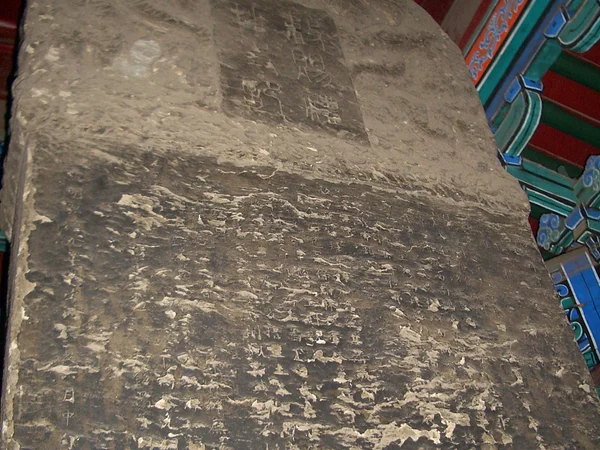
Kangxi- and Yongzheng-era documents include both suspicion from officials and imperial language rejecting blanket accusations against Hui residents. Legal equality in a written order did not guarantee equal treatment on the ground, but neither is it accurate to describe every early Qing Muslim community as continuously persecuted. Local taxation, land disputes and official prejudice could matter as much as a court statement.
Mosques remained places of worship, education and community mediation. Niujie Mosque in Beijing preserves inscriptions and successive repairs that show a living institution adapting within an imperial capital. Visitors should read the on-site chronology carefully: the age of the congregation, an inscribed date and the date of visible timber are not necessarily the same.
Intellectual life also expanded. Late-Ming and early-Qing scholars produced the body of Chinese-language Islamic writing now called the Han Kitab, using concepts familiar to educated Chinese readers while remaining engaged with Islamic scripture and law. This was interpretation and translation across traditions, not proof that Islamic belief simply merged into Confucianism.
In the northwest, Sufi networks and teaching lineages developed their own institutions and leadership. Their internal debates later intersected with disputes over land, authority and official intervention. Terms such as menhuan describe historically specific Chinese Sufi networks and should not be used as a label for every mosque community. Genealogies, tomb complexes and written teachings can clarify affiliation, although later rebuilding means a present complex may not preserve its earliest physical form. The Muslim heritage of Gansu provides the regional setting, but named mosques and tomb complexes still require current access checks and respectful behavior.
The early period therefore combined worship, scholarship, trade, military service and episodes of rebellion. A useful historical account keeps those strands together instead of using one dramatic event as the identity of millions of people across the empire. Household records, mosque inscriptions and official case files answer different questions, so agreement between more than one type of source is especially valuable when reconstructing local life.
From the eighteenth century onward, the Qing expanded and reorganized frontier rule while population movement, sectarian competition, taxation and local violence created repeated crises. Some conflicts began inside Muslim communities, some involved Muslim and non-Muslim neighbors, and others became wars against Qing forces. Their causes and outcomes must be examined separately.
In Gansu, disputes involving Khafiyya and Jahriyya Sufi networks in the 1780s became entangled with official intervention and armed resistance. Later accounts often flatten these events into a timeless religious feud. The safer reading asks who controlled local institutions, what officials did, and how a specific confrontation escalated. Names for “old” and “new” teaching also change by source and can carry polemical meanings, so they should not be treated as neutral denominations. A dated local record is more useful than a modern summary that projects later divisions backward.
Xinjiang followed a different political history. Qing conquest of the region, Khoja movements, oasis politics and intervention from Central Asia cannot be explained through the experience of Hui communities in eastern China. Use regional travel material only as geographic context, and avoid treating modern travel conditions as evidence for an eighteenth-century event.
The nineteenth-century wars in Shaanxi and Gansu grew from local violence into a prolonged, multi-sided catastrophe. Muslim and non-Muslim civilians suffered killing, famine, flight and resettlement; Muslim commanders fought on both rebel and Qing sides. Exact death totals vary sharply by source, so responsible interpretation describes the scale without repeating an untraceable number.
In Yunnan, the conflict often called the Panthay Rebellion was led for much of its course by Du Wenxiu from Dali. His administration appealed to more than one local group and opposed Qing rule, while alliances shifted over time. The former commander mansion in Dali is a real historical site; it should be read through museum interpretation rather than used as a generic “Muslim palace” photograph.
The Yunnan Muslim heritage guide helps place mosques and communities geographically. It is not a substitute for specialist histories of the 1856–1873 war, and visitors should not ask residents to perform or defend a traumatic past for photographs.
Qing suppression, postwar resettlement and new local power arrangements reshaped communities across the northwest and southwest. Linxia later became an important centre of Muslim scholarship and commerce, but the city's present mosques are living religious institutions, not frozen exhibits from the rebellions.
Reconstruction did not restore an unchanged prewar landscape. Families rebuilt mosques, markets and teaching networks under new settlement patterns, while official histories and community memories preserved different accounts of responsibility and loss. Where a local plaque gives one concise narrative, compare its date and sponsor with museum catalogues or scholarly work before treating it as the final word.
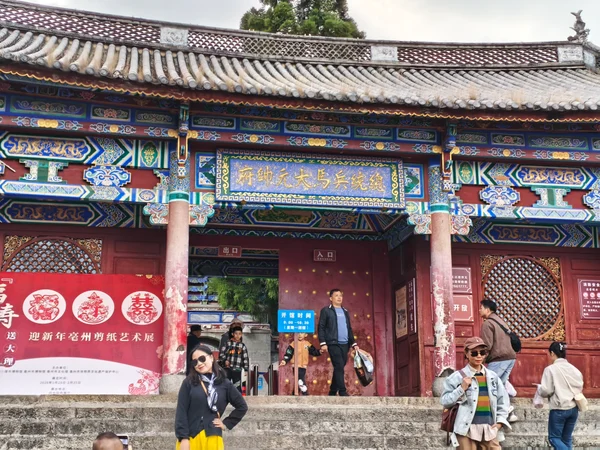
Elsewhere, Muslim life continued through ordinary work, education and worship. Beijing, Henan and coastal communities did not share the same wartime trajectory as Gansu or Yunnan. This regional contrast is essential evidence against claims of one continuous empire-wide campaign with identical effects.
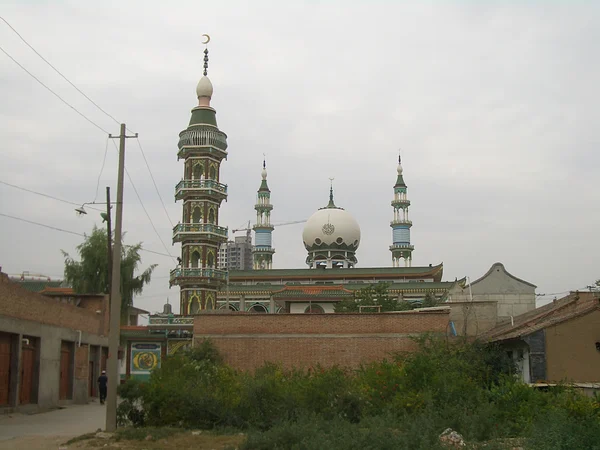
How to read the period on a trip: identify the exact site and date; distinguish a community history from surviving fabric; compare the label with a museum or academic source; and avoid photographing prayer, graves or people without permission. Political and religious access can change, so verify contemporary visitor rules separately from the history.
The Qing period left no single verdict on Islam in China. It produced court restrictions and accommodation, local prejudice and cooperation, intellectual writing, community rebuilding, frontier wars and everyday coexistence. A credible account preserves those contradictions and names uncertainty where the evidence is contested.
From $ 1226
From $ 2183