Your China & Yunnan Travel Experts

 Ask a Question
Reviewed August 28, 2026. Modern Chinese Muslim history grew out of late-Qing conflict, migration, religious reform and new education. It cannot be reduced to a single uprising or sect. This page covers the transition into the Republican era; the Islam in the PRC period guide continues the chronology after 1949.
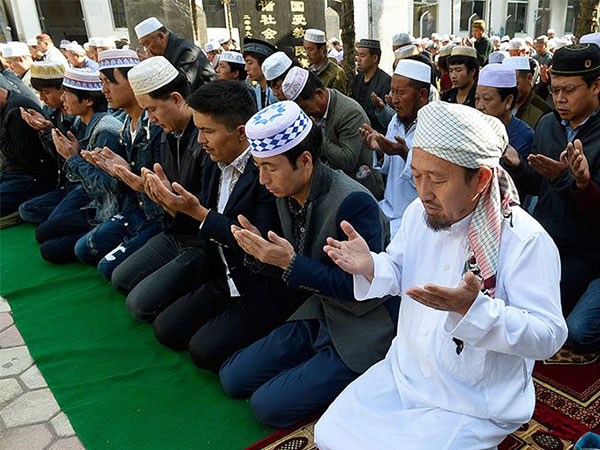
During the Qing dynasty ‘s final decades, Muslim communities in northwest China and Yunnan experienced wars whose causes included local disputes, state policy, economic pressure, militia politics and escalating communal violence. The conflicts produced severe civilian loss, displacement and destroyed settlements among Muslims and non-Muslims. Exact totals differ sharply by source, so this revision removes unsupported national figures and the claim that all resistance formed one coordinated anti-imperialist movement. Recovery also varied: some families rebuilt locally, while others migrated to new towns or border regions. A place-based account should identify the conflict, date and archive rather than assign collective responsibility to a religion or ethnicity.
Religious reform also moved through networks centred in Gansu and neighboring Qinghai and Ningxia before reaching communities farther east in Henan , Shandong , Hebei and Xinjiang . The late-nineteenth-century Yihewani movement advocated renewed attention to scripture and criticized some inherited practices. It is often called “Wahhabi” in old English copy, but that label can conceal Chinese debates and changing local positions. Sufi orders such as Khufiyya and Jahriyya likewise contained distinct lineages; affiliation did not determine one political behavior. Readers comparing national institutions can use the China Islamic Association overview, while remembering that a modern organization should not be projected backward onto Qing communities.
Education and print reshaped public life in the early twentieth century. Mosque schools revised parts of their curricula, and reformers founded primary schools, teacher-training programs, associations and periodicals. Chengda Teachers School and journals such as Yuehua connected religious learning with Chinese, history, geography and international debate; women's education expanded in some cities but remained uneven. Students and scholars who studied at al-Azhar added translation and overseas exchange to these networks without creating one unified ideology. Wartime relocation later interrupted schools and publishing, so a surviving title or campus photograph must be tied to a date before it is used as evidence. The Muslims in China overview explains why ethnic and regional diversity still matters. For research, check a publication's author, issue and institution; for travel, verify archive and mosque access before arrival and never treat an illustrative photograph as proof of every place named.
From $ 1226
From $ 2183