Your China & Yunnan Travel Experts

 Ask a Question
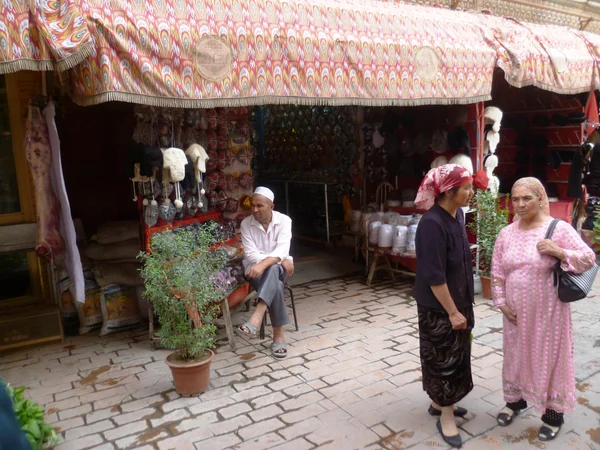
Reviewed August 28, 2026. Islam developed in Xinjiang through centuries of contact with Central Asia, political change and local adoption—not through one arrival or a single conversion. The Karakhanid realm helped establish Islamic institutions around Kashgar and the western Tarim Basin from the tenth century, while other faiths remained important in different oasis regions for centuries. The replacement image shows real residents in Kashgar's old town rather than an AI reconstruction.
Uyghur, Hui, Kazakh, Kyrgyz, Tajik and Tatar communities have distinct languages, settlement histories and religious traditions. Pastoral, oasis and urban experiences should not be collapsed into a uniform “Xinjiang Islam.” For the distances and current logistics behind these histories, read the Xinjiang travel guide and verify transport, documents and site access near departure.
Travelers should separate durable history from contemporary rules. A historic mosque may be an active religious venue, a protected heritage site or subject to access restrictions. Do not enter closed areas, photograph worshippers without consent or assume that a public square means the prayer hall is open.
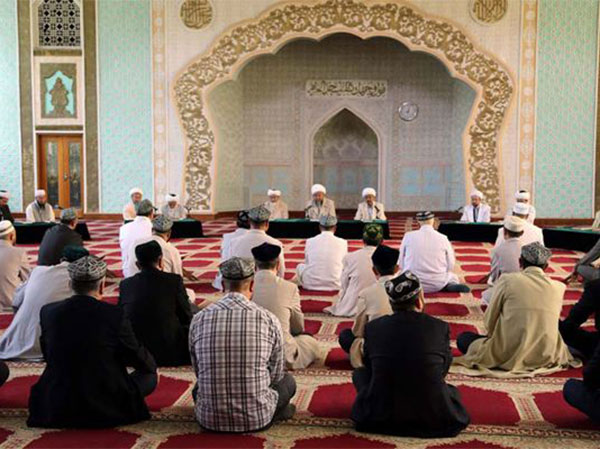
1. Oasis states and institutions. Karakhanid patronage supported scholars, mosques and legal offices, but conversion remained uneven. Kashgar and Khotan followed different timelines from Turpan and Hami, and the Chagatai and later khanates changed political frameworks without producing identical local practice.
2. Sufi and khoja networks. Naqshbandi-linked teachers and khoja families became influential in southern Xinjiang, especially from the seventeenth century. Devotional lineages, family authority and political rivalry overlapped but were not the same. Avoid the old shortcut that describes every lineage as one of two hostile “sects.”
3. Shrines and living heritage. Mazars preserve layers of saint veneration, community memory and local architecture. Historical descriptions do not prove present access. The Xinjiang travel tips page explains why route, permit and photography checks need to be made close to travel.
Census figures record ethnicity, not individual belief, and should not be converted into an exact “Islamic population.” Use a cited census year only for demographic context. Community distribution also changes with education, work and urban migration. A more accurate guide names the people and places being discussed, distinguishes historical evidence from present observation and avoids treating anyone's ethnicity as proof of religious practice.
Do not repeat a province-wide mosque total without a date, definition and source. The practical issue for a traveler is whether a particular site is open and what behavior is permitted.
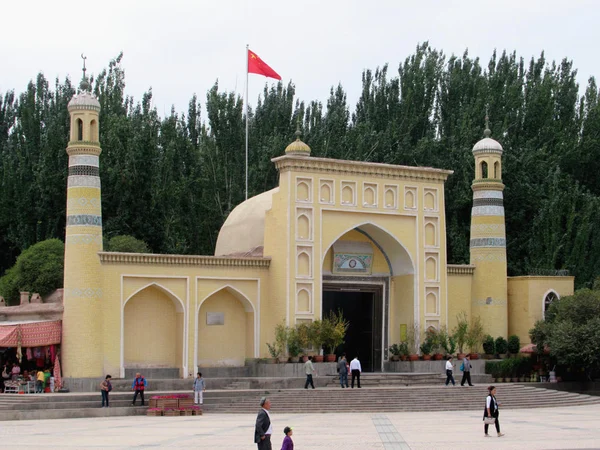
Id Kah Mosque anchors Kashgar's main square and has a layered history of construction and repair. The new photograph shows the real mosque and square. Confirm exterior and interior access separately, keep clear of worship activity and follow all current photography instructions.
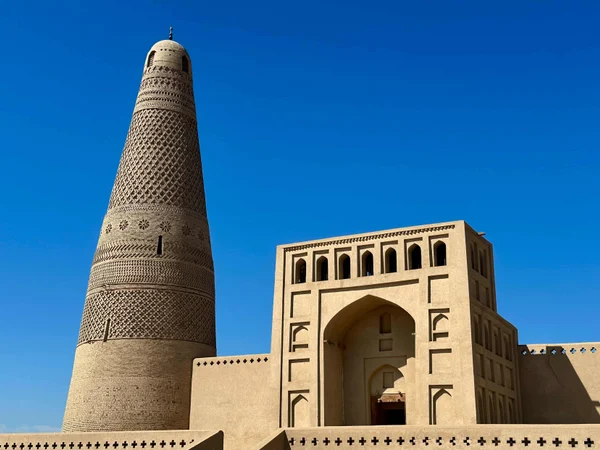
Emin Minaret near Turpan is a distinctive eighteenth-century brick monument associated with the Sugong complex. Its patterned tapering tower is accurately shown in the replacement photograph. Check current ticketing, conservation closures and whether mosque spaces are accessible before arrival.
Urumqi and other cities also have active Muslim venues, but a named religious association or office is not automatically a visitor attraction. Plan a wider route with the Silk Road itinerary guide, then confirm each stop through current official tourism and venue notices.
Evidence boundary: historical context was reviewed against current cultural-heritage material on the date above. Entry policies, transport, documentation, religious schedules and photography rules are time-sensitive and this page does not guarantee access.
From $ 1226
From $ 2183