Your China & Yunnan Travel Experts

 Ask a Question
Huangshan Travel Guide for Expats Reviewed August 28, 2026. Huangshan in southern Anhui combines a steep granite mountain, cableway-assisted routes and Huizhou villages. A good plan separates arrival, summit time and the village extension instead of treating “Huangshan” as one stop. Huangshan City, Huangshan North Railway Station, Tangkou and the mountain summit are distinct places. A hotel described simply as “Huangshan” can be an hour or more from the entrance you intend to use. Confirm the Chinese property address, driving time to the scenic shuttle, luggage plan and breakfast availability before booking. Travelers arriving late should usually sleep in Tunxi or Tangkou rather than race toward a final shuttle. The next morning's entry gate and cableway should determine the base, not the broad city name shown by an international booking site.
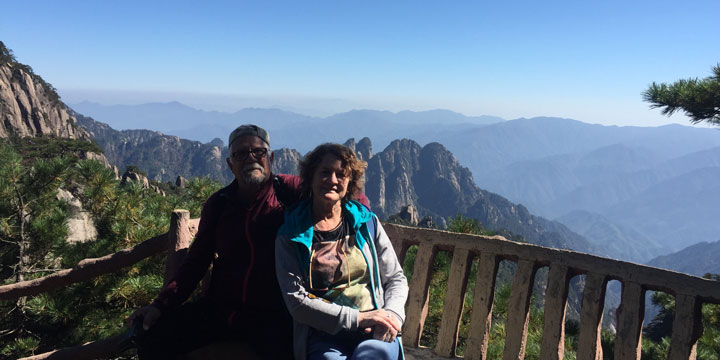
The retained photographs show genuine mountain paths, winter conditions and Hongcun; visibility and snow are weather outcomes that cannot be assured.
One-day mountain route The classic decision is front mountain versus back mountain, but current closures and physical ability matter more than tradition. The Yuping side provides access toward the Greeting Guest Pine and steeper sectors; the Yungu side often supports a gentler introduction toward Beihai. A through-route requires understanding where the cableways start and finish, how summit hotels connect, and which stairs remain unavoidable. Ask for a route with estimated walking hours and elevation change. “Cable car tour” never means step-free, and wet granite deserves slower timing.
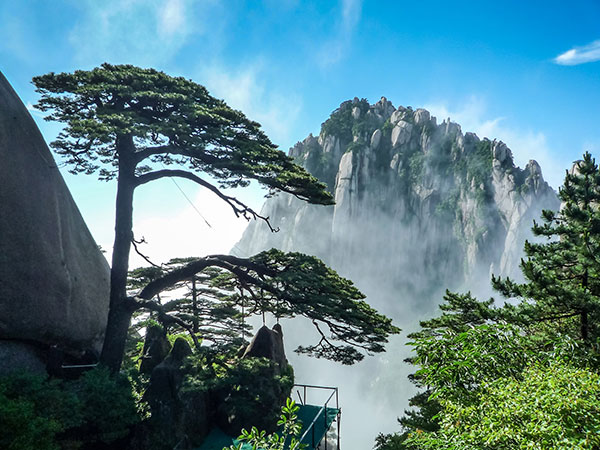
Ascend in the morning, stay near your chosen sunrise area, walk a second sector and descend after breakfast or lunch.
Add Tunxi and Hongcun, or a longer hike, without placing the village transfer on the same evening as a late descent. Route check Confirm the open gate, cableway, summit lodging and current trail notices. Compare options on the Huangshan destination page.
Granite peaks and old pines
Huangshan's visual identity comes from exposed granite, sculptural pines and changing layers of mist. Use marked paths and do not leave railings for a photograph.
Sunrise and cloud sea The famous pines are living trees in a protected landscape, not props. Stay on the path, do not touch roots or branches, and keep food away from wildlife. Granite viewpoints may have narrow circulation and one-way crowd controls. Wait for a safe space instead of stepping onto an unmarked ledge. A telephoto lens often creates a better mountain image than moving beyond a railing. In mist, use near-field subjects such as pines, rock texture and forest rather than chasing a distant panorama that the weather may not reveal.
These are weather-dependent. Choose lodging based on the route you can manage, not a promise of a particular sky.
Ask the hotel for the current sunrise time and safe viewpoint, then decide in the morning. Sunrise planning begins with sleep and route safety. Identify the nearest suitable viewpoint, walking time in darkness and whether the hotel recommends a headlamp. Do not cross a closed or icy path for a forecast that may change. Cloud-sea conditions depend on humidity, temperature and wind; no hotel or guide can guarantee them. If the sky is blank, use the early hour for a quieter trail and breakfast. Sunset can be equally rewarding but must leave enough daylight or lighting for the return to accommodation.
Peak routes
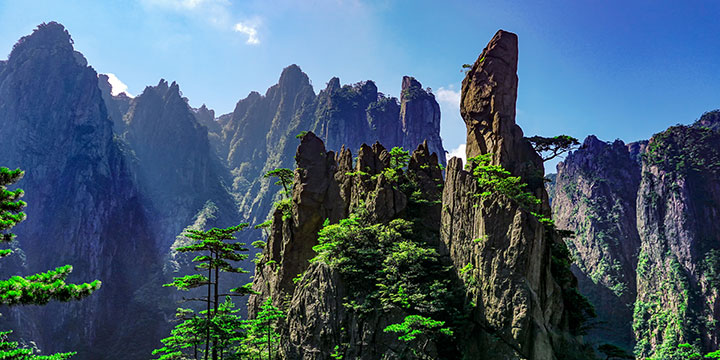
Lotus, Bright Top, Flying-over Rock and other landmarks do not all open simultaneously. Seasonal rotation and maintenance can change the classic circuit.
The retained landscape images match these granite-and-pine sections. Peak names on older maps can create false expectations because opening cycles and maintenance change. Lotus Peak and Celestial Capital Peak, for example, may not both be available. Bright Top is an important junction rather than a simple isolated summit. Check the official route map issued for the visit date and ask staff about one-way paths. A strong plan has a primary loop and a shorter fallback. Adding every named rock formation usually produces fatigue, not deeper appreciation, especially when carrying an overnight bag.
Huizhou food
Try regional dishes with clear expectations: fermented mandarin fish has a pronounced aroma; tofu, bamboo shoots and preserved ingredients can be salty.
Ask about allergens, bones, chili, alcohol and animal fats.
Tunxi Old Street
Tunxi is useful for an evening walk, food and practical supplies, but shop age and authenticity claims need evidence.
Keep receipts for tea, ink, carvings or anything sold as old; avoid wildlife material and unverified antiquities.
Hot springs
A hot-spring visit can work after descent if the active facility, water source, hygiene and opening hours are confirmed.
People with cardiovascular, pregnancy or heat-sensitivity concerns should seek appropriate medical advice and avoid prolonged soaking.
Cultural performance
Treat any evening show as optional entertainment. Verify the current venue, language support, seat category and transport back to the hotel.
No performance is required to understand Huizhou culture; a village guide or museum can provide better historical context.
Day 1 arrival and Tunxi; Days 2–3 mountain with one overnight; Day 4 Hongcun and departure. Add rather than compress time when traveling with children, older adults or large luggage.
Winter can produce snow, rime and clearer distant views, but also ice, closed trails and reduced cableway operation.
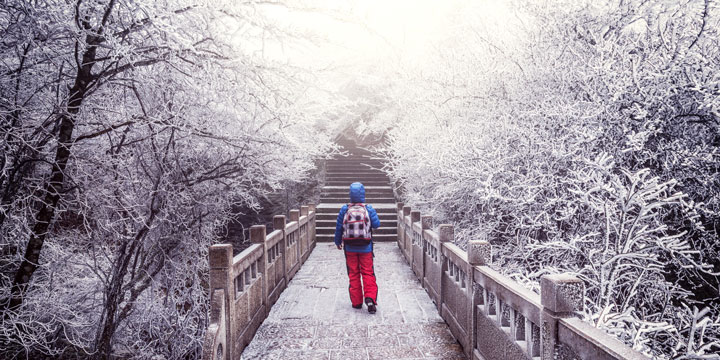
Use traction appropriate to official advice, wear gloves that still allow a secure handrail grip, and never step beyond barriers for an uncluttered photograph.
March to May Milder walking weather and spring growth, with rain and holiday peaks to manage. June to August
Green scenery, heat, thunderstorms and the highest visitor pressure. Start early and carry water. September to November Spring and autumn are often promoted as ideal, yet weekends, school holidays and short bursts of rain can matter more than the monthly average. Summer thunderstorms can pause cableways and make exposed ridges unsuitable. Winter visitors gain a chance of snow or rime but need to accept closures and ice. Check three forecasts: Huangshan City, Tangkou and the summit area. Reconfirm the official scenic notice on the morning of travel, because a previous day's social-media photo does not establish current conditions.
Often comfortable for hiking, though National Day and autumn weekends require early booking. December to February
Potential snow and rime with cold, ice and partial closures. There is no universally “best” month; choose by hiking tolerance, crowd sensitivity and the scenery you accept may not appear.
Check summit weather rather than Huangshan City alone. Clothing should manage sweat as well as cold. Cotton layers can remain wet after a climb; a breathable base, insulating mid-layer and windproof outer layer are easier to adjust. Gloves help with cold railings, and a brimmed cap or sunglasses reduce glare. Use a small backpack so both hands remain free. Trekking poles may help on permitted routes but must not obstruct queues. Carry personal medication, blister care and a modest amount of food, then pack out all waste.
Wear broken-in shoes with grip and stable heel support.
Carry a breathable waterproof layer instead of an umbrella on exposed paths.
Pack a warm mid-layer even when the base is mild.
Use sun protection; elevation and cloud do not remove ultraviolet exposure.
Bring water and compact snacks while respecting park waste rules.
Keep passport, phone and power bank in a dry pouch.
Transfer large luggage to a city or base hotel and carry only the summit overnight bag.
If you need rental coats or walking support, verify availability and sizing before relying on it.
Reserve timed entry and summit accommodation early for weekends and holidays. Name and passport number must match the booking. Crowd strategy begins before the summit. Use a time slot that allows entry without chasing the last shuttle, travel outside major holidays when possible, and ask the hotel which gate is currently less congested for the chosen route. On descent, cableway lines can lengthen suddenly when weather deteriorates. Keep a written latest-safe-turnaround time. Families should establish a meeting point in case phone service is weak. Never separate from a slower traveler simply to reach a final viewpoint.
Do not schedule the last cableway descent against a fixed train departure. Queues, weather and shuttle transfers can erase the apparent margin. Summit hotels are chosen mainly for route position, not resort comfort. Rooms can be compact, supplies cost more to transport, and breakfast timing may follow sunrise demand. Confirm whether the booked room has a private bathroom, whether children need separate registration and how far the property is from the arrival cableway. Bring only what can be carried safely on stairs. If no summit room is available, use a Tangkou base and plan a full single-day loop rather than improvising an unauthorized overnight.
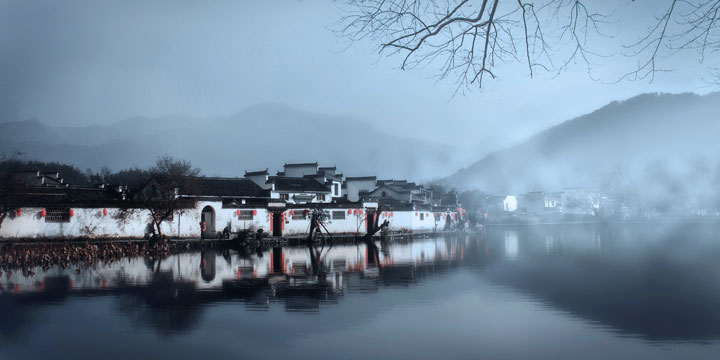
Review the Yellow Mountain route guide and a suitable four-day Huangshan itinerary. Last reviewed August 28, 2026. Hongcun and Xidi require their own cultural approach. The famous white walls, dark roofs and water systems belong to living villages with residents and guesthouses. Visit early or late for calmer lanes, keep doorways clear, and ask before photographing interiors. A local guide can explain lineage halls, water management and Huizhou merchant history more accurately than a quick photo stop. Confirm the return vehicle before dinner because rural evening transport is less frequent than daytime sightseeing transfers.
From $ 2356
From $ 1207

From $ 22782050