Your China & Yunnan Travel Experts

 Ask a Question
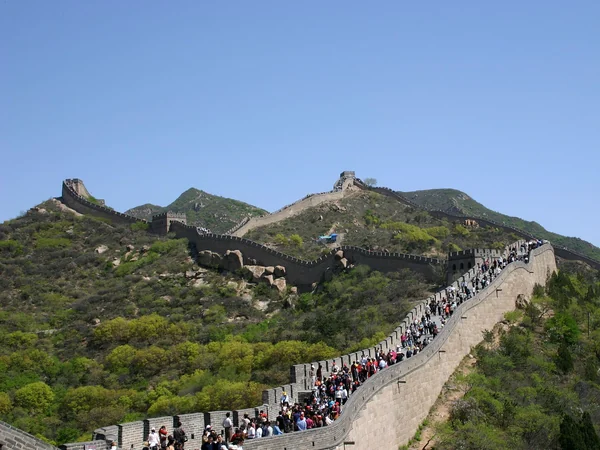
Visiting the Great Wall with Limited Mobility A Great Wall visit is possible for some wheelchair users and travelers who walk only short distances, but “accessible” does not mean that an entire section is step-free. The Wall follows steep ridges, and even restored areas can include gradients, uneven paving, exposed edges and long distances between rest points. The useful planning question is not simply whether access exists, but exactly where the barrier-free route begins and ends.
Badaling, Mutianyu and Juyongguan offer different levels of assisted access and distant views. Lift operation, maintenance, weather and visitor controls can change, so confirm the current route with the scenic area before travel. A companion may help with gradients, but staff assistance should never be assumed unless arranged in advance.
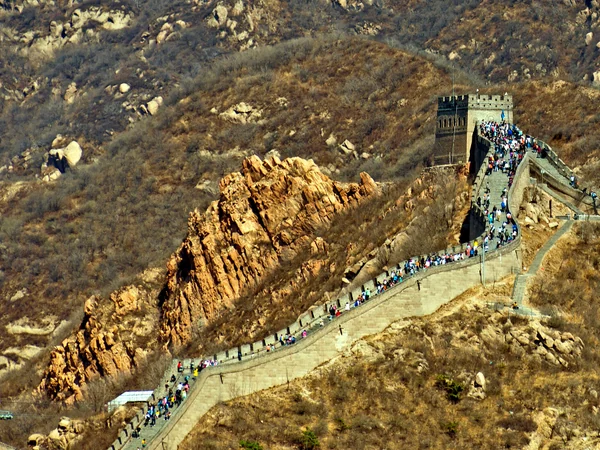
Start by describing the traveler's needs precisely: manual or powered wheelchair, maximum slope, ability to transfer, tolerance for a few steps, and whether an accessible toilet and step-free vehicle are essential. That information is more useful to an operator than the broad phrase “mobility difficulty.”
For a side-by-side choice, Badaling and Mutianyu serve different priorities. Badaling usually offers the clearest barrier-free planning path, while Mutianyu can provide a scenic platform reached with mechanical assistance but still involves transitions that must be checked. The Badaling versus Mutianyu comparison helps match access needs with crowd levels and scenery. Choose by the usable experience, not by the total length of wall shown on a map. A short, comfortable viewing route can be more rewarding than an ambitious plan that depends on uncertain transfers.
Badaling is the strongest starting point for visitors who need a defined step-free approach. The visitor complex has barrier-free facilities and assisted routes serving a limited part of the restored Wall. However, the accessible portion is only a fraction of the ridge, and conditions beyond it become steep. Review the Badaling cable-car guide, then ask the scenic area which entrance, parking area and lift are operating on the intended date.
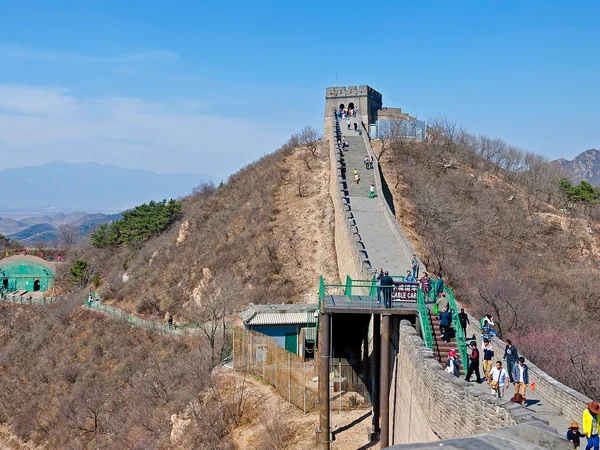
Arrange the arrival route before buying transport. A driver should know the designated accessible drop-off rather than leaving passengers at a general coach park. At the site, follow current barrier-free signs and speak with staff before joining a queue. Confirm wheelchair dimensions and weight limits for any lift, whether a transfer is required, and how the return route works if crowd controls change the normal circulation pattern.
Mutianyu is attractive for forested views and a less urban setting, but the journey between the parking area, shuttle, ticket zone and upper transport station creates several interfaces. Elevators or ramps may help at particular points, while the wall surface beyond the upper station still has slopes and steps. Ask for a route description from vehicle drop-off to the viewing platform, not only whether the cable car itself can carry a wheelchair.
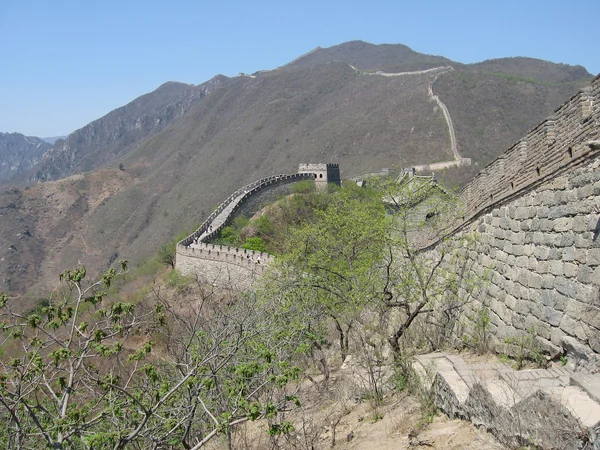
A traveler who can transfer and walk a few steps may have more options than someone who must remain in a powered chair. Toboggans and chairlifts are not substitutes for accessible transport. If the usable upper platform is the main goal, allow time to enjoy that viewpoint instead of treating further travel along the wall as mandatory.
Juyongguan is a fortified pass rather than the same type of ridge visit offered at Badaling or Mutianyu. A relatively level approach can provide views of walls climbing the valley sides, but most routes onto the fortifications involve steep steps. It may suit a traveler who values an architectural overview from below; it is less suitable when the goal is a long wheelchair route on top of the Wall.
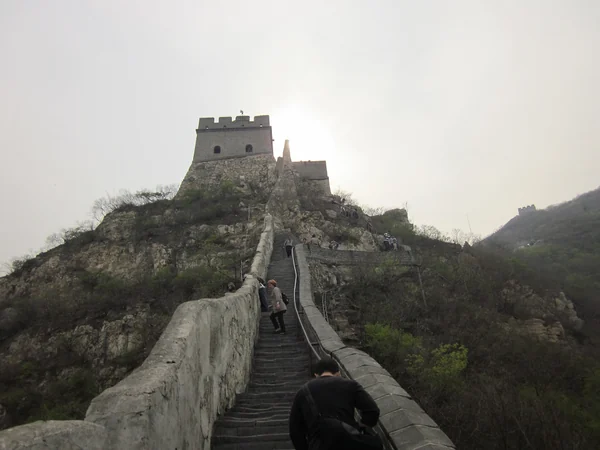
Reserve a vehicle that fits the actual chair and luggage, and confirm whether it has a ramp or lift rather than assuming “accessible” means step-free boarding. Carry essential repair items, weather protection and any medication normally required. The China senior travel guide adds pacing and transport considerations that are useful for many mobility-limited visitors as well.
Build in a weather alternative. Rain, ice, high wind or heavy crowds can make ramps and stone surfaces harder to use, and mechanical services can pause without notice. Keep the visit flexible, protect the historic fabric, and never push a chair onto a gradient that exceeds the user's or equipment's safe operating limits.
From $ 389
From $ 509
From on request