Your China & Yunnan Travel Experts

 Ask a Question
Reviewed August 27, 2026. Tibet tourism works best when the route is designed around altitude, travel time and cultural context rather than a race through famous names. Start with the experience: Lhasa heritage and living religious culture, Nyingchi's lower valleys and forests, Shigatse and the central valleys, high Himalayan viewpoints, or the longer and more remote landscapes of western Tibet. Then map each overnight altitude, the longest driving day, road exposure, heating and toilet standards, medical access and the final connection home. Lhasa is around 3,650–3,700 metres, and many passes or scenic stops are much higher. A physically fit traveler can still develop altitude illness, so protect the first 24–48 hours for light activity and avoid adding a hard ascent simply to fit one more photograph into the itinerary.
Foreign-visitor rules, route permissions, protected-area access and border procedures can change. Requirements may depend on nationality, passport, itinerary and destination. Confirm the current process with the responsible Chinese authority and a licensed operator before paying non-refundable costs; an old blog post, another traveler's permit or a screenshot from social media is not proof that the same rule applies now. The operator should state the legal company name, exact route, included permits, guide and vehicle arrangements, refund terms and responsibility when weather or access changes. For a place-by-place comparison, use the Tibet destination guide rather than assuming every headline attraction belongs in one trip.
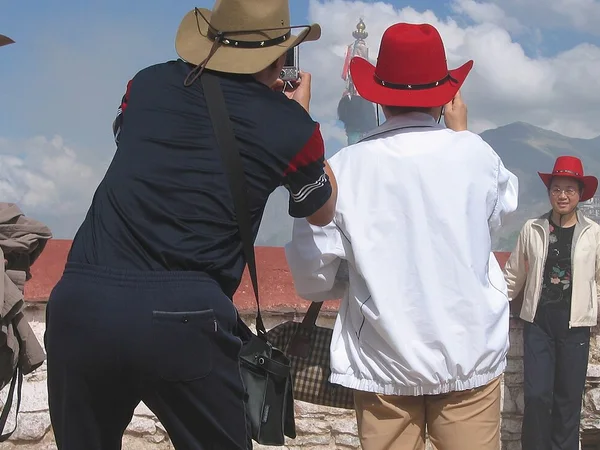
The new photograph beside this section shows actual visitors on the roof of Jokhang with the Potala in the distance. It replaces the former red tourism-bureau emblem because a real visitor scene explains the travel experience more honestly. It does not imply that roof access, group size or photography rules are always the same. Recheck the site's current instructions and treat worshippers, staff and other visitors with privacy and respect.
Build the itinerary in layers. A first Lhasa day should be deliberately easy: settle in, eat lightly, hydrate normally and avoid alcohol or strenuous stairs. Later days can add Jokhang, Barkhor, Potala, Norbulingka and nearby monasteries according to reservations and personal response to altitude. Central-valley extensions toward Gyantse and Shigatse introduce longer drives and additional heritage. Namtso, Everest-area routes, Ngari and other remote sectors require more time, higher sleeping elevations, weather buffers and stronger contingency planning. The dramatic route is not automatically the responsible route.
The CDC Yellow Book identifies Lhasa as a high-altitude destination and advises gradual acclimatization; fitness does not remove risk. Headache with nausea, dizziness, unusual fatigue or poor sleep can be early warning signs. Worsening symptoms, confusion, loss of coordination or breathlessness at rest require urgent professional assessment and descent rather than continuing upward. Travelers with heart, lung, blood, pregnancy-related or other medical concerns should obtain individualized advice before booking. Do not use a pulse oximeter, oxygen canister or medication as permission to ignore symptoms. Ask the operator where meaningful medical care and descent options exist on every remote sector.
Heritage deserves the same seriousness. UNESCO's Lhasa ensemble includes Potala, Jokhang and Norbulingka, but a list of protected places does not explain how to visit them. Observe posted routes, dress for active religious sites, walk clockwise where locally requested, do not interrupt prayer or prostration, and ask before photographing a person. Never touch murals, statues or manuscripts. The historic and cultural sites guide helps readers connect monuments to periods and protection rules instead of using them as interchangeable backdrops.
Choose season by route, not by a universal “best month.” Spring can be bright, dry and windy; summer can green the valleys but bring cloud, rain and road disruption; autumn often offers clearer views with colder nights; winter can be sunny, dry and severe after dark, with seasonal services or access limits. A forecast for Lhasa does not describe Nyingchi, Namtso or Everest. Check official city and route forecasts close to departure, then confirm the highest pass, road condition and contingency with the operator.
A practical booking file should contain the passport used for reservations, confirmed hotel names in Chinese, operator contacts, daily sleeping altitude, attraction reservations, transport details, insurance wording, emergency contacts and a written change policy. Keep copies offline while protecting sensitive document data. Compare hotels by heating, lift access, room oxygen policy if relevant, breakfast timing and legal guest registration—not only star rating. Compare vehicles by legal operation, seat belts, luggage space, driver hours and realistic toilet stops. Responsible tourism also means carrying out waste, staying on established paths, avoiding wildlife disturbance and never flying a drone without explicit legal and site permission.
Use the Tibet attractions guide to shortlist places by theme, then remove anything that creates an unsafe ascent or rushed heritage visit. Three well-paced sites with time to listen and observe usually produce more understanding—and longer, more satisfying visits—than eight hurried photo stops. Recheck all time-sensitive rules shortly before travel. Honest planning protects health, local communities, fragile landscapes and the reader's trust.