Your China & Yunnan Travel Experts

 Ask a Question
Mount Everest is located at approximately 27.988° N, 86.925° E in the central Himalaya. Coordinates vary slightly by mapping system and whether a source marks the rock summit or another survey point, so the location is best understood through the Mount Everest maps rather than an over-precise legacy coordinate.
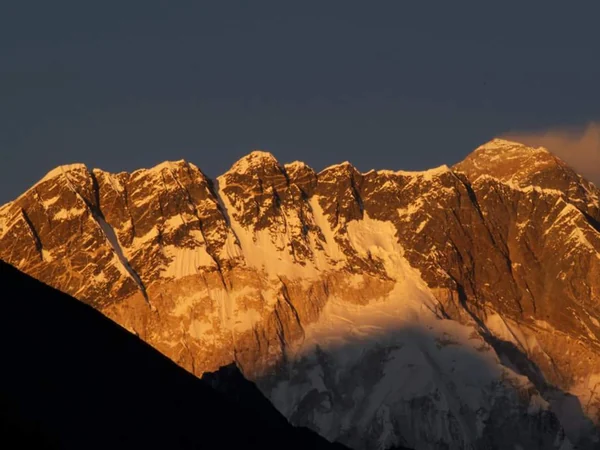
The mountain is part of the Great Himalaya and stands on the international boundary between China and Nepal. In December 2020, the two countries jointly announced a snow-surface height of 8,848.86 metres. Everest is the English name; Qomolangma is widely used in Tibet and China, while Sagarmatha is the official Nepali name. These are names for the same mountain, not three separate peaks.
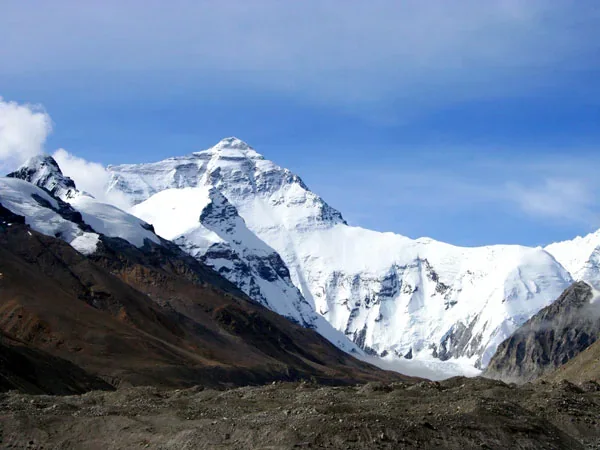
The border passes across the summit. The north face and the road-accessed visitor region lie in China's Tibet Autonomous Region; the south face and the trekking approach through Sagarmatha National Park lie in Nepal. Saying that Everest is “in China” or “in Nepal” without mentioning the boundary leaves out an essential geographic fact.
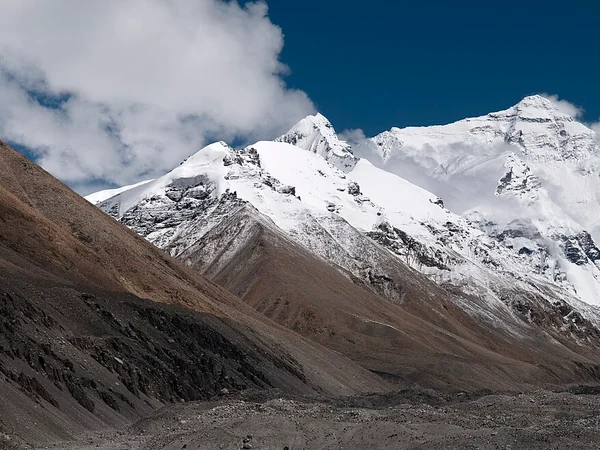
On the Tibet side, the mountain lies in Tingri County within the wider Shigatse region. Visitors normally approach from Lhasa through Shigatse and Tingri toward Rongbuk. The journey requires substantial road time and reaches very high sleeping elevations, so it should include acclimatization and the current access arrangements described in the Mount Everest travel hub.
The Tibet Autonomous Region occupies the southwestern part of China and borders several countries along the Himalayan arc. Everest is only one part of a much larger plateau landscape that includes major river headwaters, high passes, monasteries and protected areas. A straight line on a small map understates the scale: travel time is shaped by terrain, checkpoints, road conditions and permitted routes.
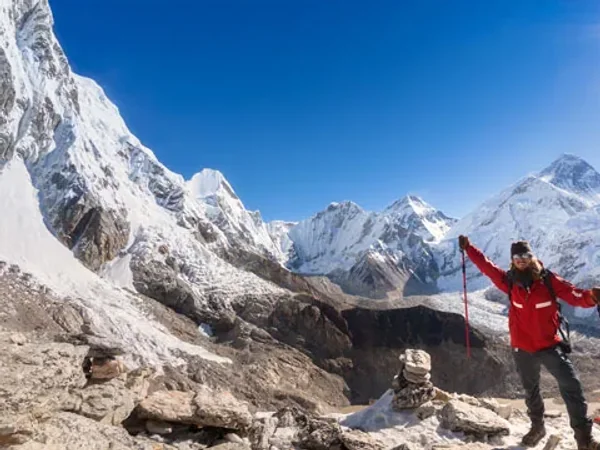
On the Nepal side, most visitors reach the Everest region by trekking from the Lukla area through the Khumbu, while expedition teams continue beyond the public trekking route under Nepal's current rules. A few distant viewpoints elsewhere in Nepal can reveal sections of the Himalayan range, but they should not be described as guaranteed views of Everest without careful geographic confirmation.
For trip planning, choose the side by experience rather than by the abstract question of which country “owns” the mountain. Tibet offers an organized overland approach and direct north-face viewpoints; Nepal offers a multi-day trekking journey through the Khumbu. Border status does not create a tourist crossing over the summit, and the two base camps are not connected by an ordinary trail. Build the Tibet option within a permitted Tibet itinerary and verify all current rules before booking.
From $ 1637
From $ 3179