Your China & Yunnan Travel Experts


 Ask a Question
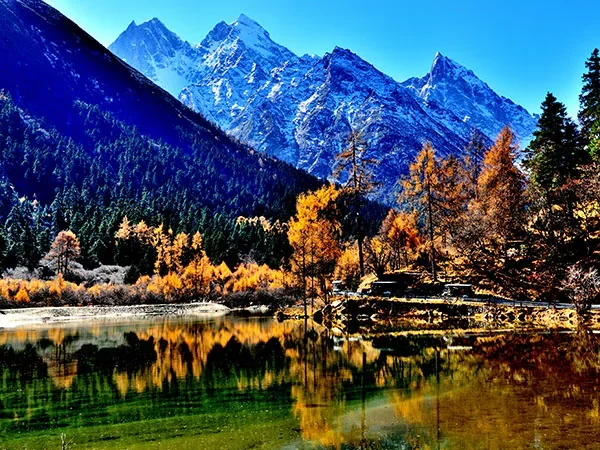
China's environmental conditions cannot be summarized by one image of clear skies or one report of haze. The country includes dense industrial regions, dry northern basins, humid coasts, high plateaus, forests and protected landscapes such as Jiuzhaigou. Air, water and landscape conditions vary by city, season and weather. Travelers need current local information, while long-term national reports provide context for wider trends.

Air quality is measured with instruments, not by visibility or smell alone. Fine particles, ozone and other pollutants can change through the day as weather and emissions interact; mist, dust and humidity can also reduce visibility. Check a current local air-quality index together with the weather forecast, and pay attention to the pollutant and health guidance behind the headline number.
When official alerts or local readings show poor conditions, consider shifting strenuous outdoor activity, choosing indoor attractions or adjusting the route. A well-fitting particulate respirator can reduce exposure to airborne particles when worn correctly, but it does not remove every risk or address all pollutants. Travelers with respiratory, cardiovascular or other health concerns should discuss an appropriate plan with a qualified clinician before the trip.
Environmental planning in China also addresses surface-water quality, groundwater, soil degradation, waste, biodiversity and industrial pollution. These issues differ by watershed and region and should not be projected onto every destination. Visitors can reduce their own impact by refilling water where safe, limiting disposable items, staying on marked paths and following reserve rules.

Satellite view of a winter haze episode over eastern China; a single event is not a permanent map of local air quality.
National and provincial monitoring shows why broad labels such as “polluted city” or “clean province” are too simple. Wind, rainfall, heating demand, dust events, traffic and industrial activity can all change conditions. Use a recent city-level reading for daily decisions, and compare several days when planning outdoor photography or mountain views.
Variation also occurs within one city. A riverside park, dense business district, suburban valley and industrial edge may have different noise, shade, traffic and air movement. Choose accommodation and daily transport with the actual activities in mind rather than relying only on a city's general reputation.

Chinese cities have expanded parks, greenways, restored waterways and constructed wetlands, although access and distribution remain uneven. These spaces support recreation, shade, storm-water management and habitat. Travelers interested in landscapes beyond the major city circuit can compare the China nature tours collection and evaluate how much transfer time each protected area requires.

Check seasonal weather, short-range forecasts, air quality, wildfire or flood notices and park access before outdoor days. Keep a flexible indoor alternative and allow extra time after severe weather. Routes combining high mountains and valleys, such as the Zhangjiajie and Jiuzhaigou tour, require destination-by-destination packing rather than one “China climate” assumption.