Your China & Yunnan Travel Experts


 Ask a Question
Chinese wedding dress is not one fixed costume. A contemporary couple may choose a Western gown and suit, qipao, longfenggua, hanfu-inspired ceremonial clothing or attire linked to a regional or ethnic tradition. Red and gold are familiar celebratory colors, while dragons, phoenixes, flowers and the double-happiness character can carry auspicious associations. The Chinese wedding customs guide explains where clothing changes may fit within the day.
Red is strongly associated with celebration and good fortune, but it is not compulsory. Longfenggua—an embroidered jacket-and-skirt ensemble especially associated with southern Chinese communities—often uses gold or silver thread on red. Qipao is a fitted one-piece dress whose recognizable modern form developed in the twentieth century. Calling both garments “ancient Chinese wedding dress” erases their different histories.

Qipao and longfenggua shown as distinct contemporary wedding choices
Longfenggua usually features dense embroidery and a two-piece construction. Dragon-and-phoenix pairs can symbolize balance and harmony, while bats, peonies and fruit motifs may express blessings through image or wordplay. Ask the maker what a specific pattern means instead of assigning a generic symbol list to every garment.

Dragon-and-phoenix embroidery on a wedding garment
Red wedding décor can coordinate with clothing, but matching every object is a styling choice rather than an etiquette requirement.
A square red veil appears in historical drama and some heritage-style ceremonies. It may be embroidered and lifted by the groom at a chosen moment.
Red wedding veil used in a traditional-style ceremony
Fèngguān refers to an ornate crown using phoenix imagery. Surviving imperial examples and modern bridal reproductions differ greatly in materials, weight and construction. At a contemporary banquet, a bride may wear a lightweight stage or studio version rather than an archaeological replica. The associated phrase fèngguān xiápèi combines a phoenix coronet with formal robe or stole imagery and is especially linked with Ming-style bridal presentation.

Phoenix coronet displayed as a historical costume object Museum-grade imperial crowns were rank objects, not ordinary bridal accessories sold in one standard design.

Ming phoenix crown preserved in a museum collection
Embroidered wedding shoes vary by region, family and garment. Motifs may include flowers, animals or auspicious symbols. Comfort, fit and safe movement matter more than reproducing a custom from another province.

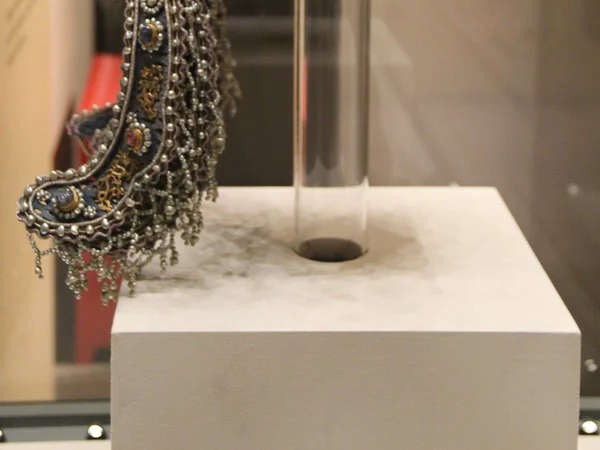
Embroidered Chinese wedding shoes in a museum display
Wedding clothing changed with court regulation, local practice, textile access and social class. Modern “dynasty wedding” packages are usually reconstructions informed by art and surviving objects; they should be labeled as interpretations. The history of Chinese clothing provides the broader timeline.
Zhou sources describe formal dress through ritual categories, but complete wedding outfits rarely survive. Names transliterated as xuanduan or xunran require context and should not be reduced to one modern rental set.
Tang formal clothing combined court rules with diverse silhouettes and cosmopolitan textile influences. The popular image of a red groom and green bride reflects particular historical interpretations, not every Tang marriage.
Ming-style bridal presentation often inspires today's fengguan xiapei reconstructions. Rank garments, phoenix imagery and red ceremonial dress were adapted differently outside the court.
Zhou ritual aesthetics are often described as restrained, with dark outer garments and reddish tones used in formal combinations.
Museum displays and carefully documented reconstructions are more reliable than costume-drama screenshots because fabric, cut and accessories must be interpreted from several types of evidence.
Tang dress was varied, and women's formal ensembles could include long skirts, jackets, shawls and elaborate hair ornaments.
A red-and-green pairing appears in later wedding descriptions,
but color, class and date need qualification rather than being presented as one rule for the entire dynasty.
Modern Ming-style ceremonies often use red robes, rank-inspired groom's dress and a phoenix coronet ensemble.
Reconstruction inspired by Ming formal wedding clothing
A phoenix crown associated with the Ming imperial tombs at Dingling is an imperial artifact, not proof that ordinary brides wore the same materials or workmanship. For a real wedding, agree on cultural meaning, mobility, heat and changing time before choosing several looks. The traditional wedding etiquette guide helps match attire to each ceremony module.