Your China & Yunnan Travel Experts


 Ask a Question
Eight ancient towns and cities in China reward different kinds of travellers: a walled banking centre, Naxi settlements threaded by water, Huizhou merchant country, a Jialing River city and two very different Jiangnan water towns. This practical ancient-town guide compares eight strong choices rather than claiming an official “best” ranking. Lijiang, Pingyao and Hongcun are within UNESCO World Heritage properties; Fenghuang is on China's Tentative List, which is not the same as inscription; the others have national or local heritage value in their own contexts. Choose by architecture, living culture, route and crowd tolerance—not by superlatives alone. Editorial note: inscription status, place identity and core heritage facts were checked against UNESCO and official national or local sources on 26 August 2026. Opening hours, tickets, transport and event schedules change, so reconfirm them with the relevant site before travel.
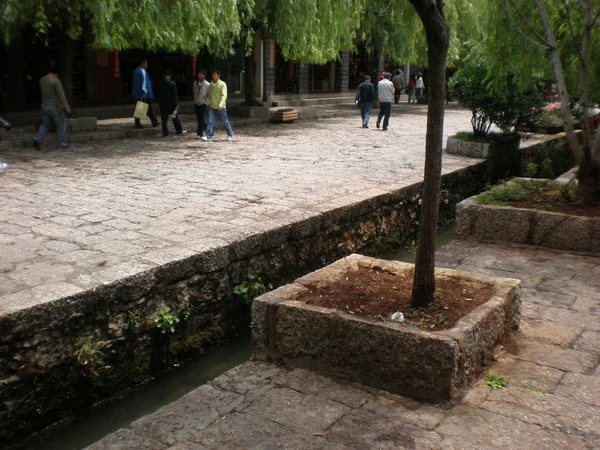
In northwestern Yunnan, the UNESCO-listed Old Town of Lijiang sits at about 2,400 metres and comprises three component parts: Dayan Old Town, Baisha and Shuhe. UNESCO highlights its adaptation to uneven terrain, its timber courtyard houses and the water network fed through Black Dragon Pool. The property grew at a trading crossroads between Yunnan, Sichuan and the Tibetan Plateau; it should not be reduced to a decorative night market.
The World Heritage property is broader than Dayan alone: Baisha and Shuhe preserve different settlement patterns and a quieter relationship with fields, water and neighbourhood life. Baisha's historic murals bring Buddhist, Daoist and local visual traditions into the same complex, while Dayan provides the densest lanes and canals. The image here shows Lijiang's roofscape and water-fed old-town fabric—not Jade Dragon Snow Mountain or a generic “ethnic village.” Visit early, keep voices low in residential lanes, and ask before photographing residents or ritual activity.
Best for: water-system history and Naxi cultural context, with enough time to distinguish Dayan from Baisha and Shuhe. Do not describe Dongba traditions as “disappearing” scenery; they are living knowledge held by people and institutions. If time and altitude planning allow, choose a carefully planned Jade Dragon Snow Mountain day, or a separate Lugu Lake journey.
Practical route: allow two or three nights for the three historic clusters; this 3-Day Lijiang Essence Private Tour.
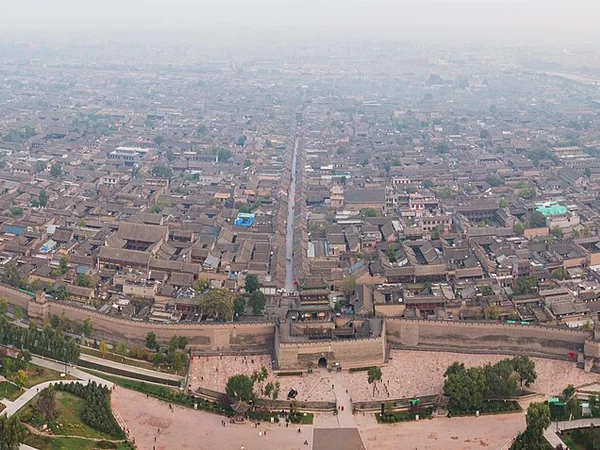
In central Shanxi, Pingyao Ancient City is a complete walled county-level city whose surviving streets, shops, dwellings and temples show more than five centuries of urban development. UNESCO dates the city's present form from the 14th century and includes Shuanglin Temple and Zhenguo Temple as associated components. Pingyao's 19th- and early-20th-century draft banks are central to its story; Rishengchang is useful when read as financial history, not merely an old shopfront. The city can be busy during holidays, so the former claim that it is “not swamped with tourists” is no longer dependable.
Best for: walking the city wall, reading the street grid, visiting a draft-bank museum and seeing painted sculpture at Shuanglin Temple. The image shows Pingyao's wall and grey-tiled urban fabric. Stay within or beside the old city if an early start matters, but remember that traditional courtyards may have steps, narrow passages and limited sound insulation.
Planning note: use Pingyao as the heritage base on this 6-Day Datong, Pingyao and Taiyuan Tour.
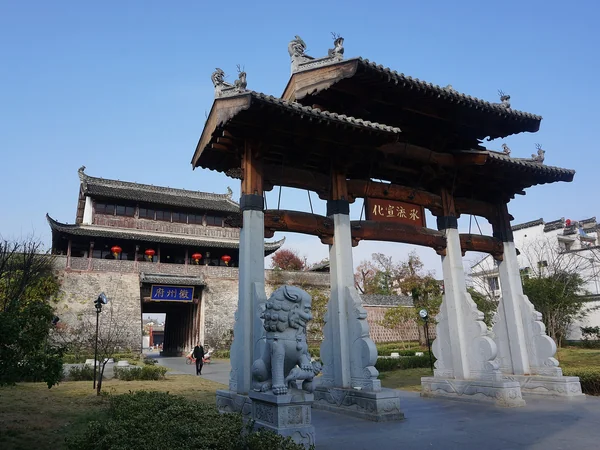
At the meeting of the Xin'an River corridor and the Huangshan Mountains in southern Anhui, Shexian County contains Huizhou Ancient City, the former seat of Huizhou Prefecture. Official Huangshan sources identify its old walls, government complex, Doushan Street and Yuliang Dam as core heritage. Shexian is the county; Huizhou Ancient City is the historic urban area within it, so the names should not be used as if they were identical attractions. Memorial archways, ancestral halls and white-walled, dark-tiled houses document merchant wealth, clan institutions and craft traditions, but they also sit within a living city. The image is matched to Huizhou Ancient City rather than Mount Huangshan. Read carved decoration with historical context, respect occupied courtyards and use the vernacular architecture guide to compare house form without treating all Huizhou homes as one timeless type.
What to prioritize: Xuguo Stone Archway, Doushan Street, the Huizhou History Museum and Yuliang Dam; fish-lantern events are scheduled community activities, not guaranteed daily shows.
Route idea: combine the old city with a separate mountain day on this 4-Day Mt. Huangshan Highlights Tour.
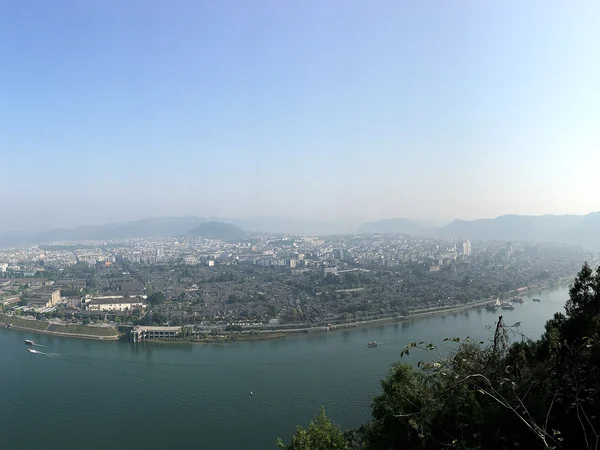
Set on a bend of the Jialing River in northeastern Sichuan, Langzhong Ancient City has more than 2,300 years of recorded urban history and long served as an important Ba–Shu military and administrative centre. Its visual appeal comes from a historic walled city shaped by river and hills, not from a promise that geomancy guarantees good fortune. Courtyard houses combine northern and southern building features, while the street plan is commonly interpreted through traditional feng shui ideas. The surrounding landscape and layers of late-imperial history remain legible together. The image shows the old town beside the Jialing River, making the site's topography clear.
Langzhong is also associated with Zhang Fei and Three Kingdoms memory, but later temples, storytelling and tourism interpretation must be distinguished from contemporary evidence for the third century. Walk the lanes, riverfront and wall viewpoints before deciding what the town “means”; it is still a lived county-level city, not a preserved stage set.
Context worth noticing: Sichuan's river-town heritage, expressed here through Huaguang Tower, Zhang Fei Temple, courtyard houses and the relationship between the old grid and the riverbank.
Route warning: the linked Chengdu and Leshan itinerary is a separate route; add Langzhong only with an extra transfer day.
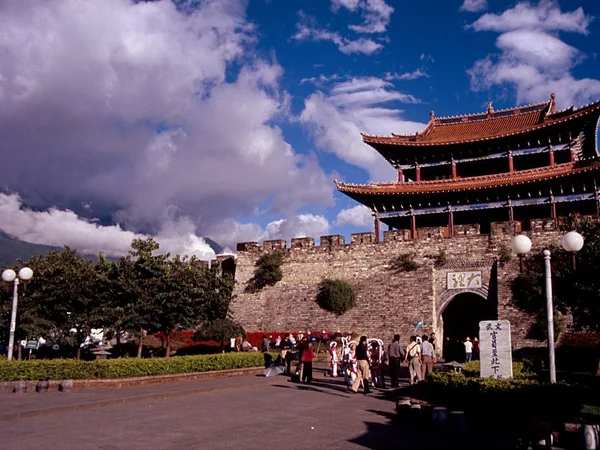
Between Cangshan and Erhai Lake, Dali Ancient City occupies a strategic basin long connected with the Nanzhao and Dali kingdoms. The present street grid and gates reflect later rebuilding as well as older regional history; it is a living, commercially active city rather than an untouched medieval settlement. Fuxing Road, the South Gate, Wuhua Tower and local museums give a more coherent introduction than collecting isolated photo stops.
Bai architecture, food, textile traditions and community festivals are important here, but “Bai culture” is not a single performance or costume. Xizhou's courtyard houses belong to another settlement north of Dali and deserve their own time. The image shows Dali's gate and roofscape with the Cangshan setting, accurately separating the old city from lakeside villages. Avoid entering private courtyards without permission, and distinguish a restored facade from an original fabric claim.
Best for: the Three Pagodas, Xizhou's Bai courtyard houses, Erhai Lake, and plan a separate outing to Cangshan.
Trip planning: keep one full old-city day plus separate landscape time on this 4-Day Dali Highlights Private Tour.
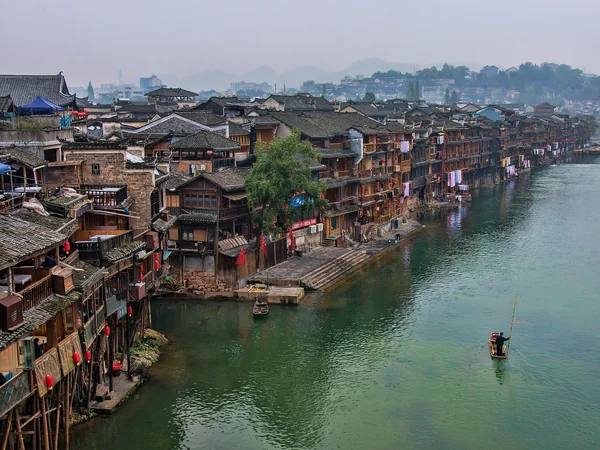
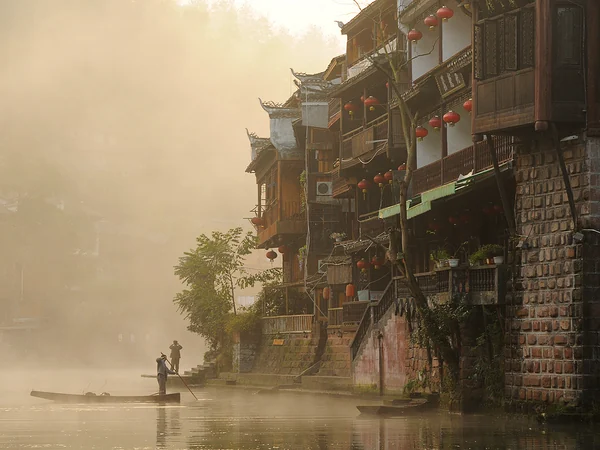
On the Tuojiang River in western Hunan, Fenghuang Ancient City is known for riverside diaojiaolou, stone lanes, gates and bridges within a mountain-and-river setting. It has appeared on China's UNESCO Tentative List since 2008, but it is not currently an inscribed World Heritage property; calling it “UNESCO-listed” would be inaccurate. Miao and Tujia histories are important across the wider region, yet no single performance, costume or village represents either community in full. Name the specific community and event, and ask before making portraits.
Fenghuang is highly visited, especially at night and on public holidays. Dawn brings softer light and quieter lanes, while evening lighting creates a modern tourism scene rather than evidence of the historic townscape. The image shows actual riverside stilt houses on the Tuojiang. Use bridges and marked river access, do not fly a drone where prohibited, and avoid blocking residents' doors for photographs.
Best for: the Tuojiang riverwalk, Hongqiao Bridge, East Gate and a contextualized visit beyond the brightest commercial streets.
Route planning: combine two different landscapes on this Zhangjiajie and Fenghuang Private Tour.
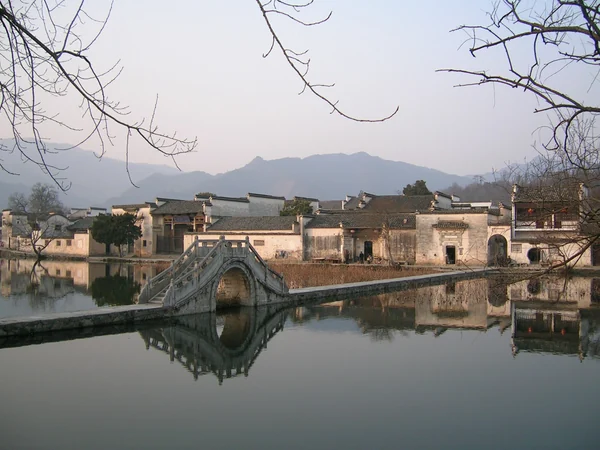
At the foot of Huangshan in Yi County, Hongcun Village forms one UNESCO World Heritage property together with Xidi. UNESCO emphasizes the villages' street plans, architecture, decoration and integration with engineered water systems. At Hongcun, channels feed Moon Pond and South Lake, shaping both everyday circulation and the celebrated reflected views. The inscription covers Hongcun and Xidi—not every old village in southern Anhui—and the two should not be collapsed into a single stop.
The image shows Moon Pond and the white walls and dark roofs around it. Arrive early if you want clear architectural views, then put the camera down long enough to notice thresholds, drainage, wood carving and how public lanes meet occupied houses. Water edges can be slippery, and tripods should never obstruct residents or narrow passages. For field practice, the ancient-towns photography guide explains timing, consent and route choices without staging local life.
Best for: Moon Pond, South Lake, Chengzhi Hall and a close reading of the village water system; Qishu Lake lies outside the historic core and should be treated as a separate landscape stop.
Trip planning: pair village photography with mountain scenery on this 4-Day Huangshan to Wuyuan Photo Tour.
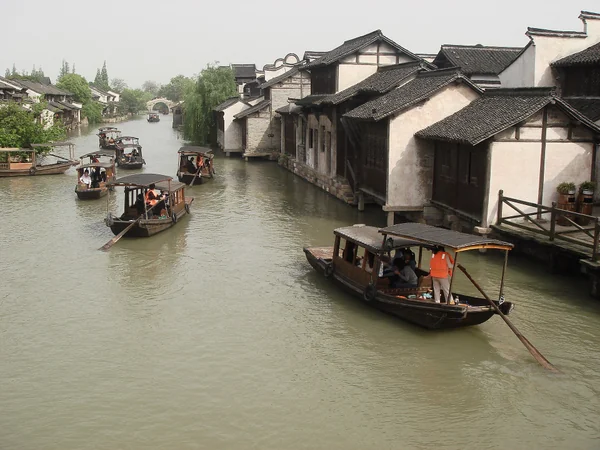
In Tongxiang, northern Zhejiang, Wuzhen Water Town lies roughly 80 kilometres from both Hangzhou and Suzhou and about 140 kilometres from Shanghai. Its canals, stone bridges, waterside houses and craft spaces belong to the Jiangnan water-town tradition, but today's visitor experience is organized mainly between Dongzha (East Scenic Zone) and Xizha (West Scenic Zone). Xizha is more comprehensively managed for tourism and evening stays; Dongzha feels more compact. Neither should be described as untouched Qing China.
Wuzhen also hosts contemporary theatre and digital-economy events, so its identity is not frozen in the past. Busy weekends can feel very different from an early weekday morning. The image shows a real canal street with inhabited-scale buildings, not a generic “Venice of the East.” Compare it with the Jiangnan water-towns guide before choosing Wuzhen, Zhouzhuang, Tongli or Nanxun; similar photographs can conceal meaningful differences in access, management and atmosphere.
Best for: canal walks, bridge views, the Mao Dun Former Residence and an evening in Xizha after day visitors leave. Verify the current zone ticket, operating hours and boat rules rather than relying on an old combined-price listing.
Route planning: compare Hangzhou and Wuzhen at a realistic pace on this 4-Day Hangzhou and Wuzhen Water Town Tour.
There is no single winner among these eight. Choose Lijiang or Dali for a Yunnan route, Pingyao or Langzhong for walled-city history, Shexian or Hongcun for Huizhou architecture, Fenghuang for a dramatic river setting, and Wuzhen for a managed Jiangnan canal stay. Two nights usually reveal more than a rushed checklist, but book only after checking the specific town's current rules. Travel outside national holidays when possible, use local museums and place-specific guides, buy crafts with clear maker and material information, and remember that heritage streets remain workplaces, homes and places of worship.
11-Day North China Ancient Town Exploration Tour
Beijing, Datong, Pingyao, Xi'an and Shanghai—designed around Pingyao rather than all eight towns.