Your China & Yunnan Travel Experts


 Ask a Question
Lucky numbers in China are best understood as flexible wordplay and social convention, not a mathematical fortune system. Eight is widely favoured because its sound can evoke prosperity, while four is often avoided because it resembles the word for death. The strength of an association depends on language, dialect, region, generation and occasion. Number customs also differ from the twelve-year Chinese zodiac; neither system predicts an individual outcome.
At Spring Festival, wedding celebrations and business openings, a number may help phrase a good wish. In ordinary travel, most room numbers, train seats and prices are simply identifiers. Notice the custom, but do not assume every Chinese person pays extra for a number or feels offended by four.
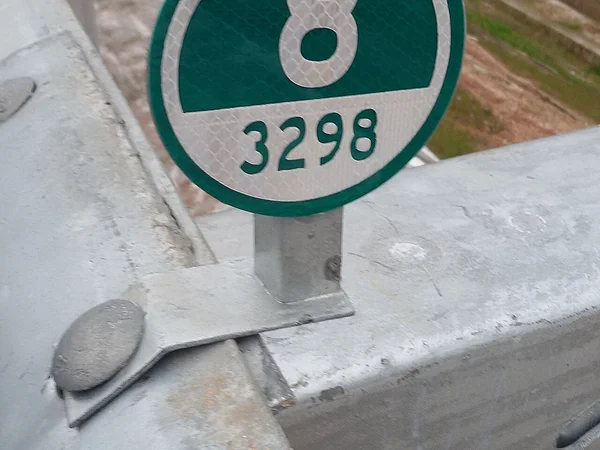
Most popular explanations rely on sound, repeated patterns or an older cultural association. They are not uniform across all Chinese languages, and a clever reading may have been popularized recently through advertising or online chat.
Key idea 8 — 八 (bā)
In Mandarin and especially in Cantonese popular explanations, eight is linked by sound with prospering or making a fortune. That makes 8, 88 and 888 attractive in greetings, prices and promotional language. The words are similar enough for a pun, not identical in every pronunciation.
Eight also looks balanced in many typefaces, but visual symmetry is a modern supporting explanation rather than the sole historical reason for its popularity.
Number preferences become visible when people can choose among otherwise similar options. Their price or importance is created by demand and context, not by an intrinsic power in the digit.
Another common sound association 6 — 六 (liù)
Six is often connected with things proceeding smoothly, reinforced by phrases used in conversation and online culture. The link is conventional rather than a perfect homophone in standard Mandarin. “666” can be enthusiastic praise in Chinese internet use, a meaning distinct from Christian symbolism.
Pairs and balance 2 — 二 (èr)
Pairs can suggest company, balance and the saying that good things come in twos. Symmetrical decorations and matched gifts may use that idea, though quantities still depend on the object and occasion. In slang, èr can also describe foolish behaviour, showing why context matters.
Three in older phrases 3 — 三 (sān)
Three recurs in philosophical, literary and religious groupings, but that does not make every set of three lucky. Claims that it is a direct homophone for “life” overstate standard Mandarin pronunciation. Ask which phrase or tradition is actually being referenced.
Long duration and imperial use 9 — 九 (jiǔ)
Nine sounds like jiǔ, “long-lasting,” and appears in wishes for longevity or enduring relationships. It also has historical imperial associations. Popular claims that the Forbidden City contains exactly 9,999 rooms are not reliable room counts and should not be used as architectural evidence.
A number with mixed associations 7 — 七 (qī)
Seven can evoke togetherness through sound play in some phrases, while seventh-month observances introduce other associations. The seventh day of the seventh lunar month is linked with the Qixi story; the seventh lunar month also includes Ghost Festival traditions. Neither makes seven simply lucky or unlucky.
Key example 4 — 四 (sì)
Four is often treated cautiously because Mandarin sì resembles sǐ, “death”; related sound associations exist in other Chinese varieties. Some buildings omit floor labels containing four and some gift-givers avoid sets of four. Practices are inconsistent, so a missing label does not mean a physical floor is absent.
For New Year or a celebratory cash gift, another quantity may feel more natural if you do not know the recipient's preference. In ordinary transactions, four remains an everyday number and should not be treated as forbidden.
Slang, not numerology 250 — 二百五 (èr bǎi wǔ)
In colloquial Mandarin, “250” can insult someone as foolish. Its origin has several competing stories, so it is better to explain current usage than repeat one legend as fact. The expression is about language and tone, not supernatural bad luck.
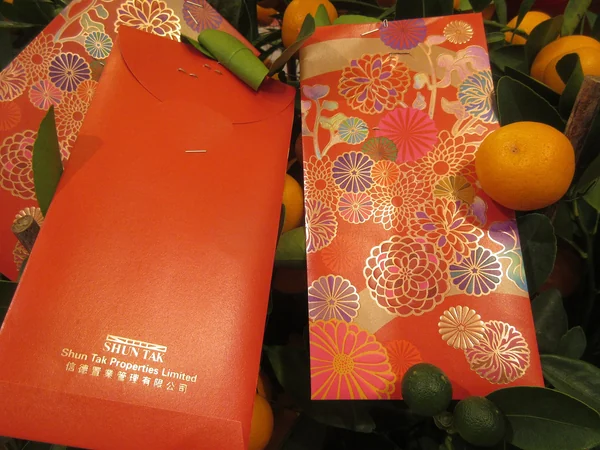
Combinations are especially common in digital messages and transfer amounts, where the sender can turn a sum into a short pun. Meanings are approximate and often contemporary. When giving money, follow the relationship, occasion and platform rules; compare the wider etiquette behind lucky colours in China.
1 Can suggest first, single or a beginning; the surrounding phrase decides whether that is positive.
2 Often evokes a pair or balance, but it also appears in slang with less flattering meanings.
3 Important in many named sets; not a universal homophone for life.
4 Frequently avoided in celebratory settings because of the death-related sound association.
5 Central to five-phase, direction and element groupings; online puns may give it newer readings.
6 Often used for smooth progress and, in repeated form, online praise.
7 Carries Qixi, seventh-month and sound-play associations that can point in different directions.
8 Widely favoured for prosperity-related wordplay, especially in commercial and celebratory contexts.
9 Nine can evoke long duration and has historical imperial associations. The practical rule is simple: treat a number as a courtesy cue, not a promise. For a celebration, ask the host or recipient when the amount matters; for a hotel, home or ticket, prioritize safety, suitability and clear terms. During Chinese New Year, the wording of a blessing and the relationship between giver and receiver matter more than copying an online chart.
What are lucky numbers in China? We guess that you may have perfect answers in mind. Please feel free to contact us if you want to know more about Chinese culture, Top China Travel will be happy to help you. See our tours to easily start your planning.