Your China & Yunnan Travel Experts

 Ask a Question
Reviewed August 28, 2026. Muslims in China are not one homogeneous community. Islam has been present for more than a millennium, yet local histories differ across maritime ports, Silk Road oases, northwest market towns and large eastern cities. Today, Muslim life includes many ethnic backgrounds, languages, cuisines and mosque traditions. Travelers who want a practical urban example can begin with the Muslim-friendly Beijing guide, then compare it with a western or southwestern region rather than assuming that one city represents the country.
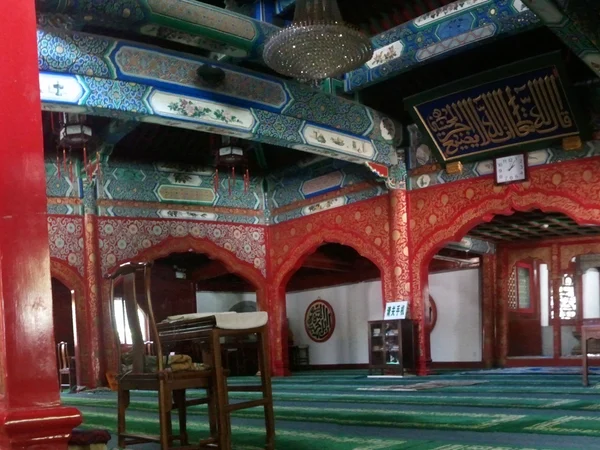
How many Muslims live in China?
There is no single current census total that can be treated as an exact count of Muslims. China's population census records ethnicity, not personal religious belief, and membership of an ethnic group is not the same as religious observance. Estimates that add the populations of ten ethnic groups historically associated with Islam can include non-practising people and exclude Muslims from other groups. For that reason, this guide does not repeat the old 2009 figure as a present-day fact. The most defensible approach is to state the method, census year and limitation whenever a number is used.
Communities, languages and religious traditions
The Hui are widely distributed and often use local varieties of Chinese, while Uyghur, Kazakh, Kyrgyz, Tajik, Uzbek and Tatar communities have strong histories in Xinjiang. Dongxiang, Salar and Bonan communities are particularly associated with parts of Gansu, Qinghai and nearby areas. Yunnan has its own long-established Hui settlements, introduced in the Yunnan Muslim guide. These labels describe different histories; they do not establish how any individual worships. Most Chinese Muslims are Sunni, but mosque affiliations, Sufi lineages, teaching traditions and everyday practice vary by place. Women have also sustained religious learning in some Hui communities, including institutions led by female religious teachers, but this should not be presented as a universal national model.
Hajj from China: history and present-day planning
Pilgrimage connected Chinese Muslims with wider Islamic networks long before air travel. Routes could pass through Central Asia, South Asia or maritime Southeast Asia and involved substantial cost, documentation and risk. Zheng He was born into a Muslim family and led Ming state voyages, but surviving evidence does not support the popular claim that he personally completed the Hajj on those expeditions. Modern pilgrimage from China is generally organized through approved channels; quotas, eligibility, health requirements, costs and departure arrangements can change. Prospective pilgrims should use current notices from the relevant religious and government authorities rather than a travel article or an old annual headcount.
For historical context, continue to the Islam in Republican China guide, which explains schools, publishing and public associations between 1912 and 1949. For travel, verify mosque access locally, dress modestly, avoid photographing worshippers without consent and treat halal claims as venue-specific. This page separates durable background from changing rules: opening hours, visitor access, prayer arrangements and Hajj procedures should all be confirmed close to the date of use.
From $ 1226
From $ 2183