Your China & Yunnan Travel Experts


Reviewed August 28, 2026. Beijing has had Muslim residents, mosques and food traditions for centuries, with especially visible Hui community history. Old census figures cannot describe today's population or daily life, so this guide avoids an unsupported current total. It focuses on places a traveler can identify, questions that require same-day verification and respectful ways to visit. For the wider city plan, start with the Beijing travel guide.
Niujie in Xicheng is the most useful starting point because it brings together a historic mosque, halal shops, bakeries, restaurants and community institutions. Dongsi, Huashi, Madian, Changying and other districts also have Muslim history, but they are separate neighborhoods rather than one continuous visitor quarter.
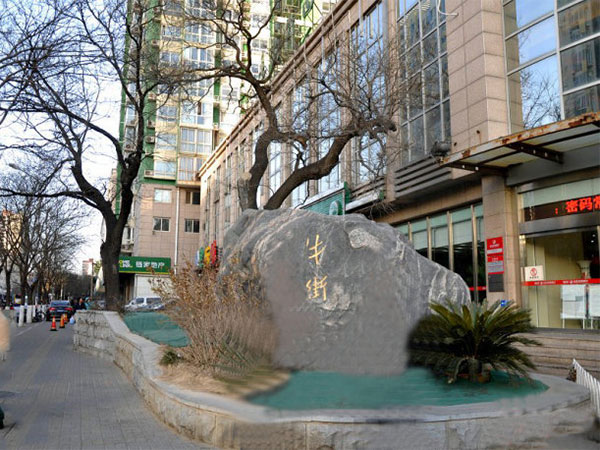
Beijing also includes Hui community areas such as Changying and Yujiawu, but a township name is not an invitation to enter private spaces. Visit an identified mosque, market or restaurant and use normal city transport; avoid turning residential streets into a staged “ethnic village.”
Niujie works well for a half-day: begin with an exterior and permitted courtyard view of the mosque, then explore food shops and have a verified halal meal. The replacement neighborhood photograph shows the real street context, while the mosque image provides a different angle from the image used elsewhere on the site.
Plan around community life rather than old internet rules.
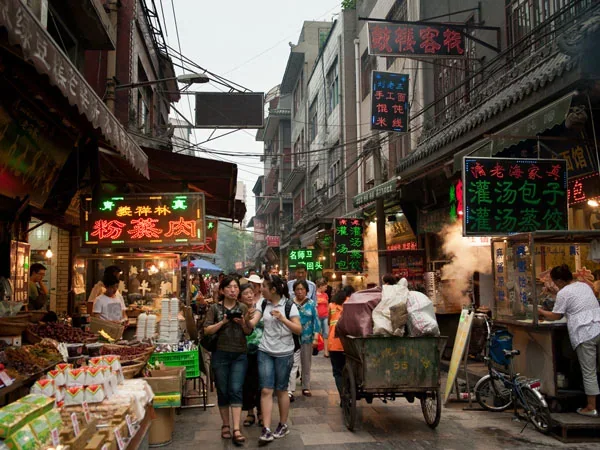
Beijing halal cooking includes instant-boiled mutton, roast and braised beef or lamb, pastries, dumplings, noodles and dishes shaped by Hui, Uyghur and other regional traditions. The real food photograph shows thinly sliced mutton prepared for Beijing-style hot pot, replacing a low-quality labeled collage. A dish's heritage does not by itself certify a particular kitchen.
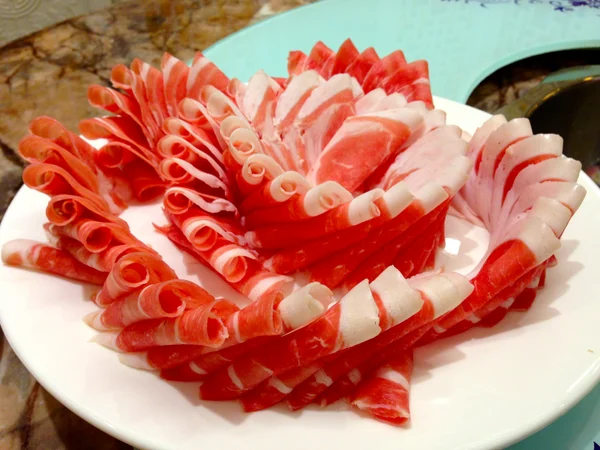
Look for 清真 (qīngzhēn), then confirm the branch, meat source, cooking wine, stock and shared equipment. Niujie is convenient, but established qingzhen restaurants also operate elsewhere. Read the China mosque guide for worship-site context and keep food and mosque access as separate decisions.
The former list of phone numbers, prices and branches aged quickly. This planning table instead organizes durable decision points. Prices, menus, certificates and opening hours must be confirmed with the exact branch on the day.
| Area or situation | Useful food direction | Why it works | What to ask | Planning note |
| Niujie | Beijing Hui dishes, pastries and meat shops | Several options are close enough to compare in person | Is this branch qingzhen, and are meat and stock halal? | Friday and festival periods may be busy; keep a backup |
| Wangfujing or central hotels | Established qingzhen restaurant brands | Convenient for a first or last evening | Does this exact branch still operate and use cooking wine? | Ask the hotel to call rather than trusting an old address |
| Haidian | Xinjiang and northwestern Chinese restaurants | Useful near universities and western Beijing sights | Is the full kitchen halal, including grill and utensils? | Travel time across Beijing can exceed the meal itself |
| Chaoyang | Qingzhen hot pot, noodles and regional restaurants | Good choice near many business hotels | Is there a current halal sign or certificate at this branch? | Confirm the restaurant entrance inside large complexes |
| Hot pot or quick lunch | Dedicated qingzhen hot pot or noodle shop | For hot pot, verify broth, meat and dipping ingredients For noodles, verify broth and absence of cooking wine |
Ask whether fryer, wok and utensils are shared Reserve hot pot for groups and disclose needs early |
Keep a simple backup close to the hotel Recheck the exact branch before travel |
| Airport or rail transfer | Sealed backup plus a verified outlet | Reduces risk when a connection is delayed | Is the outlet open in your exact terminal or station zone? | Security may prevent moving between concourses |
| Strict cross-contact needs | Dedicated halal kitchen confirmed in advance | Provides clearer control than a pork-free dish elsewhere | Are fryer, wok, knives and storage fully separate? | Keep the answer in writing if the meal is critical |
For deeper ordering guidance, continue to the Halal Food in China guide .
These are active religious institutions, not a ranking. Access for general visitors can change by day, prayer time, festival and maintenance. Dress modestly, follow the posted route, remove shoes where requested, and ask before photographing any interior or person.
Niujie Mosque: History and Community Context
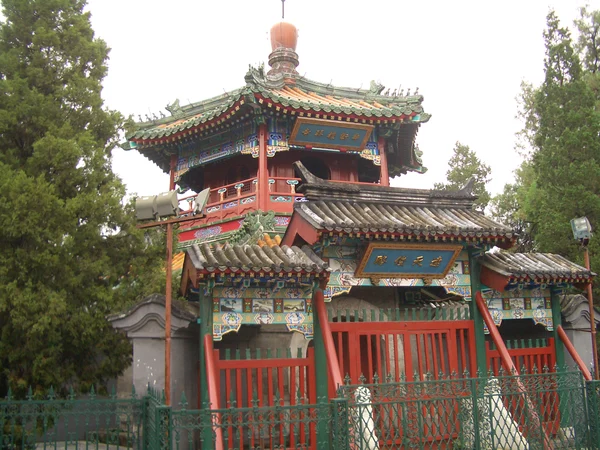
Official Beijing visitor information describes Niujie Mosque as a major historic mosque. Its Chinese courtyard form, timber halls and Arabic calligraphy reward close observation. Use the designated visitor entrance, avoid congregational prayer and do not promise access to the prayer hall.
Dongsi Mosque: Central-Beijing Heritage
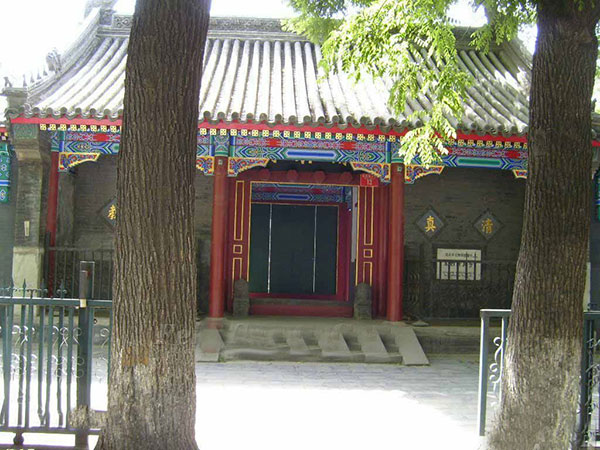
Dongsi Mosque is linked with Beijing's long Muslim history and remains a community institution in a central urban setting. Older sources disagree on precise founding details, so focus on surviving architecture and present use. Confirm the street entrance and current visitor policy before making a detour.
Huashi Mosque: A Neighborhood Site
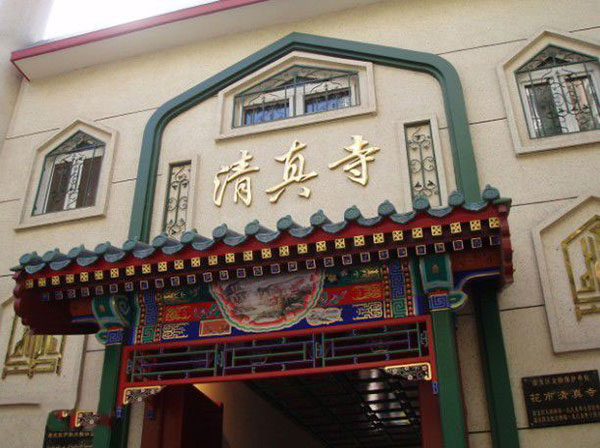
Huashi Mosque, often translated as Flower Market Mosque, serves a historic community east of the old city centre. It is smaller and less visitor-oriented than Niujie; an exterior view may be the appropriate limit. Do not rely on a century-old date as proof that all visible fabric is original.
Madian Mosque: North-City Community History
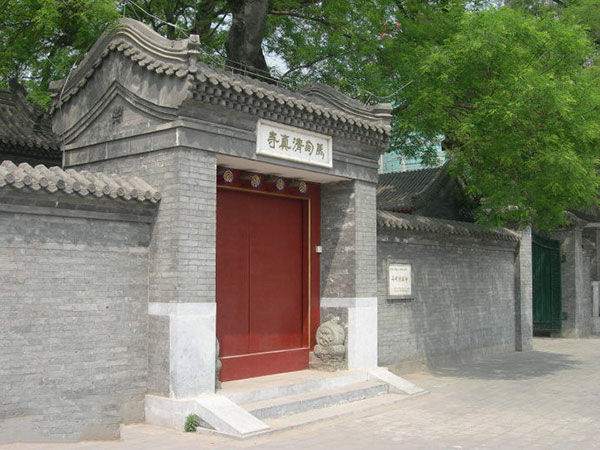
Madian Mosque reflects Muslim life beyond the best-known Niujie area. Repairs and rebuilding complicate a simple construction date, and practical access may be limited. Visit only with current confirmation, keep the local congregation's needs first and use the real neighborhood context rather than an unrelated tourist-group image.
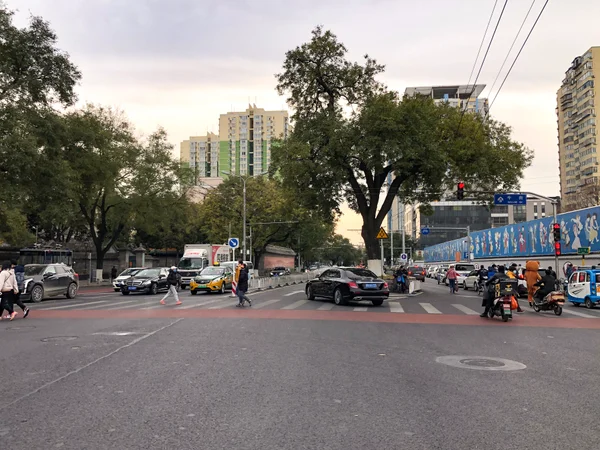
Morning at Niujie Mosque and the surrounding streets
Lunch at a currently verified qingzhen restaurant, followed by one nearby city sight; add another mosque only if access is confirmed and travel time remains realistic.
From $ 1226
From $ 2183
Editorial accountability
Hu Lei, CEO. The named owner is responsible for travel-planning accuracy and escalation of time-sensitive checks.
Yuntian Travel (Yunnan) Group is identified in its corporate profile as a licensed professional inbound travel service provider based in Kunming, China. Registration and travel-service documents can be requested before booking.
Page-specific references where cited, official destination, transport and entry notices, YUNSKY route-planning records, and direct provider confirmation before a booking is finalized.
Content is reviewed when rules, transport, access, pricing or route conditions change. Final availability and operating details are reconfirmed for each traveler’s dates.
Quality review: Page updated:
