Your China & Yunnan Travel Experts

Yunnan hiking ranges from a selected lakeside or mountain path to an overnight gorge trek and more demanding journeys in the northwest. Choose the actual route before judging difficulty. A destination name, a cable car or an “easy trek” label does not describe ascent, exposure, footing, elevation or the distance to a practical exit.
Start with the time you want to spend walking, your previous experience and the kind of landscape you value. Then use the Yunnan map to decide whether the route fits your wider journey. A memorable walk does not have to be the longest or most remote option.

| Interest | Route type to investigate | Main planning question |
|---|---|---|
| Flexible walking from a town base | A selected Dali or Erhai-area path | What is the surface, permitted route and return arrangement? |
| Mountain landscape with a defined outing | A specific Cangshan route | What walking and elevation remain after any transport? |
| A walking journey with an overnight | Tiger Leaping Gorge high-trail section | What are the current start, finish, accommodation and exits? |
| A focused northwest trekking trip | A locally confirmed route in the Meili or Yubeng area | How many access, walking and return days does the full journey need? |
The last category requires its own detailed preparation. This article does not publish a remote track, current opening claim or generalized clearance to enter a particular area. Choose a knowledgeable provider for the exact route and confirm access for your dates.
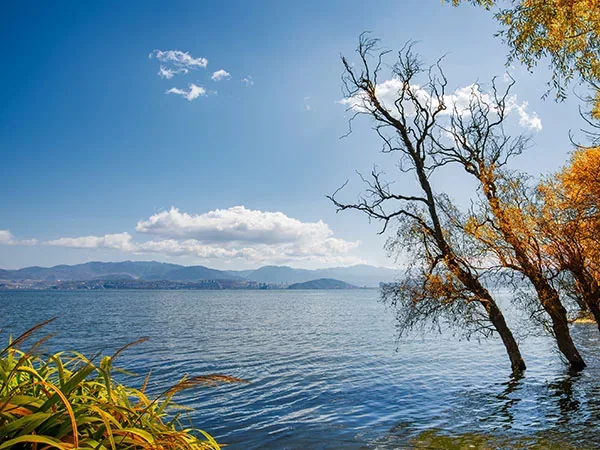
A Dali stay can support different walking interests without changing hotels every night. A selected shore walk and a mountain path are not equivalent outings, so decide which you want. Ask how far you walk, where transport ends and whether you return by the same route.
For Cangshan, establish the named route, elevation, steps, operating arrangements and shortening options. A cable-car component can change access but does not establish that the rest is effortless. The altitude comparison helps distinguish the town from the higher outing.
If the group has mixed interests, a town-and-lake day may be easier to divide than a remote route. Agree a meeting place and transport rather than assume non-walkers can wait comfortably at any trailhead.
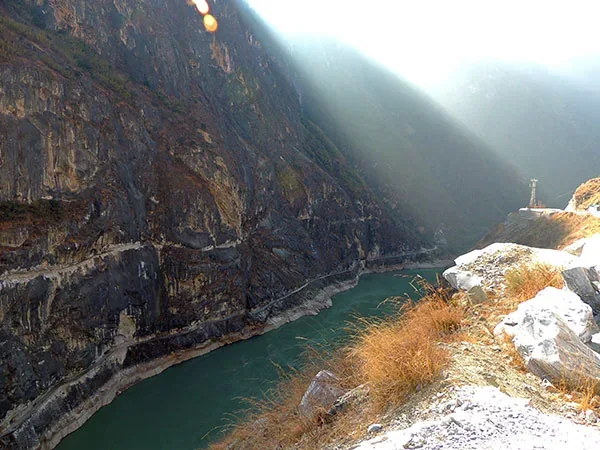
Use the gorge hiking guide to separate a scenic stop from the high trail. An overnight walk requires accommodation, food, luggage handling, a defined exit and onward transport. Those are part of the experience, not details to solve at the end of the first day.
Ask whether quoted walking times are moving times or whole-day estimates. Rest, photography and meals add to the duration. A route that appears manageable on paper can become a long day when the transfer from Lijiang is included.
Do not add a demanding lower-gorge descent automatically after finishing a high-trail section. It is a separate route decision with its own current access and physical demands.
A Meili-area or Yubeng-focused trip can be a reason to visit Yunnan in its own right. It is not a routine spare day from Shangri-La. Identify each overnight place and distinguish reaching the walking base from completing a trail.
Older trekking lists may contain outdated guesthouse, access or route descriptions. Treat them as ideas for further investigation, not operating instructions. Your final plan needs current local information and an accurate description of the selected itinerary.
For a short holiday, removing a distant route may leave a better balance between walking and experiencing Yunnan's towns. The itinerary guide helps test this against the number of nights you actually have.
Ask for distance, total ascent and descent, highest point, footing, exposure and practical exit options. Add expected moving time and the longest gap between reliable support points. These measures are more useful than a one-word grade.
Explain your own experience in comparable terms: the type of terrain you have walked, how long you enjoy walking and whether you are comfortable with uneven or exposed paths. Do not claim that fitness alone resolves every issue, especially on a higher route. Obtain individualized professional advice when health considerations are relevant.
For families and mixed-ability groups, check whether the route can genuinely be shortened and how everyone returns. “Walk as far as you like” is not a complete plan when the pickup is at a different finish point.
Allocate the journey to the starting area, the walking days and the journey onward separately. If the trip has seven days including arrival and departure, a two-day trek can occupy more than two days once its access and recovery of luggage are included.
Ask about the actual accommodation, room sharing, bathrooms, meals, water arrangements and any support included. For special diets, use the Muslim travel planning questions or state your other needs explicitly. Do not assume remote stops provide the same options as a city.
Compare quotes with the same route, number of nights, guiding level and transport. The Yunnan travel-cost guide helps distinguish shared services from per-person accommodation and meals. Equipment rental, baggage movement and optional route charges should be visible where applicable.
Consult the regional climate guide, then use current information for the actual trail. Conditions at your hotel can differ from those on the walking route. Local closures and route instructions take precedence over a saved itinerary or an older online account.
Agree an alternative before departure: a shorter currently suitable route, a viewpoint visit after its own checks, or a cultural day. Do not replace a closed track with an unverified shortcut. A changed plan can still provide a worthwhile Yunnan day.
The travel-tips guide provides a practical checklist for names, luggage, clothing and contact arrangements. Carry what the confirmed route requires, and avoid treating an equipment list as a substitute for a sound route choice.
There is no single route suitable for all beginners. Start with a locally confirmed short walk whose surface, ascent and return options match the group, then compare more demanding routes using specific measures.
It depends on the walking you choose after transport. Ask for the exact path and total demand rather than infer it from the cable-car ticket.
A viewpoint visit does not. A chosen high-trail itinerary may use an overnight or another arrangement, which must be planned with its start, finish and group pace.
Only after allocating the separate access, walking and onward days. It is better treated as a focused journey than a quick addition between city stays.
Needs differ by route, access, experience and language. For a demanding or unfamiliar itinerary, local route knowledge and support can be important. Confirm any requirements for the exact area.
Reassess using local conditions and current guidance, and choose an agreed suitable alternative. Do not preserve the original route by ignoring closures or improvising an unverified path.
Compare Yunnan route ideas for the surrounding stays. To make walking the main interest or add one manageable outing, request a Yunnan itinerary with a clearly described walking route and explain your experience and preferred pace.
Editorial accountability
Hu Lei, CEO. The named owner is responsible for travel-planning accuracy and escalation of time-sensitive checks.
Yuntian Travel (Yunnan) Group is identified in its corporate profile as a licensed professional inbound travel service provider based in Kunming, China. Registration and travel-service documents can be requested before booking.
Page-specific references where cited, official destination, transport and entry notices, YUNSKY route-planning records, and direct provider confirmation before a booking is finalized.
Content is reviewed when rules, transport, access, pricing or route conditions change. Final availability and operating details are reconfirmed for each traveler’s dates.
Quality review: Page updated: