Your China & Yunnan Travel Experts

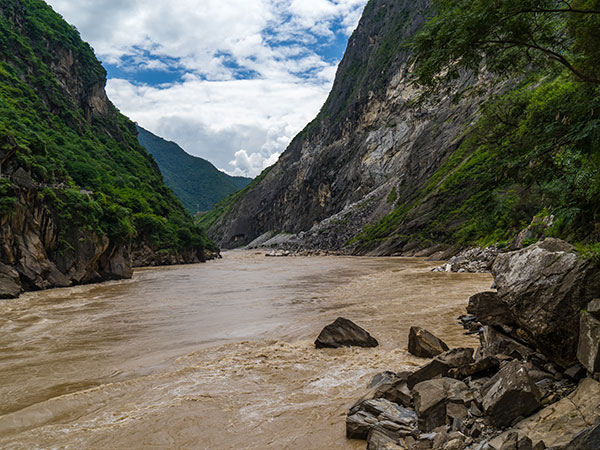
Tiger Leaping Gorge in Yunnan can mean a viewpoint visit, a selected walk or an overnight journey on the high trail. Choose that format first. A short scenic stop does not provide the same experience as trekking above the gorge, and an attraction ticket does not resolve every trail, transfer or accommodation arrangement.
The gorge lies along the Jinsha River between the Jade Dragon and Haba mountain areas. It is often considered when traveling between Lijiang and Shangri-La, but proximity to a route does not make every type of visit a convenient stop on the way.
| Format | Main experience | What must be planned |
|---|---|---|
| Selected viewpoint visit | See the canyon from a defined visitor area | Exact access, steps, entry and return transport |
| Chosen walking section | Spend time on a specific part of the landscape | Start, finish, route demand and a reliable pickup |
| Overnight high-trail hike | Make walking the central activity across two days or more | Current route, accommodation, luggage, meals and onward transport |
Choose the first option if the main interest is a view within a road itinerary. Choose a hike because the walking itself is a priority. Do not book the overnight version only because it sounds like the more complete experience; it requires a different commitment.
The commonly discussed high trail includes ascending sections, exposed terrain and an uneven walking surface. Names such as the “28 Bends” describe a known part of the route, not a universal measure of difficulty for every itinerary. A guide or local provider should describe the exact current section you would walk.
Ask for walking distance, estimated moving time, ascent and descent, surface, exposure and the longest stretch without a practical exit. Moving time excludes meals, rests and photographs, so the whole day will be longer. Compare that description with your group's preferences using the Yunnan hiking guide.
This article does not certify that a route is currently open. Local access and conditions must be checked for the actual date. Do not use an old online trail description as authority to bypass a closure or improvise a replacement.
A typical planning structure places the transfer and first walking section on day one, an agreed overnight stop in the trail area, then a second selected section and pickup on day two. The exact trailhead, accommodation and exit should be fixed together after local checks.
Do not choose the overnight solely by a well-known guesthouse name in an older account. Confirm its current operation, room arrangement, meal options, access and position on the selected route. An extra walking segment late in the day can change whether that stop is practical.
On day two, avoid adding a separate lower-gorge descent just because it appears close on a map. Establish the current access, extra ascent and descent, additional charges if any, and the effect on pickup timing. It may be better left out.
If your group wants a gentler pace, discuss shortening the chosen trail section or adding time. An additional night does not automatically reduce difficulty unless the actual daily route changes.
Decide whether you return to Lijiang or continue toward Shangri-La. Ask who holds the main luggage, where you collect it and what happens if the walking plan changes. A through-journey can be useful, but a bag cannot simply be assumed to follow you without an arrangement.
Agree a precise pickup location and a contact method. A broad “gorge exit” description can refer to different places. Keep the Chinese place name and meeting instructions available using the approach in the Yunnan language guide.
Read the transport planning guide to compare the entire day from one hotel to the next. Do not place an inflexible evening flight after a trek whose finish depends on pace, weather and road conditions.
Carry equipment appropriate to the confirmed route and forecast, including footwear you have already used, layers, rain protection and a manageable daypack. Determine food and water arrangements with the local provider before departure rather than assume every named stop is operating.
Ask about room type, bathroom arrangements, bedding, heating if relevant and meal times. Travelers with dietary needs should confirm the actual trail-area meal plan; the Muslim travel guide explains why remote-day arrangements need more detail than a city restaurant list.
Discuss what support is available if the walk must be shortened and how the itinerary handles local restrictions or an unavailable exit. These are practical route questions, not a reason to rely on reassuring labels such as “suitable for everyone.”
Use the regional weather guide for broad context, then check the gorge's local conditions. Heavy rain, unstable ground or closures can change the plan. Follow current local instructions and do not substitute an unverified path.
If the hike is unsuitable, a viewpoint visit may be an alternative only after its own access and conditions have been checked. Another option is to remain in Lijiang for Naxi cultural visits. A fallback should suit the group's interests and practical circumstances.
For cost comparisons, separate transport, guiding, accommodation, meals, admission and any additional route charges. Use the Yunnan budget guide to compare the same walking plan instead of comparing an overnight trek with a scenic day trip.
Yes, a defined viewpoint visit is a different option to investigate. Confirm its current access and physical demands; avoiding a trek does not automatically mean a step-free outing.
Two days is a common planning framework, but the selected start, finish, overnight and group pace determine the schedule. Discuss the exact route rather than use the label as a guarantee.
Arrange storage or onward transfer for main luggage and carry what the confirmed walk requires. Establish collection and contingency arrangements before leaving the original hotel.
Potentially, with a confirmed finish, pickup, luggage plan and workable road journey. Keep the destination arrival realistic and avoid assuming that every walking itinerary exits at the same point.
Do not assume it does. Ask about the exact areas and any separate access or local charges for the chosen route. Older descriptions may not reflect current arrangements.
Consider a currently accessible viewpoint or a different Lijiang day, after checking conditions and group preferences. Do not improvise a walk simply to preserve the original plan.
Read the Yunnan itinerary guide before allocating the hiking nights. Compare Yunnan route ideas for the surrounding city stays, or request a journey with a clearly defined gorge visit or hike.
Editorial accountability
Hu Lei, CEO. The named owner is responsible for travel-planning accuracy and escalation of time-sensitive checks.
Yuntian Travel (Yunnan) Group is identified in its corporate profile as a licensed professional inbound travel service provider based in Kunming, China. Registration and travel-service documents can be requested before booking.
Page-specific references where cited, official destination, transport and entry notices, YUNSKY route-planning records, and direct provider confirmation before a booking is finalized.
Content is reviewed when rules, transport, access, pricing or route conditions change. Final availability and operating details are reconfirmed for each traveler’s dates.
Quality review: Page updated: