Your China & Yunnan Travel Experts

To travel around Yunnan, compare trains for the main city-to-city legs and road transport for the hotel transfers, villages and scenic outings beyond the station. Flights may be worth comparing for more distant regions, depending on your dates and full route. Start with the overnight stops, then count the whole hotel-to-hotel journey. This Yunnan transportation guide connects the main choices with detailed route guides and the high-speed train guide.
Start with your Yunnan itinerary and overnight stops. A fast intercity journey does not automatically leave a full sightseeing afternoon. This guide helps you compare arrangements and build realistic transfer days; actual departures, fares, booking rules and service availability must be checked for your dates.
Make a route map before comparing tickets. The Yunnan map helps separate the northwest corridor from Yuanyang and Xishuangbanna. Destinations within the same province may belong to different journeys.
| Option | When to compare it | What can change the decision |
|---|---|---|
| Train | Travel between cities with suitable services for your date | Station location, departure time, available seats and both hotel transfers |
| Flight | Arrival, departure or a longer regional connection | Airport transfers, check-in, baggage, connection protection and total elapsed time |
| Private car | A rural journey, family transfer or planned stops along a road route | Vehicle capacity, road conditions, breaks, agreed hours and what the quote includes |
| Public bus or shared transfer | A route with a confirmed service that matches your plans | The exact terminal, last return, luggage arrangements and onward travel from the stop |
You can combine these choices. Independent rail travel between cities, a private transfer to a rural hotel and a guided excursion on one day are compatible arrangements. Choose a full private itinerary when coordinating the whole journey has value for your group, rather than assuming every city stay requires a car waiting outside.
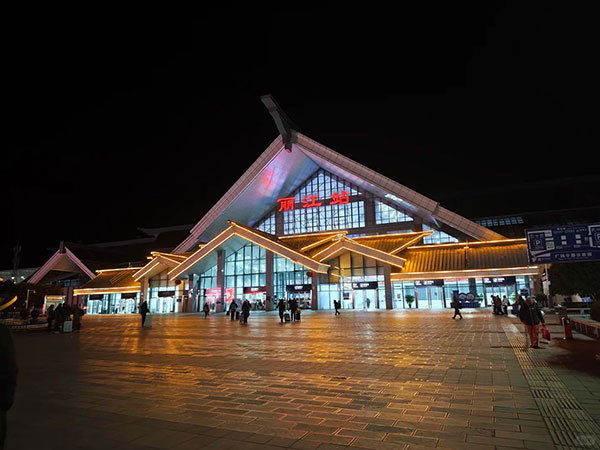
Rail is a useful first comparison for this leg. Start with the departure station shown on the actual service, not simply “Kunming.” A hotel, an airport arrival and a railway station are three separate locations. If you land first, allow for arrival formalities, baggage and the onward transfer before selecting a departure.
At the other end, reaching Dali's station is not the same as arriving at a room in Old Town or beside Erhai. Save the hotel's exact address and confirm the pickup and luggage arrangements. The Dali accommodation and trip guide helps explain why the base you choose changes the rest of the day.
Compare the rail options for your date with a direct road transfer for your actual group. A car can reduce luggage handling between hotels, while a train may suit travelers who are comfortable coordinating the journeys to and from stations. Price both complete arrangements before choosing.
A village stop can be a reason to select a road journey, but it adds time. Agree which stop, how long you will spend there and where luggage will remain. Do not describe a drive with several sightseeing stops as though it were the same service as a direct transfer.
For the arrival afternoon, plan a meal and a short walk near your accommodation. Use the Lijiang trip-planning guide to choose between a central old-town base and other town or village locations.
If your outbound flight leaves Kunming early, compare returning the previous day with attempting a same-day connection. These produce different itineraries and costs. A night near the airport may fit a departure, while a city hotel is more useful if you still want sightseeing time.
Read the Kunming planning guide before deciding that a short connection is also a city visit. Your final day's plan should follow the confirmed departure location and the amount of time you can actually use.
Use six lines for every hotel change: check-out and packing, travel to the terminal, pre-departure time, the main journey, arrival and luggage handling, and travel to the new hotel. Add meals and breaks where appropriate. This makes options comparable and reveals when a convenient-looking ticket creates an awkward day.
| Part of the journey | Example input | Replace with |
|---|---|---|
| Hotel check-out and packing | 30 minutes | Your group's actual preparation time |
| Hotel to station | 45 minutes | A dated estimate for your hotel and station |
| Before departure | 60 minutes | Current provider requirements and the margin you choose |
| Main train journey | 120 minutes | The duration on your selected service |
| Arrival and exit | 20 minutes | Your group's luggage and access needs |
| Station to hotel | 45 minutes | The destination pickup and hotel location |
These chosen inputs total 320 minutes, or 5 hours 20 minutes. They are a calculation example, not verified journey times or recommended minimum connection allowances. The point is that a two-hour main journey can occupy a much larger part of your day once every component is counted.
Only book a timed afternoon attraction when the complete sequence works. If a delay would spoil an expensive or irreplaceable experience, move that experience to a full day in the destination.
Use the booking provider's established process when passenger details are needed. Keep offline copies of addresses, booking references and meeting instructions available during the trip.
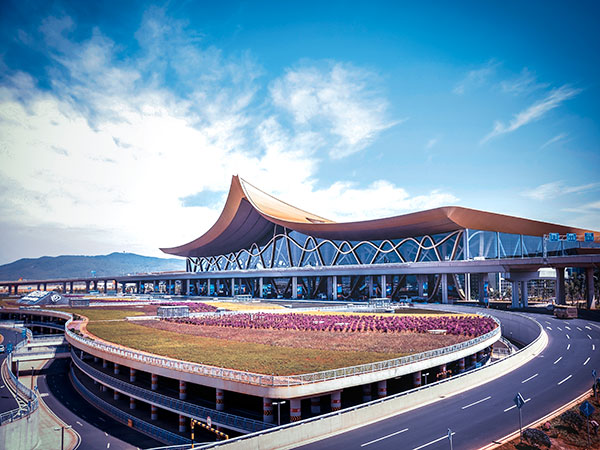
Flights need the same whole-journey comparison. A short flight can still involve two substantial airport transfers. Check whether a connection is protected on one booking or consists of separate tickets, and what happens if the first journey is delayed. Avoid assuming a railway arrival and a later flight form a protected connection.
A hotel can be well located for sightseeing yet inconvenient with large suitcases. In Dali and Lijiang, ask where a vehicle can legally and practically stop, how far the room is from that point, whether the walk has steps or uneven surfaces, and whether luggage help is arranged.
For a lakeside property, confirm the actual village. A room described as “at Erhai” could be far from the departure point or outing you have in mind. For a village base around Lijiang, check evening meal options and the journey back after activities.
For broader preparation, use the Yunnan travel-tips guide, then confirm current booking and access details with the companies you choose.
Separate a direct city-to-city connection from a day built around road stops. Compare the services available for your dates with a quoted road route, and decide whether the scenery or an excursion justifies the extra time. Keep the arrival day light if you are continuing into a highland stay.
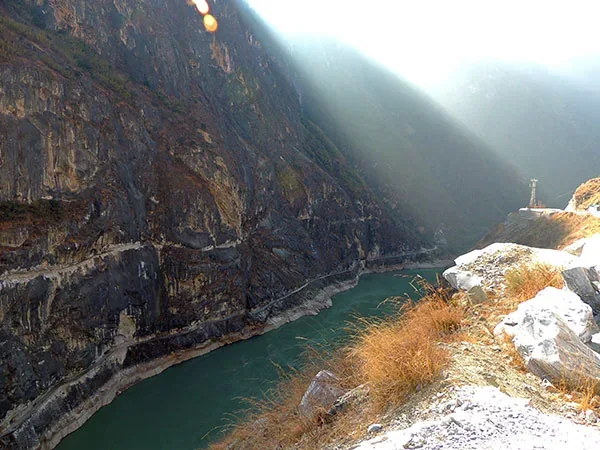
The Shangri-La itinerary guide helps establish the purpose of the extension. If Tiger Leaping Gorge is part of it, specify a viewpoint visit or the exact hiking route. A drop-off at a scenic entrance is not an arrangement for an overnight trek.
Use the Tiger Leaping Gorge guide for route context. Confirm the current trail access, start and end points, luggage plan, accommodation and onward pickup separately. Do not rely on historical bus times for the last journey of the day.

Reaching a town in southern Yunnan is not the same as reaching a terrace-area guesthouse. Consider the full journey to the accommodation, the transport between viewpoints and the departure afterward. A rail component, if useful for your route, still needs an onward road plan.
The Yuanyang trip-planning guide explains the region. For early photography, confirm pickup times and the exact lodging area with a local provider. Do not add a dawn outing after a late arrival simply because both appear on separate calendar days.
Choose the Xishuangbanna region for the experiences you want there, then compare the flights, rail and road arrangements available for the route and date. Check the destination city and onward transport to individual attractions. Being connected to a regional gateway does not make every forest or village visit a short local journey.
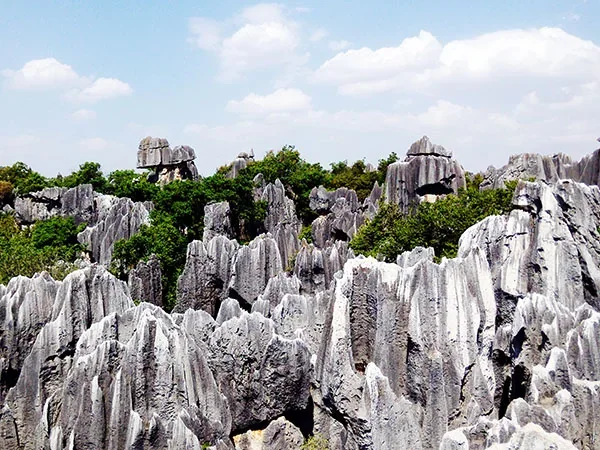
For Stone Forest or a mountain day from Lijiang, use a separate excursion plan. The Stone Forest day-trip guide and Jade Dragon Snow Mountain guide help identify the visits; recheck current access, ticket components and transport before booking.
For rail, add tickets for every traveler, the transfer to the departure station, the transfer from the arrival station and any booking charges. For a car, ask whether the quote includes the driver, fuel, tolls, parking, waiting, agreed stops and any extra hours. An English-speaking driver and a separate guide are different services.
A comparison example: suppose your planning sheet uses RMB 180 per train ticket, RMB 80 for the first hotel transfer and RMB 100 for the second. Two travelers would total RMB 540; four travelers would total RMB 900, assuming the same two vehicles can carry each group and its luggage. Compare those sums with a complete car quote for the same route.
These are hypothetical inputs chosen to explain the calculation, not market prices or offers. Replace every input with a dated quote and confirm vehicle capacity. More travelers can change the comparison, but a larger group may also require a larger vehicle.
When comparing classic Yunnan tour arrangements, check which transport, guiding and local excursions are included before comparing the total with independent bookings.
On a seven-day trip with six nights, Kunming 1, Dali 2 and Lijiang 3 is one possible allocation. Arrival is Day 1, travel to Dali is Day 2 and travel to Lijiang is Day 4. That leaves full days in each later base, but no full sightseeing day in Kunming.
On a ten-day trip with nine nights, Kunming 2, Dali 3 and Lijiang 4 provides a full Kunming day and more flexibility after each transfer. The detailed ten-day plan shows the day-by-day structure. If departure requires returning to Kunming, move the final night there and shorten another stay.
Check the seasonal Yunnan planning guide before fixing weather-dependent road days. Fewer hotel changes can be particularly useful when rain or visibility makes the order of outings uncertain.
If you prefer one coordinated plan, explore private Yunnan tours and describe the transfers and outings you want included.
No. You can arrange city-to-city transport independently and use a car for selected transfers or rural outings. Compare the value of coordinating each part yourself with a complete arranged itinerary.
Not for every complete journey. Compare hotel departure to hotel arrival, including station transfers and pre-departure time. A faster main leg may still produce a less convenient day.
Possibly, if a suitable onward service and a realistic transfer sequence exist for your arrival. Allow for formalities, baggage and the journey to the correct departure point. An overnight stop can be the more workable choice after a late or uncertain arrival.
A planned road visit may fit, but define the activity first. A viewpoint stop and an overnight hike have different time, access, luggage and pickup requirements. Confirm the current route with the relevant providers.
Compare that option if it avoids a return journey. Check actual flights, connections, baggage and total cost for your dates. Different entry and exit cities are useful only when the full arrangements work.
Check the current sales window with the railway or your booking provider for the journey and passenger type. Do not treat an itinerary request or a quoted service as a confirmed ticket.
Provide the date, pickup and drop-off addresses, group size, luggage, planned stops and any seating or access needs. Ask for the vehicle, included services, cancellation terms and a clear meeting arrangement in reply.
List every hotel change and the six parts of each transfer, then remove activities that depend on unrealistic arrival times. If you want help connecting independent city stays with selected rural journeys, request a Yunnan route with transport arrangements. Include your likely gateways and actual luggage and group needs.
Planning basis
Route context was reviewed on September 6, 2026 using the linked YUNSKY city, destination and excursion guides. The calculations use explicitly hypothetical inputs. This article does not publish a live timetable, a current fare list or guaranteed connections; confirm those details with the operating and booking providers for your trip.
Editorial accountability
Hu Lei, CEO. The named owner is responsible for travel-planning accuracy and escalation of time-sensitive checks.
Yuntian Travel (Yunnan) Group is identified in its corporate profile as a licensed professional inbound travel service provider based in Kunming, China. Registration and travel-service documents can be requested before booking.
Page-specific references where cited, official destination, transport and entry notices, YUNSKY route-planning records, and direct provider confirmation before a booking is finalized.
Content is reviewed when rules, transport, access, pricing or route conditions change. Final availability and operating details are reconfirmed for each traveler’s dates.
Quality review: Page updated: