Your China & Yunnan Travel Experts

Shangri-La, Yunnan is a highland stay with its own climate, cultural setting and practical requirements. Add it because you want that experience, rather than because it is the next name after Lijiang. Two nights give one full day between arrival and departure; three nights allow a town-and-monastery focus plus a separate landscape outing, subject to your group's needs and current conditions.
Start with the Shangri-La destination overview and the Yunnan altitude comparison. A gentle-looking itinerary can still involve a higher overnight location and steps. Individual health suitability requires advice specific to the traveler; a tour description cannot establish it.

The main visitor base is associated with Dukezong and nearby modern-city areas. Songzanlin Monastery and selected landscapes add experiences different from Dali's lake setting or Lijiang's old towns. Farther northwest journeys toward the Meili area are another commitment, not spare-time sightseeing within the town.
If you have only a week for Kunming, Dali and Lijiang, adding Shangri-La compresses other stays. Remove a base or add days when the highland setting is a priority. The Yunnan itinerary guide shows how nights, rather than attraction counts, determine the pace.
| Stay | Possible sequence | Decision before booking |
|---|---|---|
| Two nights | Arrival with a light town orientation; a selected cultural day; departure | Is one full day enough for your main purpose? |
| Three nights | Arrival; town and monastery focus; one landscape outing; departure | Which exact landscape route and walking demand fit the group? |
| Longer stay | Add flexibility or a separately planned farther journey | Are the extra hotel locations and road days justified? |
These are planning examples, not a statement that a particular pace is medically suitable. Keep the arrival day free of ambitious sightseeing commitments. A later arrival may leave only time to settle in and eat, even when the itinerary labels it a “Shangri-La day.”
If a landscape outing cannot proceed, choose a shorter local cultural alternative only when it suits the group's preferences and conditions. Do not substitute an even higher or more remote location simply to keep the day full.
Use a walk in Dukezong to look at the street layout, shops and local activity, with time to pause. Ask a guide to distinguish older surviving elements, restored buildings and modern visitor businesses. Historical appearance alone does not tell you the age or original use of a structure.
For accommodation, investigate the specific lane, stairs, heating arrangements and vehicle meeting point. A central old-town position may involve carrying luggage, while a road-accessible property may better match your practical needs. Quietness and room comfort should be confirmed for the actual property.
The Yunnan history guide provides a broader way to interpret trade and cultural exchange. For contemporary visits, the guide to regional communities is a reminder that living places are more than scenic settings.
Songzanlin is a Tibetan Buddhist monastery near the visitor base. Approach it as an active religious setting as well as an architectural visit. Ask about current visitor entry, the appropriate route, photography and whether particular spaces are open. Respect instructions given on the day.
Clarify how the transport and entrance arrangements work, how much walking and how many steps your chosen route includes, and where your guide will provide interpretation. Do not assume a scenic shuttle removes every physical demand or that all interiors can be photographed.
Allow time for an explanation of the buildings and their use instead of approaching the visit only as a sequence of viewpoints. A shorter, well-interpreted visit can be more meaningful than adding several religious sites without context.
Potatso and the Napa Lake area are examples of landscape interests often considered around Shangri-La, but their names do not describe a single standard walking experience. Ask which area is currently accessible, what internal transport is involved and how far you will walk. The scene around a wetland or seasonal water body can differ considerably across dates.
Read the regional climate guide and check the conditions for the outing itself. The town forecast does not establish road access, visibility or the state of a walking surface elsewhere. Photography plans should allow alternatives rather than promise a particular landscape appearance.
For a more demanding walk, consult the Yunnan hiking guide before arranging it as a routine day trip. Exact route knowledge matters more than whether the destination name sounds familiar.
Ask about room temperature control, stairs, bathroom arrangements and the distance from vehicle access. If an early departure is planned, discuss breakfast or a practical meal alternative. These details help compare accommodation more meaningfully than a broad “traditional hotel” label.
Menu names do not establish ingredients or preparation. Use the food guide for ordering questions and discuss any necessary dietary arrangements before booking remote outings. For Muslim travel needs, verify the actual provider and prayer arrangements along each day rather than assume the town or hotel offers everything required.
For costs, request the vehicle, guiding, admission, internal transport and optional activity components separately. A lower total can reflect fewer inclusions or a different route. The Yunnan cost guide shows how to compare like-for-like arrangements.
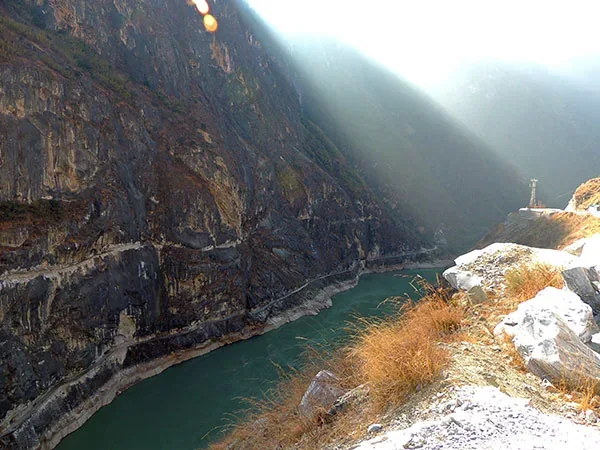
Build the onward plan around the actual service or road itinerary. A direct transfer and a transfer with a gorge stop are different days. If the Tiger Leaping Gorge is included, state whether it is a viewpoint visit or part of a trek and resolve luggage handling.
A journey toward Meili needs its own overnight locations and road days. Do not add it to a town stay without checking how it changes the return or onward route. If the extra travel would remove your only full day in Shangri-La, decide which experience matters more.
Use the transport guide and Lijiang planning guide together to allocate the city change. Keep the final departure day free of an outing whose timing is uncertain.
It can be when the highland and Tibetan Buddhist cultural setting interests you and you allocate a proper stay. It is optional; a focused Dali-and-Lijiang trip remains a complete itinerary.
They provide one full day between arrival and departure. Choose them for a focused visit, or add a night for a separate landscape day and more flexibility. Individual suitability depends on more than the number of nights.
No. Compare the actual hotel's access, room conditions and connection to your activities. A property outside the lanes may be more convenient for luggage or mobility needs.
Ask for the exact current access route, steps and transport before deciding. Do not use a general attraction label as evidence that the whole visit will be easy or accessible.
No. Conditions vary by location and date. Choose a worthwhile cultural and landscape itinerary with alternatives, rather than base the entire stay on one expected photograph.
Potentially, with the exact walking route, nights, transfers and luggage arrangements planned together. A viewpoint stop on a road journey is a different arrangement from an overnight trek.
Compare classic Yunnan routes with the nights you want in each place. If Shangri-La is central to your interests, request a route that gives the highland stay enough time and include your walking preferences, meal needs and intended onward journey.
Editorial accountability
Hu Lei, CEO. The named owner is responsible for travel-planning accuracy and escalation of time-sensitive checks.
Yuntian Travel (Yunnan) Group is identified in its corporate profile as a licensed professional inbound travel service provider based in Kunming, China. Registration and travel-service documents can be requested before booking.
Page-specific references where cited, official destination, transport and entry notices, YUNSKY route-planning records, and direct provider confirmation before a booking is finalized.
Content is reviewed when rules, transport, access, pricing or route conditions change. Final availability and operating details are reconfirmed for each traveler’s dates.
Quality review: Page updated: