Your China & Yunnan Travel Experts

Yunnan ethnic groups are best understood through specific places, people and activities, not a checklist of costumes. Bai-area culture around Dali, Naxi traditions around Lijiang, Dai cultural context in Xishuangbanna and Hani-associated terrace landscapes offer different starting points. None represents every person in that community or the whole province.
Use this guide to choose meaningful visits and ask better questions. It does not claim to speak for local communities or provide invented firsthand interviews. If listening to a particular practitioner or resident matters to your trip, arrange that encounter with clear consent and appropriate interpretation.

| Community or context | A region to investigate | A useful visitor focus |
|---|---|---|
| Bai | Dali and the Erhai area | Courtyard architecture, town life, crafts and food |
| Naxi | Lijiang and surrounding places | Dongba heritage, town history and music |
| Dai | Xishuangbanna and other relevant southern settings | Local religious, festival and everyday contexts |
| Hani | Yuanyang and the wider Honghe area | Terrace landscapes, villages and cultivation |
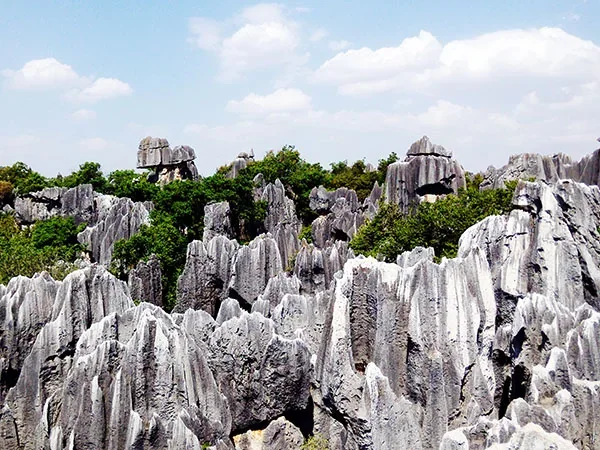
| Yi | Several parts of Yunnan, including Chuxiong and Shilin contexts | Place-specific traditions and festival interpretation |
| Hui | Kunming, Dali and other communities including southern Yunnan | Community history, food and religious life where visits are appropriate |
Han communities and many other communities are also part of Yunnan. Regional associations are not exclusive boundaries, and ethnicity does not establish an individual's beliefs, language or lifestyle.
A museum introduces selected objects and interpretation. A guided town walk explains a place and its current uses. A workshop offers a specific activity under agreed terms. A performance is a programmed event. These can all be worthwhile, but they answer different questions.
Ask what is actually included and who provides the explanation. If a visitor park combines several cultural displays, treat it as that particular presentation rather than evidence that every community lives in the same way. A staged encounter should be identified as such.
The Dongba museum guide and Naxi music guide show how two different formats can complement each other. Neither needs to be described as more “authentic” simply because it looks older or less polished.
In Dali, a town walk and a Bai-area village or craft visit can explore architecture and daily use of space. In Lijiang, combine a Naxi cultural introduction with an appropriate museum or music experience.
At Yuanyang, the relationship between fields, water and settlements is a meaningful subject. Do not treat residents as a background decoration for landscape photography. In Xishuangbanna, distinguish a visitor demonstration from a local observance when considering a water-splashing celebration.
For Muslim community visits, confirm the actual venue's expectations and access rather than assume religious spaces are ordinary attractions. A photograph of a mosque does not establish permission to enter.
Ask before entering homes, workshops beyond the public area, religious spaces or working fields. Ask before taking identifiable photographs, especially of children, worshippers and private activities. A ticket to a wider attraction does not automatically authorize every photograph.
If you want a conversation, allow the person to decline or continue working. Do not assume a resident is available as an unpaid guide. When a visit or demonstration is arranged, clarify payment, duration, photography and what the host has agreed to share.
Use the language guide for polite questions and clear communication. Avoid addressing someone in a language you assume they speak based on dress or appearance; ask the guide or person for the appropriate approach.
A handmade object can be a worthwhile purchase, but ask who made it, where and using what process. A shop display may include both local work and goods produced elsewhere. Price, age-like appearance and a dramatic origin story are not proof of provenance.
A hands-on workshop is a learning experience, not evidence that you have mastered or been initiated into a tradition. Ask about the maker's interpretation and acknowledge the limits of a short activity. Do not request access to private or religious practices simply because they would make unusual photographs.
The tea buying guide provides a related method: compare identifiable information with what is being sold, and avoid purchasing out of pressure or obligation.
One thoughtful visit with interpretation can be more useful than several quick stops. Reserve time for questions, meals and travel rather than fill a day with a list of community names. Use the Yunnan itinerary guide to give each region enough nights.
Ask whether guiding, interpretation, admission, materials and host payments are included. A vehicle-only quote does not provide the same service as a subject-focused cultural visit. Compare the actual arrangements using the budget guide.
For festival interests, the festival guide explains why the annual observance, a public program and a staged visitor event need separate date and access checks.
No single presentation can represent the province's many communities and individual lives. A park can be one interpreted visitor format when understood in that context.
No. Identity should not be used as proof of an individual's beliefs or practice. Ask relevant questions respectfully and avoid assumptions.
They offer different kinds of learning. Judge the explanation, consent and relevance to your interests rather than rank the format by appearance.
Ask before taking identifiable photographs, especially in private or sensitive settings. Being in a visitor area does not remove the need for consent.
State the subject and request an agreed encounter with appropriate interpretation, timing and compensation where relevant. Do not expect an unannounced visit to provide access.
Choose enough time for a clear subject rather than maximize the number. One interpreted visit and a related walk can be more informative than repeated short demonstrations.
Compare Yunnan itinerary ideas for the regions that interest you. To give cultural learning a clearer role, request a route with specific community, craft or history interests and the interpretation you need.
Editorial accountability
Hu Lei, CEO. The named owner is responsible for travel-planning accuracy and escalation of time-sensitive checks.
Yuntian Travel (Yunnan) Group is identified in its corporate profile as a licensed professional inbound travel service provider based in Kunming, China. Registration and travel-service documents can be requested before booking.
Page-specific references where cited, official destination, transport and entry notices, YUNSKY route-planning records, and direct provider confirmation before a booking is finalized.
Content is reviewed when rules, transport, access, pricing or route conditions change. Final availability and operating details are reconfirmed for each traveler’s dates.
Quality review: Page updated: