Your China & Yunnan Travel Experts

Yunnan festivals are best chosen by the community, place and kind of participation you want. A Dai New Year celebration in Xishuangbanna, a Yi-associated Torch Festival event and Dali's Third Month Fair are different regional experiences. They do not form one interchangeable province-wide program.
Choose the subject first, then confirm the local dates, venue and visitor arrangements for the actual year. A lunar-calendar label, an older photograph or a daily cultural-park performance is not a verified annual event listing.
| Festival interest | Regional context to investigate | What to distinguish |
|---|---|---|
| Water Splashing Festival | Dai New Year, especially Xishuangbanna contexts | Annual observance, public water event and staged visitor show |
| Torch Festival | Yi traditions in several local settings, with related observances among other communities | The specific community program, ceremony and public evening event |
| Third Month Fair | Dali-area gathering with Bai cultural context | The fair's actual calendar, market activity and visitor arrangements |
| Other local observance | The particular town, community or religious setting | Whether public participation is appropriate at all |
Use the regional communities guide to avoid treating a festival as a complete description of everyone in that community. A celebration is one moment in a much wider contemporary life.
Dai New Year is commonly associated with April in the modern calendar. Torch Festival descriptions often refer to the sixth lunar month. Dali's Third Month Fair uses a lunar-calendar name. These broad references help decide what to investigate; they do not establish a dated schedule for your trip.
Ask for the actual year, locality, start and finish dates, daily program and source of the information. An event in one town may not follow the same visitor schedule as another. Do not convert a lunar reference yourself and assume every local program is fixed by that result.
This guide does not publish an unverified annual calendar. The detailed Water Splashing Festival and Torch Festival guides explain the specific questions for those visits.
A large public event may be easier to locate and join, but can involve crowds, transport restrictions and a program designed for a broad audience. A smaller community observance may offer a different context, but access and participation should not be assumed.
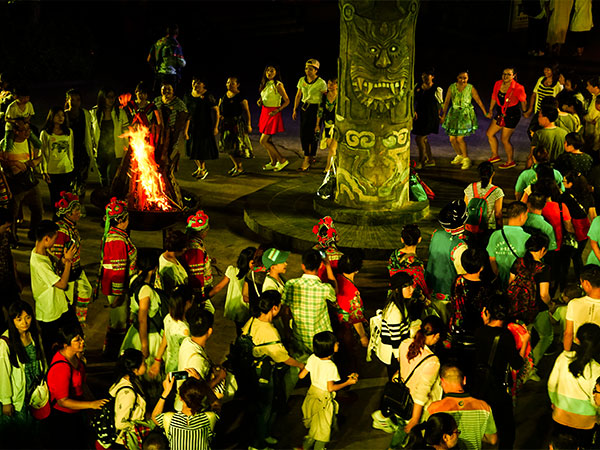
A visitor park can stage a water or dance activity outside the annual festival dates. That can be an enjoyable programmed experience when described accurately. It should not be sold or understood as evidence that the annual observance happens every day.
For a religious component, ask what visitors may observe, wear or photograph. A festive atmosphere does not remove the need to respect private spaces and people who are worshipping rather than performing.
Identify the main activity you want to attend and place the hotel and transport around it. A late evening celebration needs a return plan; an early gathering may require a different arrival night. Do not schedule a tight flight or long transfer immediately after an event with uncertain finish or road access.
Ask where vehicles can drop off and collect passengers, whether roads are affected and how you will communicate if the group separates. The language guide helps prepare exact place names and simple meeting instructions.
For families or travelers who prefer less crowding, consider a shorter attendance window or another cultural visit. You do not have to stay through the busiest program to make a meaningful trip.
Ask before joining an activity, photographing identifiable people or entering a non-public area. Do not assume traditional dress means someone is posing for visitor portraits. For water events, consent matters; for fire-centered events, follow the organizer's boundaries and instructions.
If a host explains a story or practice, do not generalize it to every community in Yunnan. Festivals can have different local interpretations. A good guide identifies whose explanation you are hearing and distinguishes local practice from a tourism presentation.
The Bai and Naxi guides provide examples of how to approach cultural subjects with more specific context.
A popular event can affect accommodation availability and prices, so compare actual dated offers and change terms. This article does not assert a fixed festival surcharge. The budget guide helps identify transport, guiding, admissions and optional activity charges.
Plan meals before the main event, including any Muslim travel requirements or other dietary needs. Crowds and changed access can make an improvised restaurant plan less convenient than on an ordinary day.
Use the Yunnan map and itinerary guide to decide whether the event fits your regional route. Traveling across the province for one uncertain program may be less useful than a deeper visit in the region where you already plan to stay.
Not necessarily in the modern calendar, and local programs can differ. Confirm the actual year, place and daily schedule rather than rely on a traditional-calendar label.
It is a different visitor experience. It may be enjoyable, but it should be understood as a programmed show rather than the annual observance.
Do not assume access. Ask about the specific setting, host expectations and whether observation or participation is appropriate.
Compare the actual hotel access and the return plan, particularly for evening programs. Being nearby can help, but exact road and pedestrian arrangements matter.
It depends on the actual crowds, activity, duration and family preferences. Ask for a practical description and consider a shorter participation window where appropriate.
Confirm the event identity, year, dates, venue, public access and program source, then the hotel, transport, meals and change terms. Keep an alternative cultural plan if the event changes.
Compare Yunnan route ideas with the region and dates you want. To investigate a specific celebration, request a Yunnan itinerary around a locally confirmed festival program.
Editorial accountability
Hu Lei, CEO. The named owner is responsible for travel-planning accuracy and escalation of time-sensitive checks.
Yuntian Travel (Yunnan) Group is identified in its corporate profile as a licensed professional inbound travel service provider based in Kunming, China. Registration and travel-service documents can be requested before booking.
Page-specific references where cited, official destination, transport and entry notices, YUNSKY route-planning records, and direct provider confirmation before a booking is finalized.
Content is reviewed when rules, transport, access, pricing or route conditions change. Final availability and operating details are reconfirmed for each traveler’s dates.
Quality review: Page updated: