Your China & Yunnan Travel Experts

Bai people in Yunnan are closely associated with the Dali and Erhai region, but Bai culture is not one uniform visitor performance. A useful introduction can combine town architecture, a clearly arranged craft encounter and a meal, while recognizing that homes, beliefs and daily routines differ between people and places.
Start with Dali trip planning to choose your base and available time. A focused visit to Xizhou or another specifically arranged setting can teach more than a hurried circuit of several places advertised under the same cultural label.
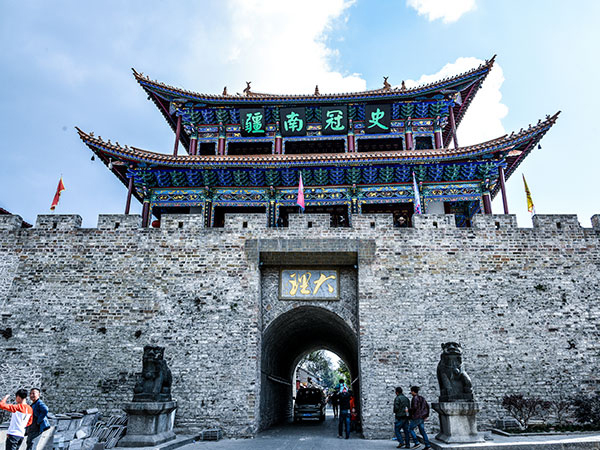
Dali's cultural setting includes historical kingdoms, Buddhist monuments, trade and contemporary town life. These layers should not be reduced to a claim that every visible building or custom has remained unchanged for centuries. The history guide helps distinguish earlier periods from the present townscape.
The Bai association with the region does not mean every resident has the same identity or speaks the same language. Use the regional communities guide for broader context and ask how the particular host or guide understands the subject being presented.
Xizhou is a useful place to investigate Bai-area residential architecture. Rather than photograph only decorative facades, ask about the arrangement of rooms, courtyards, entrances and screen walls where these are explained and accessible. Those relationships show how a house was organized.
A building may be a private home, a visitor venue, a shop or adapted accommodation. Identify its current use and ask what is old, repaired or newly added. An attractive open doorway is not automatic permission to enter.
| What you see | A question that adds understanding |
|---|---|
| Courtyard and room arrangement | How did the spaces serve the household, and how are they used now? |
| Painted or carved details | Who made them, and what interpretation is supported here? |
| A restored facade | Which elements survive and which have been renewed? |
| A visitor demonstration | What has been selected or adapted for this presentation? |
The Dali guide helps combine this interest with a selected Erhai outing without spending the day crossing between distant stops.
Tie-dye is a well-known craft interest in the Dali region. Ask which workshop you will visit, who provides the explanation and whether you observe or make something. A short demonstration and a hands-on session are different activities with different time requirements.
For participation, clarify the material, technique, design choices, drying or collection time and the finished item you take away. Ask whether materials and any later delivery are included. Do not assume the most elaborate display piece is what a beginner session produces.
A craft shop may sell both work made there and products sourced elsewhere. Ask about the specific item and maker when provenance matters. A purchase should support something you understand, not rely only on the word “traditional.”
Bai-area food interests can include dairy preparations such as rushan and local baba versions, with recipes and serving styles varying. Use the food guide to ask whether the actual dish is sweet or savory and what ingredients it contains.
A three-course tea presentation may be offered as an explained cultural activity. Ask what the host intends to show and whether it is a visitor demonstration. Do not assume it is a routine practiced identically in every household.
The Yunnan tea guide helps distinguish tea products from the ceremony or hospitality setting in which they are served. A cultural story and a product-quality claim are separate matters.
Begin with the exact place and purpose: architecture, a workshop or an arranged conversation. Add a meal and a selected lakeside or town walk if they fit the same area. Leave enough time to listen instead of moving on as soon as a photograph is taken.
For a family, a clearly defined activity may hold more interest than several similar house interiors. For photographers, ask about permitted areas and consent before building the schedule around portraits. For travelers who prefer slower pacing, choose fewer transfers and a longer stay in one town.
The transport guide explains how to count pickup, travel and the return from the actual hotel. A Dali-area label does not establish a short journey from every lakeside property.
Ask before entering private areas or photographing people. If a conversation or demonstration is arranged, clarify duration, interpretation, any payment and the host's boundaries. Do not request a private ritual simply because it sounds like a distinctive travel experience.
Compare admission, guiding, workshop materials and transport separately using the budget guide. Confirm current visitor access at the specific property; a historic house listed in an older account may have a different use or entry arrangement now.
The language guide can help with polite questions, but a subject-focused explanation may need an interpreter who understands the particular craft or architectural context.
No. The wider Dali and Erhai region provides several contexts to investigate. Choose a specific town, venue or host rather than treat the old town as the whole subject.
It can be if courtyard architecture and town context interest you. Give the visit a purpose and enough time, instead of adding it only as another name on a lake circuit.
No. Establish whether it is a public venue or private property, and ask before entering beyond the permitted area.
Ask whether you observe or participate, what you make, how long it takes and when the item can be collected. Programs and techniques vary by provider.
No. It is one specific presentation that should be understood in its setting. Ask the host what is being demonstrated and avoid generalizing it to everyone.
Choose one subject, arrange useful interpretation and leave time for questions. Respect private spaces and the people whose working or living environment you are visiting.
Compare Yunnan route ideas with your preferred Dali nights. To focus on architecture, crafts or food, request a Dali visit built around the Bai cultural subjects you want to understand.
Editorial accountability
Hu Lei, CEO. The named owner is responsible for travel-planning accuracy and escalation of time-sensitive checks.
Yuntian Travel (Yunnan) Group is identified in its corporate profile as a licensed professional inbound travel service provider based in Kunming, China. Registration and travel-service documents can be requested before booking.
Page-specific references where cited, official destination, transport and entry notices, YUNSKY route-planning records, and direct provider confirmation before a booking is finalized.
Content is reviewed when rules, transport, access, pricing or route conditions change. Final availability and operating details are reconfirmed for each traveler’s dates.
Quality review: Page updated: