Your China & Yunnan Travel Experts

Yunnan tea is not one style or one quality grade. Pu'er and Dianhong black tea have different processing and drinking characteristics, while raw and ripe Pu'er are distinct categories. Decide whether your interest is tasting, buying or visiting a production region before adding a tea experience to the itinerary.
A short tasting in Kunming can answer basic questions without a long detour. A production-region journey needs a specific arranged visit, with its own access and season checks. Neither a famous place name nor an old date on a wrapper proves quality.
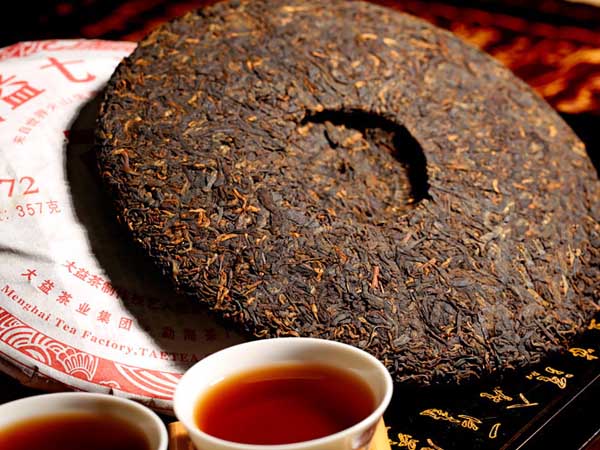
| Category | Useful distinction | A question for the tasting |
|---|---|---|
| Raw Pu'er, sheng | A Pu'er category whose character changes with production and storage | What is the production date and how has this sample been stored? |
| Ripe Pu'er, shu | A category using a controlled fermentation process during production | How does this sample differ from another ripe tea brewed similarly? |
| Dianhong | Yunnan black tea, distinct from Pu'er | What origin and processing information identifies this tea? |
These categories are not a ranking. A drinker may prefer one style for its taste, and a more expensive product is not automatically a better choice for that person. This article makes no health, treatment or investment claims for tea.
Pu'er, Xishuangbanna and Lincang are regional names to investigate when learning about Yunnan tea. Dianhong is also associated with western Yunnan production, including the Fengqing area. A broad region on a label does not identify the exact garden, producer or batch.
Ask separately where the material came from, who produced the tea, what processing category it belongs to and how it was stored. A dramatic story about tree age is not a substitute for that information. Do not use color alone to infer age or authenticity.
The Yunnan history guide explains why trade routes are useful context. Historical association with tea does not prove an uninterrupted lineage for every modern shop or tourism product.
Compare a small number of teas within a clear category first. Ask the host to use reasonably comparable leaf quantity, water and brewing time so you are not simply comparing different brewing strengths. Take brief notes on aroma, texture, bitterness or sweetness and the finish as you perceive them.
Then compare categories, such as a raw Pu'er with a ripe Pu'er or Dianhong. The aim is to learn your preferences, not to pass a test or agree with every description offered. Ask which dry leaf corresponds to the tea in the cup.
Confirm whether the session has a charge and whether purchase is optional before beginning. A long tasting should not become an unspoken obligation to buy. The Kunming buying guide gives a more detailed method for comparing products and labels.
A shop tasting is useful when you have limited time and want to compare finished teas. A more structured session can explain processing and brewing, provided the host's actual program and language support are clear. A garden or processing visit adds another dimension only when access and interpretation have been arranged.
For a production visit, ask what will be happening on your date: cultivation, leaf collection, processing or a demonstration using prepared material. A harvesting photograph does not promise a hands-on activity at every season. Clarify the walking, transport, toilets, meals and charges.
Use the Yunnan map and transport guide before adding a southern or western tea region to a northwest route. If the interest is mainly drinking and choosing tea, a good city tasting may meet it without the detour.
Choose a tea you have tasted and can identify. Record category, producer, date or batch where available, net weight and the total price. Compare the same product size; decorative packaging can make two prices look more different than the tea itself warrants.
For a gift, consider what the recipient drinks and how they brew it. A smaller clearly labeled product may be more useful than a large compressed cake requiring unfamiliar handling. Do not buy on a promise of future financial value or guaranteed improvement with age.
Check the rules relevant to taking food or plant products home with the appropriate authority for your destination. This article does not state a universal allowance. Keep the product labeling and purchase information.
In Kunming, combine a tasting with a regional meal rather than a distant attraction on the other side of the city. The noodle guide provides a practical food comparison. If both drinks interest you, the coffee guide offers another way to compare production stories with what is actually in the cup.
For a longer cultural route, the communities guide helps keep specific practices in context. An arranged tea ceremony is one format, not proof that every household follows the same routine.
No. Dianhong is Yunnan black tea, while Pu'er has its own categories and processing traditions. Compare them as different products rather than synonyms.
They are different categories, not a hierarchy. Taste comparable samples and choose according to your preferences and the information available about the product.
No blanket promise is justified. Production, storage and personal preference matter. An old date alone does not establish good taste or quality.
Only if cultivation or processing is central to your interest and a useful visit can be arranged. A city tasting can answer many questions with less travel.
Clarify the session's charge and purchase expectations beforehand. A courteous tasting should have clear terms rather than an implied obligation you discover later.
Keep the product category, producer, date or batch where available, net weight, price and original label. Make sure the packed product is the one you selected.
Compare Yunnan route ideas for the surrounding journey. To add a city tasting or a separately arranged regional visit, request a Yunnan itinerary with a clear tea focus and explain whether learning, drinking or buying matters most.
Editorial accountability
Hu Lei, CEO. The named owner is responsible for travel-planning accuracy and escalation of time-sensitive checks.
Yuntian Travel (Yunnan) Group is identified in its corporate profile as a licensed professional inbound travel service provider based in Kunming, China. Registration and travel-service documents can be requested before booking.
Page-specific references where cited, official destination, transport and entry notices, YUNSKY route-planning records, and direct provider confirmation before a booking is finalized.
Content is reviewed when rules, transport, access, pricing or route conditions change. Final availability and operating details are reconfirmed for each traveler’s dates.
Quality review: Page updated: