Your China & Yunnan Travel Experts


 Ask a Question
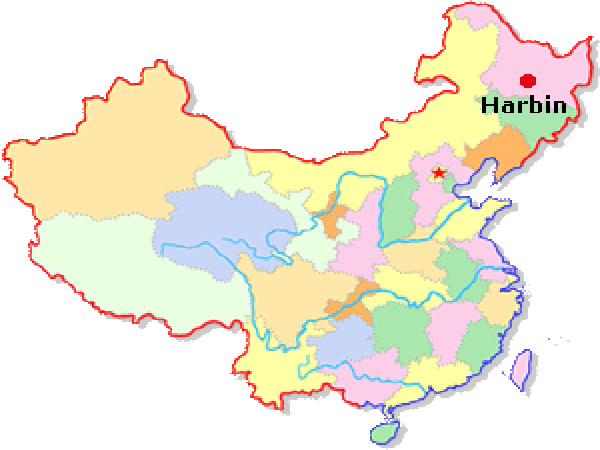
It was later in the nineteenth century, however, that the city really began to thrive, and when the Russian influence, that was to remain and heavily dominate Harbin's history, began to take a hold. The Russian Tsar and Qing court agreed, in 1896, to the signing of a contract that granted the latter the right to build a railway from Dalian, through Harbin, to Vladivostok. By 1898, the city had become a Russian concession, with its own powerful Tsarist police force, as the Tsar continued to enforce his colonial plans for Manchuria, plans that were strengthened by the completion of the rail link in 1904. The Tsar was finally thwarted by the Russo-Japanese War (1904-05) that ended with a shock victory for the belligerent and rapidly militarized Japan. The Japanese took over the railway. The city then swung between these two nations, the Russians returning in force to the city in 1917, mostly White Russians fleeing the newly established Bolshevik state, the Japanese taking control in 1932 as a part of their Manchukuo invasion, and the Soviets retaking the city in 1945 and remaining dominant here for almost ten years.
It was not until after the Cultural Revolution (when factional fighting made it almost impossible for anything to get done) that the city returned to its forte of rapid economic growth.
Climate: Harbin features a humid continental climate with hot, humid summers and very cold winters. Harbin's nickname of the “Ice City” is well-earned. Its winters are brutally cold and at times windy, as the average monthly high in January only reaches −12.3 °C (10 °F). However, the city is dry and sunny during winter. Both spring and especially fall constitute short transition seasons. Summer is very warm, with an average monthly high temperature in July soaring to 28.0 °C (82 °F). The annual precipitation, at 524 mm (20.6 in), is heavily concentrated from May to September, as evidenced by July's total of 142.7 mm (5.62 in).
Harbin Ice and Snow World
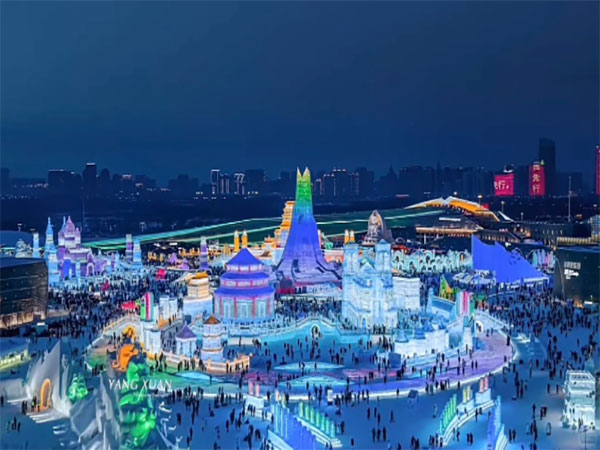
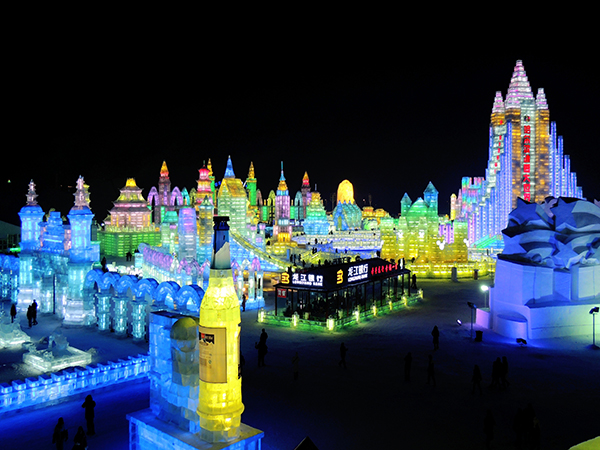
It is the most famous winter attraction in Harbin, known as the “Ice Kingdom”. Every year from December to February, it displays grand ice sculptures, ice castles and illuminated ice lanterns, all made from the ice of the Songhua River. Nighttime visits are especially stunning when all the ice structures are lit up.
Saint Sophia Cathedral
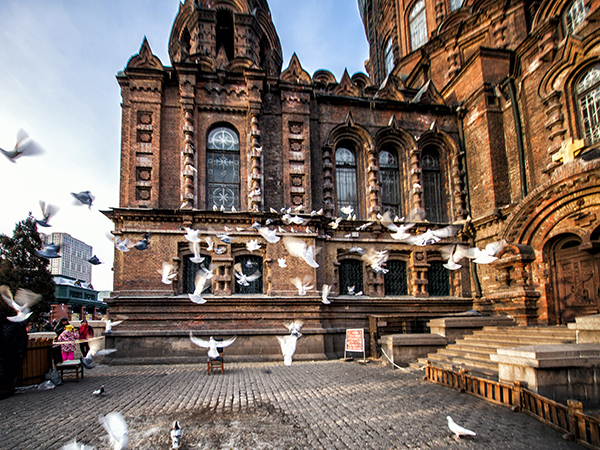
A iconic Russian Orthodox church with a distinctive Byzantine-style dome. Built in 1907, it is one of the most recognizable landmarks in Harbin. Today, it serves as a museum of Harbin's urban history, and the square around it is a popular spot for photos, especially with pigeons flying around.
Songhua River Scenic Area
The mother river of Harbin, offering different charms in different seasons. In winter, the frozen river becomes a “natural playground” for ice skating, ice fishing and snowmobiling. In summer, visitors can take boat rides, have picnics by the riverbank or walk along the scenic promenade.
Sun Island Park
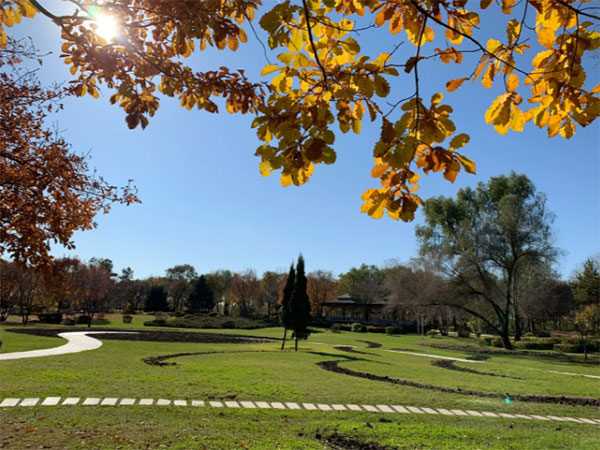
A large recreational park located on the northern bank of the Songhua River. It is famous for its beautiful natural scenery—with lush forests, lakes and meadows. In winter, it hosts the Harbin Sun Island International Snow Sculpture Art Expo, where giant snow sculptures attract countless tourists.
Harbin Siberian Tiger Park
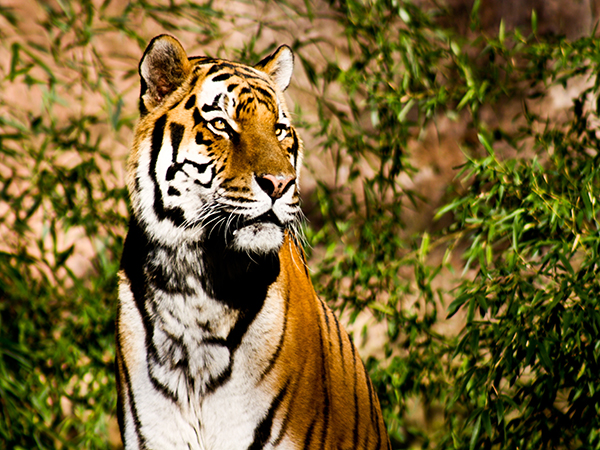
One of the world's largest conservation bases for Siberian tigers. Visitors can take special vehicles to watch these majestic tigers up close in their semi-wild habitats. The park also has a tiger museum and offers educational programs about tiger protection.
Central Street (Zhongyang Street)
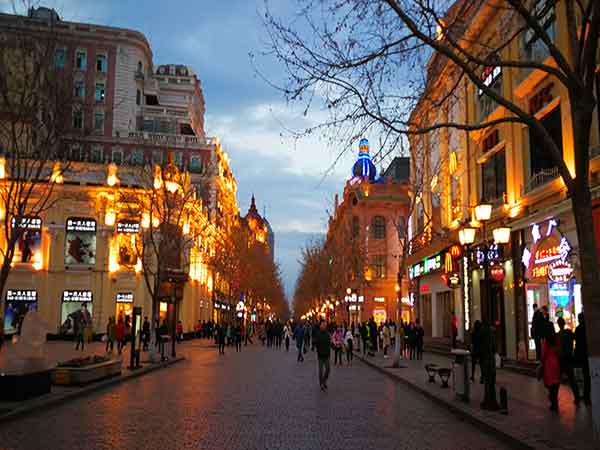
A century-old commercial street with a strong Russian style. Stretching about 1.4 kilometers, it is lined with European-style buildings, cafes, bakeries and specialty shops. It is a great place to taste Russian snacks like red sausage and Russian rye bread, and buy local souvenirs.