Your China & Yunnan Travel Experts

 Ask a Question
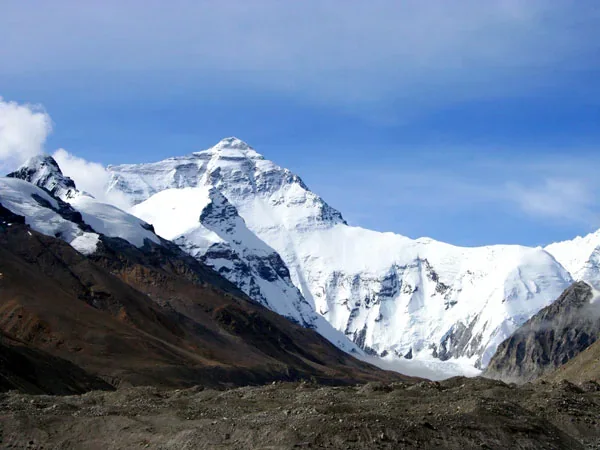
Mount Everest has several names because communities, governments and survey institutions approached the same mountain through different languages and histories. Qomolangma is the standard English rendering used in China for the Tibetan name; Sagarmatha is Nepal's official Nepali name; Everest is the internationally familiar English name.
The mountain stands on the China–Nepal boundary, so no single name erases the others. A useful caption chooses the form appropriate to its audience and can give another name on first mention. See the Everest location guide for the border context.
Names should also be kept separate from measurements. “Peak XV” was a survey designation, not a local name, and the current 8,848.86-metre elevation comes from a modern joint announcement rather than the nineteenth-century naming decision.
The Great Trigonometrical Survey of India identified the summit as the highest measured peak in the 1850s. During calculation and publication it was known within the survey as Peak XV.
Surveyor General Andrew Waugh proposed naming it for his predecessor George Everest. The Royal Geographical Society adopted Mount Everest in 1865, even though George Everest reportedly preferred the use of a local name.
Historical sources say Waugh argued that no single local name could be confidently identified and standardized from the survey's distant position. Modern readers should understand that decision within a colonial survey system that had limited access to communities near the mountain.
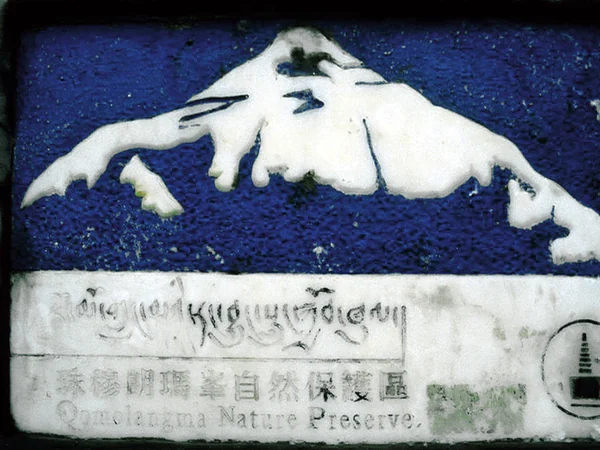
The Tibetan name is commonly romanized as Qomolangma or Chomolungma; spelling differences arise from transliteration systems and dialect. It is often interpreted in English as “Goddess Mother of the World” or a closely related expression, but literal glosses vary.
Qomolangma is not a modern replacement invented after “Everest.” Tibetan forms were in local use before the English naming, and historical maps and accounts preserve several romanizations.
In China, “Mount Qomolangma” is common in official English-language material, while “Mount Everest” remains widely understood internationally. Using both at first mention can improve clarity and respect local context.
Names such as Kangchenjunga and Dhaulagiri belong to other Himalayan mountains and must not be listed as synonyms for Everest. Deodungha appears in some historical naming discussions, but its application and interpretation require source context.
The safest approach is to distinguish attested Tibetan and Nepali names from names that early surveyors collected at a distance. The Everest facts hub links naming to height, geology and expedition history without collapsing those topics.
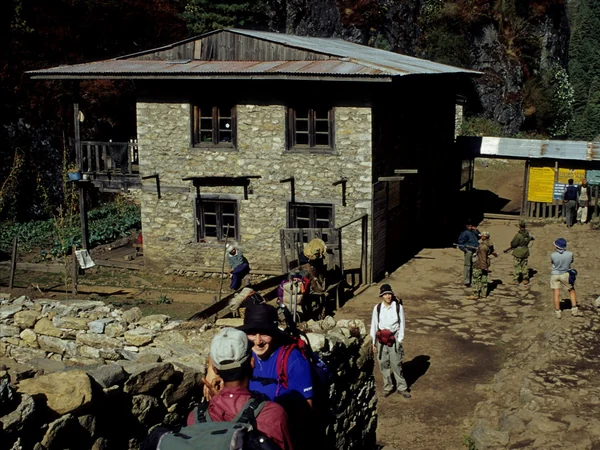
Nepal's official name is Sagarmatha, adopted by the government in the twentieth century. The mountain and surrounding national park are commonly identified by that name in Nepal.
English explanations often render Sagarmatha as “forehead of the sky” or a similar phrase. Translations are interpretive, so a travel page should avoid presenting one English gloss as a complete linguistic definition.
For trip planning, name choice also signals geography: Qomolangma commonly frames the Tibetan north side, Sagarmatha the Nepali south side, and Everest the international subject. Return to the Mount Everest hub to choose the relevant access and guide pages.
From $ 1637
From $ 3179