Your China & Yunnan Travel Experts

 Ask a Question
Zhang Qian was a Han envoy and diplomat whose missions helped the imperial court understand regions west of the Hexi Corridor. He did not “discover” Central Asia or single-handedly create the Silk Road; trade and steppe connections already existed. His importance lies in the information and diplomatic possibilities his journeys brought into Han policy.
Later narratives turned a difficult mission into a foundation story, so documented events should be separated from heroic simplification.
The Han dynasty Silk Road guide places his journeys within frontier expansion, commanderies and existing regional networks.
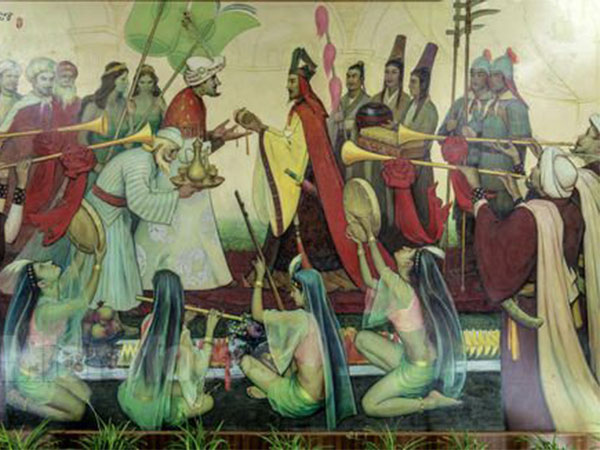
Around 139 BCE, Emperor Wu sent Zhang Qian west to seek an alliance with the Yuezhi against the Xiongnu.
He was captured and detained for years before continuing west. The surviving account comes through later Han historical writing, so exact episodes and speeches cannot be reconstructed as a diary. Zhang Qian reached regions associated with Dayuan, Kangju and the Yuezhi and learned about societies and products farther west. The Yuezhi did not agree to the alliance sought by the Han court. The mission therefore failed in its immediate diplomatic objective. Its wider result was information: routes, political relationships, horses, agriculture and markets became better known to Han decision-makers. On the return journey he again faced detention before eventually reaching the Han court. Accounts often say only a small part of the original party returned. Precise numbers should be treated cautiously unless tied to a specific historical text and translation.
His report contributed to later Han diplomacy and military policy toward the Western Regions. It also helped the court understand that goods associated with China could reach distant markets through intermediaries.
That observation supports the idea of relay trade rather than a single merchant traveling between China and Rome.
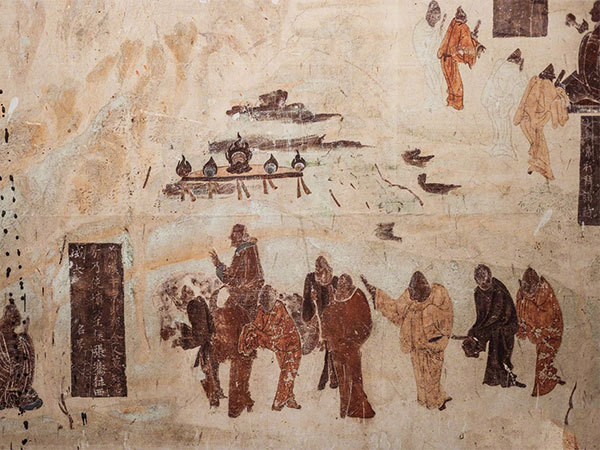
Around 119 BCE, Zhang Qian led another mission intended to develop relations with the Wusun and other western polities. The delegation and its envoys broadened diplomatic contacts, although outcomes varied by state.
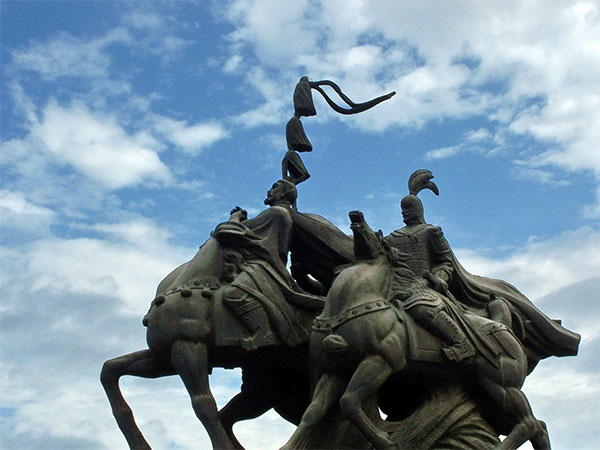
Zhang Qian's missions helped shift Han strategic attention toward the Hexi Corridor and Central Asian connections. They should be read alongside the wider Silk Road history, which includes earlier exchange, maritime routes and many actors outside the Han court. Later Han control of the Hexi Corridor changed travel conditions, but control remained contested and uneven.
Museum paintings and monuments depicting Zhang Qian are later interpretations, not eyewitness portraits. Captions should name them as commemorative or historical artwork.
For travelers, Xian, Gansu passes and museums provide the clearest geographic context. No surviving roadside marker can reproduce his exact path at every stage.
From $ 3510
From $ 3061

From $ 3683