The dangers of climbing Everest do not occur independently. A delay caused by another team can increase time in the cold; wind can damage a tent or fixed line; fatigue can turn a minor equipment problem into an emergency. This overview groups six major hazards, while the
high-altitude acclimatization guide explains the health decisions in greater depth.
Avalanches
Avalanches can be triggered by new snow, wind loading, warming, ice collapse or disturbance on a vulnerable slope. Route workers and expedition leaders evaluate local conditions, but no forecast removes uncertainty. Teams reduce exposure through timing, route choice, spacing and turnaround decisions rather than relying on a single “safe” month.
Crevasses
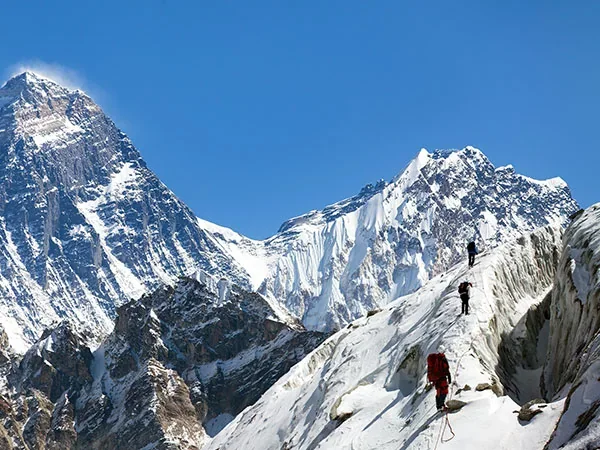
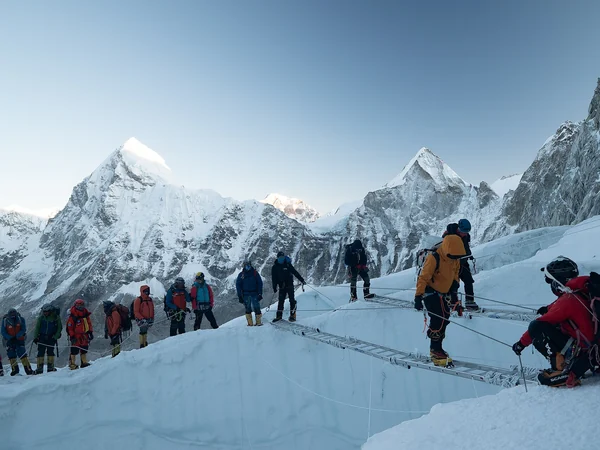
Crevasses can be open, bridged by fragile snow or hidden inside complex glacier terrain. Fixed ladders, ropes and marked tracks require current inspection and trained use. A rope team, rescue equipment and practiced crevasse-recovery skills are essential systems; following footprints is not an adequate substitute.
The Weather on Mount Everest
Upper-mountain weather can change rapidly as the jet stream, local cloud and approaching storms alter wind, temperature and visibility. Expedition forecasts support decisions, but leaders must also watch conditions on the route. A short low-wind window can close sooner than predicted.
Cold injury, frostbite, hypothermia and loss of visibility can occur well below the summit. Weather-related delays also affect oxygen, food and turnaround margins. The physiologic consequences become most severe in the
Everest death zone.
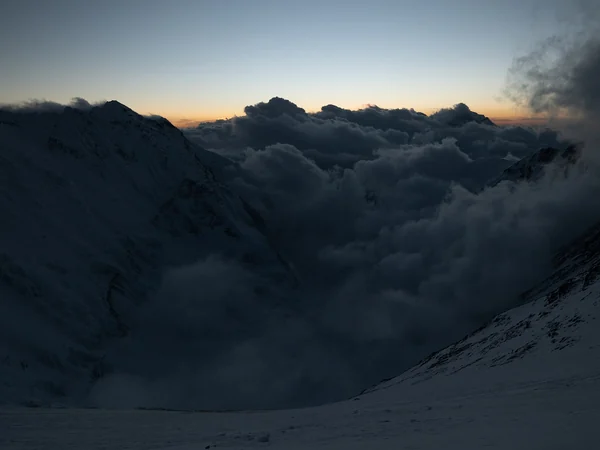
Rock and Ice Fall on Mount Everest
Rockfall and falling ice can be released by warming, freeze–thaw cycles, glacier movement or climbers above. Helmets reduce some impact risk but cannot protect against a large fall. Teams manage exposure by selecting lines carefully, moving efficiently through threatened sections and avoiding unnecessary stops beneath hazards.
Other Climbers
Congestion can delay movement on fixed ropes, limit passing space and make individual turnaround decisions harder. Poor rope technique, dropped equipment and an uncontrolled fall can also endanger people below. A responsible team maintains spacing, communicates at anchors and does not let summit ambition override the agreed deadline. Hypoxia also affects judgment, coordination and communication, so crowd management becomes harder at altitude. Climbers need rehearsed procedures that still work when mental performance is reduced.
Oxygen Deprivation
Above 8,000 metres, the body cannot acclimatize sufficiently for prolonged exposure. Supplemental oxygen can reduce—never eliminate—risk, and a system failure can become critical. Flow planning, cylinder checks, mask and regulator competence, backup allocation and descent triggers belong to the expedition plan.
Everest also presents infection, gastrointestinal illness, dehydration, sun injury, exhaustion and underlying medical problems. Awareness is only the starting point: climbers need independent medical assessment, experienced leadership, current forecasts, rescue planning and equipment matched to the approved route. Use the
Everest equipment guide as a planning framework, not a stand-alone checklist.

 Ask a Question