The Tibetan Empire flourished from the seventh to the mid-ninth century. It was a powerful, multilingual state centered on the Tibetan Plateau, with changing frontiers and diplomatic, military and religious connections across Inner Asia. Historians reconstruct it from inscriptions, manuscripts, archaeology, Tang records and later Tibetan chronicles; those sources do not always agree. Reviewed August 29, 2026.
Formation of an Imperial State
Songtsen Gampo inherited an expanding polity in the Yarlung Valley and, with ministers and allied elites, consolidated power across much of the plateau in the seventh century. Lhasa became an important political center. Describing this process as one king instantly “unifying Tibet” hides decades of negotiation, warfare, administration and older regional histories.
Later tradition counts Songtsen Gampo as the thirty-third ruler in a royal lineage. That genealogy is culturally significant but is not a continuous contemporary archive. The Tibetan script is traditionally linked to his minister Thonmi Sambhota; the details of its creation survive mainly in later accounts. Read the
early history of Tibet for the pre-imperial context.
Expansion, Administration and Buddhism
Imperial rulers and ministers developed military districts, taxation, law, written administration and treaty diplomacy. Songtsen Gampo's marriage to Princess Wencheng in 641 is documented in Tang–Tibetan relations, but claims that one marriage introduced every craft, crop or Buddhist practice overstate a long process of exchange.
Under Trisong Detsen in the late eighth century, Buddhist institutions received major court patronage and Samye became associated with translation, teaching and an ordained monastic community. Buddhism existed alongside older ritual traditions and political debate; it did not transform the empire in one event.
Tang–Tibetan Relations: War, Alliance and Exchange
Princess Wencheng's marriage to Songtsen Gampo in 641 formed part of seventh-century diplomacy. Visit the
Princess Wencheng history guide for the difference between Tang records and later devotional narrative.
Princess Jincheng married the Tibetan ruler Tride Tsuktsen in 710. Court marriages connected elites but did not prevent recurring conflict.
Tang and Tibetan forces contested corridors in the Tarim Basin, Qinghai and Gansu over many decades. Control changed repeatedly; a list of victories without dates, locations and source perspective is misleading.
Fragmentation and the End of Empire
In the ninth century, external pressure, succession disputes, court factions and conflict over religious patronage weakened central authority. No single battle explains the collapse.
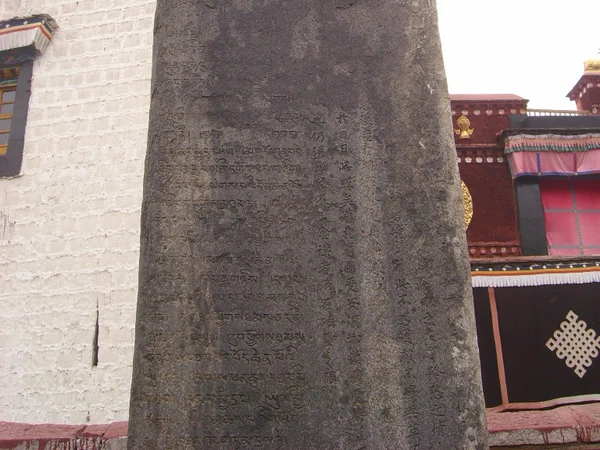
The 821–822 Tang–Tibetan treaty was sworn in both capitals. An inscribed pillar associated with the agreement still stands near Jokhang Temple in Lhasa; the text is primary evidence for diplomatic language, not proof that relations were always peaceful.
The treaty pillar records boundaries, oaths and the aspiration that the two sides should respect the agreement. It should be read alongside surviving manuscripts and Chinese records rather than reduced to a modern political slogan.
After the assassination of Langdarma in the 840s, succession struggles and regional revolts accelerated fragmentation. Local polities and religious lineages continued; the end of imperial central rule was not the end of Tibetan history. For a source-aware biography, continue to
Songtsen Gampo.

 Ask a Question