Your China & Yunnan Travel Experts


 Ask a Question
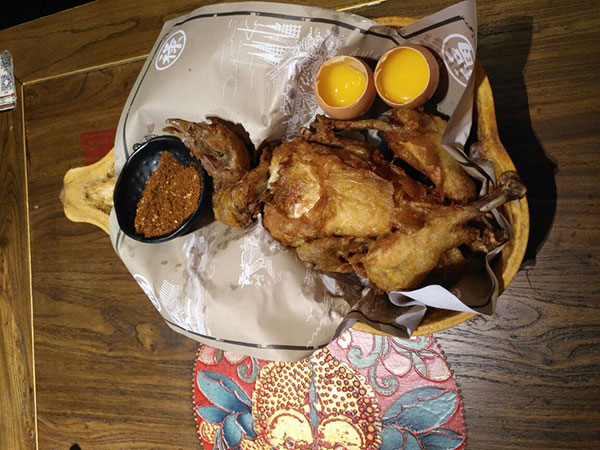
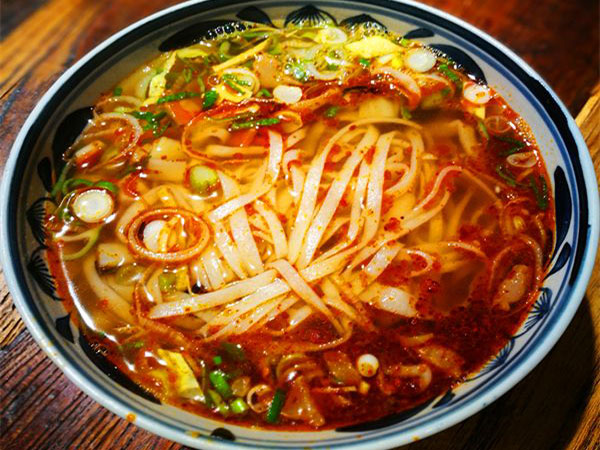
There are two main types of Liangpi: rice Liangpi and wheat Liangpi. Rice Liangpi is smooth and chewy, while wheat Liangpi is soft yet resilient. The noodles are made from wheat or rice flour respectively, and served with condiments like chili oil, vinegar, garlic water, and mung bean sprouts, which make it sour, spicy and appetizing—an excellent choice for relieving summer heat.
As the good taste of the dish, it is not just the snack in Shaanxi Province now, and it has spread to every corner of China, especially the northern and central regions.
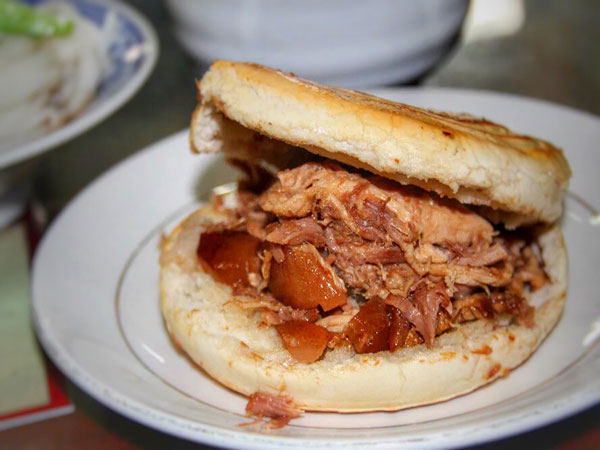
There are two main types: Preserved Juice Rou Jia Mo and Laotongguan Rou Jia Mo. Preserved Juice Rou Jia Mo uses fat and lean pork that has been simmered for a long time to absorb the sauce's flavor, paired with a crispy Baiji Mo (white wheat pancake). Laotongguan Rou Jia Mo, on the other hand, uses hot pancakes with cold meat—the pancake crust is so crispy that it crumbles easily, and the meat is rich in flavor.
The meat could be pork, and for Muslims they could add beef or lamb. The stewed meat is very delicious. And with the pancake, one Rou Jia Mo will make you feel full. Nowadays, Rou Jia Mo becomes a symbol of Xi'an catering culture; if you do not have a taste of this snack, you may regret it and plan another visit to Xi'an again.
Also known as “Belt Noodles” because they are as wide as a belt and as thick as a coin, Biangbiang Noodles are one of the representative Shaanxi noodles. The noodles are hand-made, with a chewy and resilient texture that is very satisfying to bite into.
They are usually served with toppings such as chili oil泼辣子, minced meat sauce, and tomato and egg sauce. The cooking method highlights the bold and strong flavors of Shaanxi cuisine—spicy, fragrant, and hearty. The unique name “Biang” comes from the onomatopoeic sound made when the dough is slapped on the table during the hand-making process.
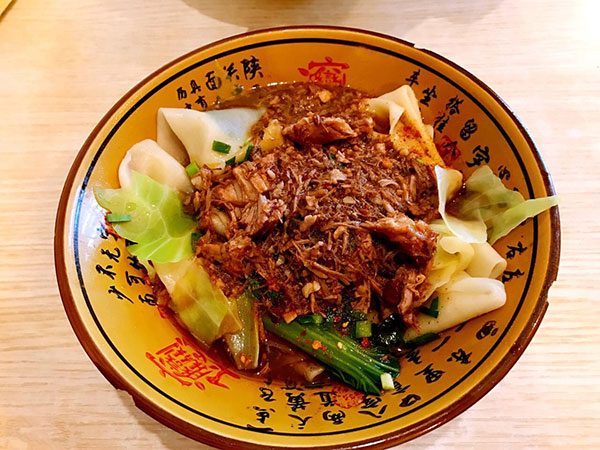
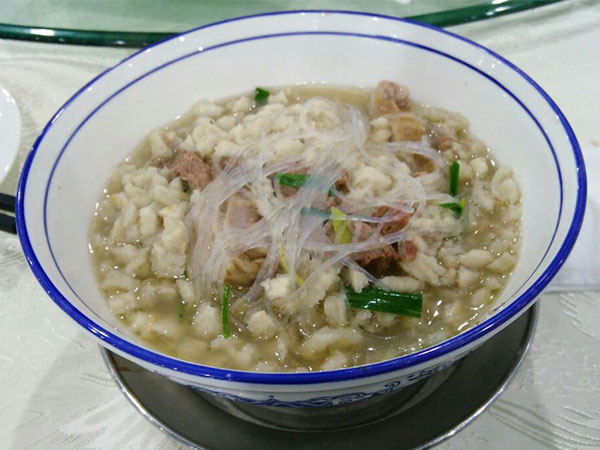
Hulu Tou Paomo gets its name because the pig intestines used in the dish are shaped like a gourd. It is a popular local Paomo variant, featuring fresh soup and chewy pancakes. The pig intestines are handled meticulously, making them fatty but not greasy.
The main ingredients include pig intestines, chicken, vermicelli, and pancake pieces. It is seasoned with chopped green onions, coriander, and chili oil, resulting in a rich and delicious soup that is deeply loved by locals.
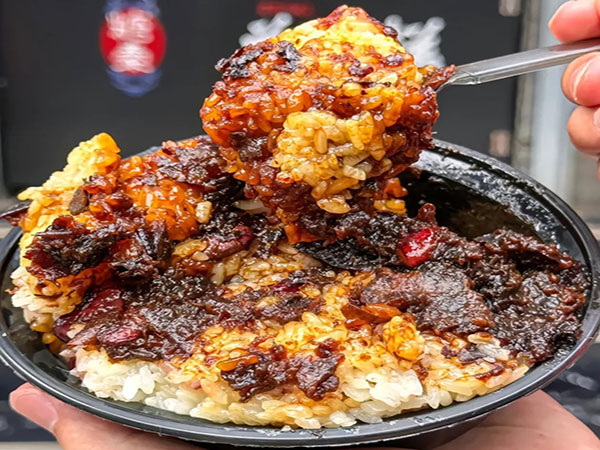
Zeng Gao is a traditional snack made mainly from red dates and glutinous rice, steamed in a special utensil called “Zeng” (an ancient steamer). The glutinous rice and red dates blend perfectly, creating a soft, sticky, and sweet taste. It has a bright and moist color and is rich in nutrition, making it suitable for people of all ages.
Fentang Yangxue is a famous semi-soup dish in Shaanxi. It perfectly combines tender sheep blood with smooth vermicelli, seasoned with spices like Chinese prickly ash and fennel. The soup is spicy, numb, fragrant, and fresh—especially warm and comforting to eat in winter.
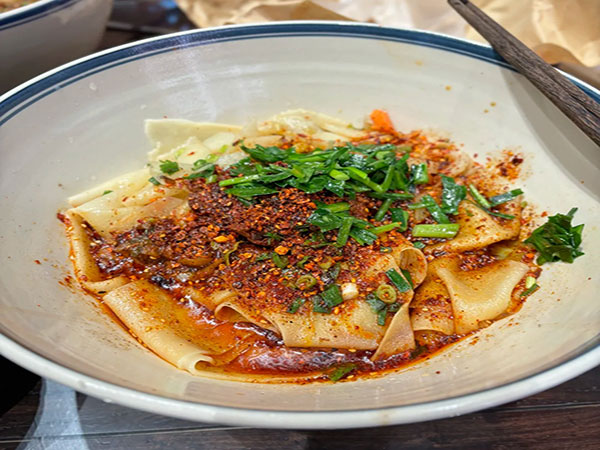
Youpo Noodles are a classic Shaanxi noodle dish. The noodles are chewy and smooth; after being cooked, hot chili oil is poured over them, instantly releasing the aroma of garlic and peppers. It is served with light soy sauce and mature vinegar, making it spicy and satisfying. This simple yet flavorful dish is a staple in Shaanxi households and restaurants.
Huanggui Persimmon Cakes are a special dessert from Lintong District, made with Huojing persimmons (fire crystal persimmons) and flour, then pan-fried until golden on both sides. The cakes are soft and glutinous, leaving a sweet and fragrant aftertaste in the mouth. They are especially popular in autumn when persimmons are in season.
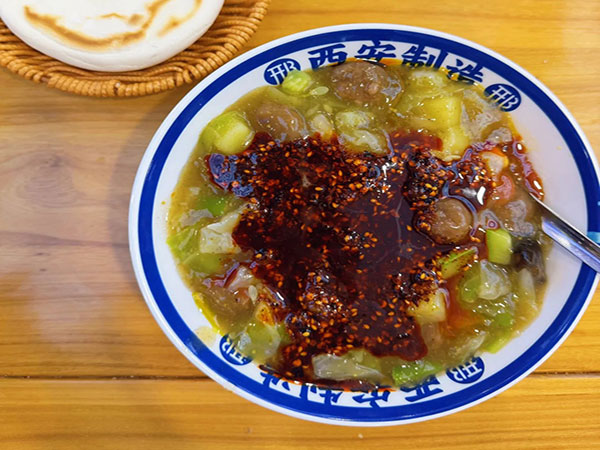
Originating from the Tang Dynasty, Rouwan Hulatang integrates Hui cooking characteristics. It is mainly made with beef or mutton meatballs, served in a soup base simmered with vegetables like potatoes, carrots, and cabbage. The soup is sour and spicy, appetizing, and is often eaten with Tuotuo Mo (lump pancakes) which can be dipped in the soup.