Your China & Yunnan Travel Experts


 Ask a Question
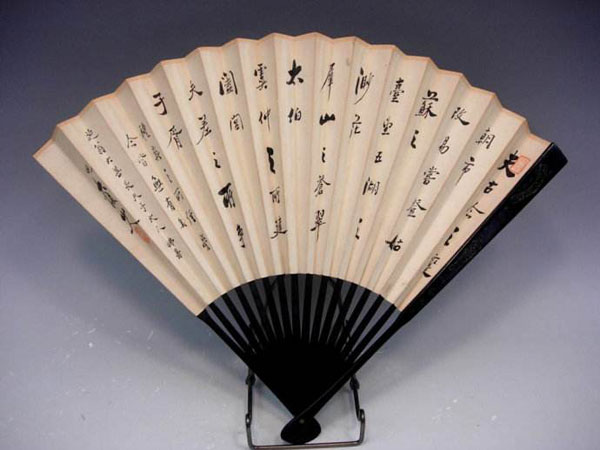
Chinese calligraphy is a classic national symbol of Chinese traditional cultural art in the past five thousand years history. Chinese calligraphy is written by Chinese writing brush, presenting aesthetic inertia. It even can be regarded as The Fourth Religion in China, with great charm and sense of ritual and widely spread popularity. The famous calligraphers include Wang Xizhi, Yan Zhenqing, and Sushi etc.. The technique of Chinese calligraphy stress structure, brushwork, composition, ink style and so on.
Chinese calligraphy
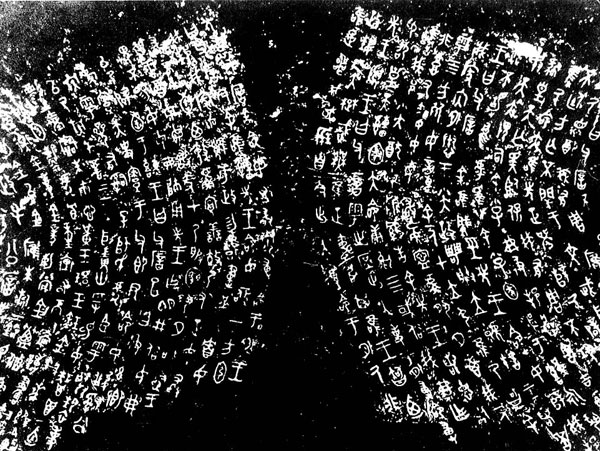
Chinese calligraphy
The main schools of calligraphy
The Chinese written language originated very early. However, people began to like the art of writing, and pay attention the creator's thinking and spirit since the period between the Late Han Dynasty and Wei Jin Dynasty (approximately from the 2nd century to the 4th century AD). The Chinese calligraphy fonts gradually evolved from oracle, Chinese bronze inscriptions and silk manuscripts to the following five main schools:
|
School
|
Representative Master
|
Feature
|
|
|
Seal Script / Zhuan
|
 |
Li Si
|
There are Big Zhuan and Small Zhuan. The Big Zhuan includes all the ancient Chinese calligraphy fonts before Qin Dynasty. The Small Zhuan are the characters commonly used after Qin united China. These characters featured balanced left and right parts and a bit complicated structures.
|
|
Official Script / Lishu
|
 |
Cai Yong
|
A kind of calligraphy with round shape and many strokes.
|
|
Regular Script / Kaishu
|
 |
Ouyang Xiu, Yan zhenqing, Liu Gongquan
|
Also named Zhenshu or Zhengshu, Kaishu is regular with a tight structure and fluent strokes.
|
|
Cursive Hand / Caoshu
|
 |
Zhang Xu
|
Caoshu is characterized by sketchy, simplified forms of characters, often distorted or exaggerated to achieve an internal rhythmic appearance within the compositions of characters.
|
|
Running Hand / Xingshu
|
 |
Wang Xizhi
|
Something between the regular script and the cursive scripts in the initial period and now is between the official script and cursive hand. Chinese masters have always compared with vivid aptness the three styles of writing. Kaishu, Xingshu, Caoshulike people standing, walking and running.
|
The ancient Chinese characters of this long period from the primitive society to Qin Dynasty are inscriptions on the turtle shell, animal bones, human bones or potteries. They are more like meaning marks rather than characters or words.
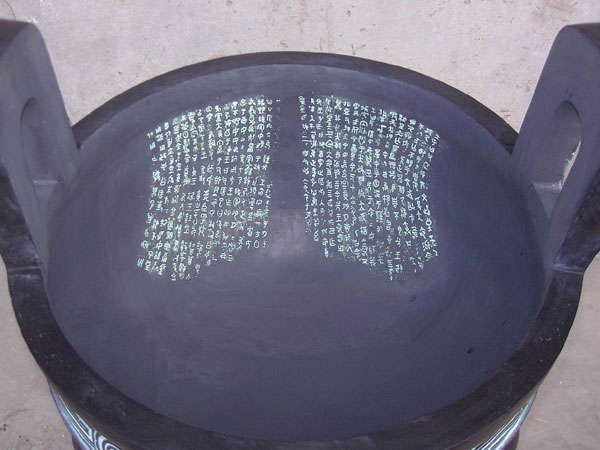
First Emperor of Qin unified China, and decided the unification and standardization of the characters. Qin Zhuan, Small Zhuan or Seal Script was created. Official Script or Lishu was also initially created in Qin Dynasty. It was a great development of Chinese characters, and the foundation of the various schools of Chinese traditional calligraphy. The representative calligraphy works of Qin Dynasty: The Mt. Tai inscription (泰山刻石).
An important time for Chinese calligraphy developing, the Han Dynasty (including the West Han and East Han Dynasties) saw the evolution from Zhuan to Lishu, and then to Zhangcao, Kaishu (Regular Script) and Xingshu (Running Hand). Lishu was the commonly-used font in Han Dynasty, with various character styles, while bronze inscriptions and Zhuan ware less used and gradually faded away, except that they were still used on the seal and eaves tiles. The representative calligraphy works of Han Dynasty: Mawangdui silk books (马王堆帛书), Stele with an Eulogy on the Reconstruction of the Road in the Western Gorge (西狭颂), Stele of Xianyu Huang (鲜于璜碑), Stele of Mt. Hua (华山碑), Stele of Shi Chen (史晨碑), etc.
Chinese calligraphy continued to develop, and the Chinese characters were basically fixed. Zhong Yao (钟繇) and Wang Xizhi (王羲之), the two greatest masters of Chinese calligraphy were born. Their works have greatly influenced the later generations and the Korean and Japanese calligraphers. The representative calligraphy works of this period include: Xuan Shi Biao (宣示表) by Zhong Yao, Preface of Lanting (兰亭集序), Leyilun (乐毅论) and Shiqitie (十七帖) by Wang Xizhi, Ode to the Goddess of the Luo River (洛神赋) by Wang Xianzhi (王献之, son of Wang Xizhi), Bo Yuan Tie (伯远帖) by Wang Xun (王洵).
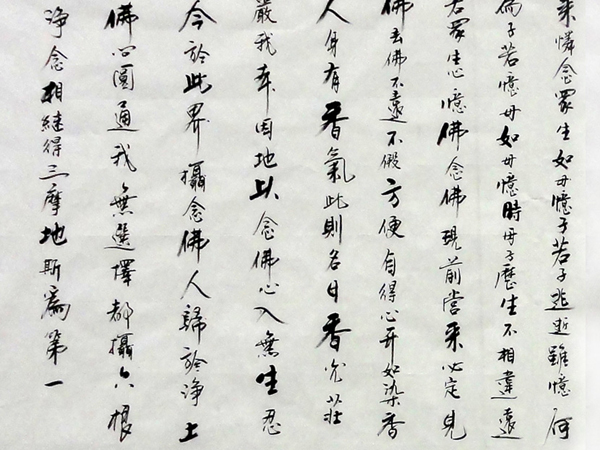
It was a period of great prosperity. The Chinese culture and arts also had the heyday during the Tang Dynasty. The Calligraphy carried forwards the classical, traditional skills and also promoted the calligraphy innovation. Kaishu, Caoshu and Xingshu evoked to the new, more mature stage. Notable calligraphers came out in succession. Stele of the Construction of the Longzang Temple (龙藏寺碑), created in 586, is one of the most famous inscription calligraphy works of China.
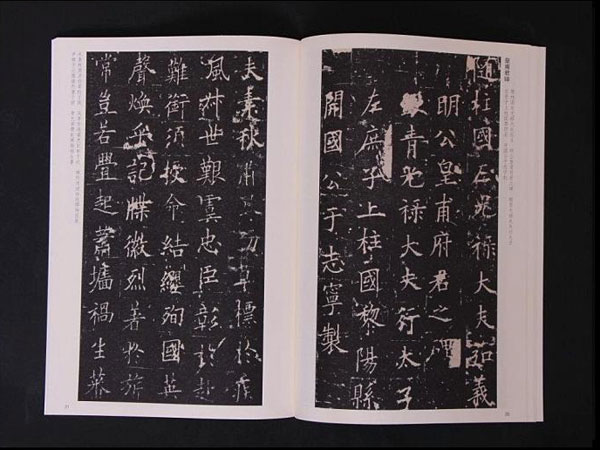
All Ming emperors were addicted to calligraphy, thus promoted the developments of this arts. Later in Qing Dynasty, Chinese calligraphy had its boom period. The most famous calligraphers of Ming and Qing include: Dong Qi Chang (董其昌), Wen Zheng Ming (文征明), Tang Yin (唐寅), Fu Shan (傅山), Zheng Banqiao (郑板桥), etc.