Your China & Yunnan Travel Experts


 Ask a Question
Chinese seals are carved or cast stamps used to authenticate documents, identify owners and mark works of art. They may be made from stone, metal, jade, wood, ivory substitutes or other materials, but the material alone does not establish age or status. The art combines carving with the design of Chinese characters, especially seal script. It therefore makes most sense beside the wider history of Chinese calligraphy, not as an isolated souvenir category.
Legends about Chinese Seals
Stories linking seals to the Yellow Emperor, dragons, phoenixes or the Mandate of Heaven belong to China's political and literary tradition. They explain how later writers understood authority, but they are not archaeological accounts of the first seal. Excavated impressions, transmitted documents and securely dated objects provide stronger evidence. Early seals are known from the late Shang and Zhou worlds, while forms, terminology and administrative use changed substantially across later dynasties.
Chinese seal
Three Types of Seals
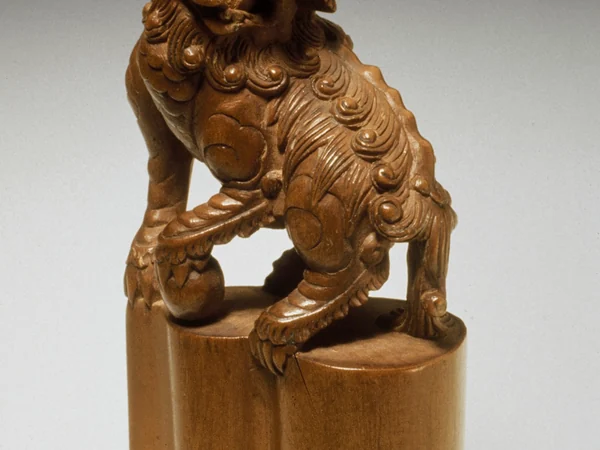
A practical introduction can retain the traditional division into imperial, official and private seals, while recognizing overlap. A ruler's seal represented court authority, an office seal authenticated administration, and a private seal could record a name, studio, phrase or collecting history. Shape, knob, material, script, impression and provenance all help identify function. The calligraphy and painting introduction explains how seals work with inscriptions and composition on paper or silk.
• Imperial Seals
In early texts, xi could refer broadly to seals; later usage increasingly reserved particular terms and formats for imperial authority. Court seals were not always jade, and no single material rule applies to every dynasty. A museum label should identify the reign, inscription, medium and documented history instead of relying on a generic claim that any jade stamp was imperial.
Accounts about Empress Wu and the preference for the term bao are useful evidence for changing court language, but they should be tied to a specific text and period. Translating bao simply as “treasure” can obscure its administrative context. Visitors can compare the Chinese inscription with the catalogue description rather than inferring function from one character.
Names and numbers of imperial seals changed as courts created separate stamps for edicts, correspondence, collections and ceremonial purposes. A larger number in a late dynasty does not mean each seal had equal authority. The inscription and the document on which it appears are the decisive context.
By the Qing period, the court maintained substantial seal collections and used different seals for government, personal authorship and connoisseurship. Claims about exact totals should be checked against the relevant palace catalogue because collections were reorganized and later dispersed.
Chinese seal
Artists and emperors also impressed seals on calligraphy and painting. Qianlong's many collector and appreciation seals are prominent examples, yet a red mark does not by itself prove that he owned or approved a work. Scholars compare the seal text, placement, paste, impression, mounting and provenance. A seal can be historically important while also being a later addition to an older painting.
• Official Seals
Official seals functioned as instruments of administration and as signs of delegated authority. Some were portable; others belonged to an office. Metal, stone and other materials were used, with handles and inscriptions shaped by period and rank. Colorful stories about rank-specific ink should not be repeated as a universal system unless a dated regulation supports them.
Seal inscriptions changed with administrative practice and calligraphic taste. Qin and Han examples often use compact seal-script forms; later official seals could employ more elongated or folded arrangements to fill a square field. The so-called nine-fold script is especially associated with official seals of later imperial periods, but not every dense inscription belongs to that category.
Chinese seal
Qing official seals may combine Chinese and Manchu. Orientation, script and office name should be read from the individual object, as bilingual layouts vary. Museum photography often shows the carved face reversed; the correct reading becomes clear in the printed impression.
• Private Seals
Private seals include name seals, studio seals, phrase seals and marks used by artists, writers and collectors. A carver plans both the positive and negative space, then cuts characters in relief or intaglio so that the impression appears as red text on white or white text within a red field. Many artists used several seals, selecting one to suit the size and balance of a particular work.
Collector seals can document ownership and reception, but they can also be copied. Crowded seals on a handscroll are not damage automatically: they may record centuries of collecting. Authentication requires comparison with reliable impressions and provenance rather than a famous name alone.
For travelers, a good museum or workshop visit follows the full process: design the inscription, transfer it in reverse, carve the stone, test the impression and adjust the spacing. Ask before handling tools or photographing a maker's design. Avoid buying pieces represented as antique without documentation, and do not assume red stone is rare “chicken-blood” stone. Decorative-arts context at the Suzhou Museum can help distinguish a modern personalized seal from historical works. For any valuable purchase, request the material, maker and date in writing.