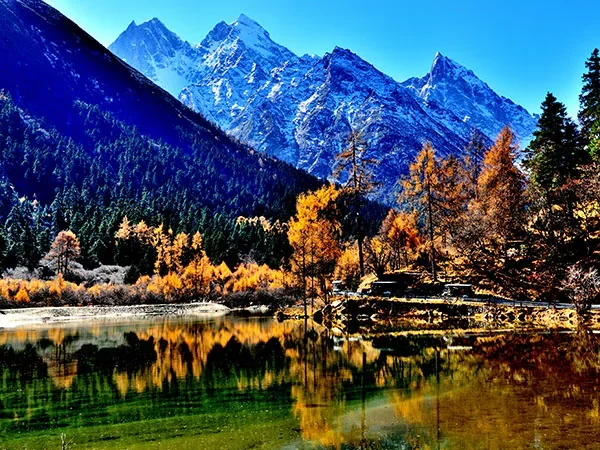
China's famous scenic towers are places where architecture, landscape and literature meet. Yellow Crane Tower, Yueyang Tower and Tengwang Pavilion are widely known as the Three Great Towers south of the Yangtze. Penglai Pavilion is sometimes added in popular four-tower travel lists, but this is not one fixed official canon.
The present structures have different histories of repair or reconstruction, so the value of a visit is not limited to untouched ancient fabric. Use the ancient Chinese architecture guide to compare their forms with temples and palaces. Travelers continuing to Xi'an can contrast these literary towers with masonry pagodas and city-wall architecture.
Yellow Crane Tower
Yellow Crane Tower, 黄鹤楼, stands on Snake Hill in Wuhan,
Hubei.
Together with Yueyang Tower and Tengwang Pavilion, it belongs to the celebrated group of towers south of the Yangtze River. Its fame is inseparable from poems, legends and repeated rebuilding, so the cultural history is as important as the modern skyline view.
Cui Hao's poem about Yellow Crane Tower became part of the landmark's national reputation, and later writers continued that literary conversation. Read a translation before visiting if poetry is your main interest; otherwise the building can feel like a scenic observation tower without the associations that made it famous.
Yueyang Tower
Yueyang Tower stands beside Dongting Lake at Yueyang's old city wall. The position connects river, lake and long-distance views, making the landscape essential to the building's meaning.
Fan Zhongyan's “Memorial to Yueyang Tower” is the text most closely associated with the site, even though the writer composed it from afar. Its concern with public responsibility turned the tower into a moral and literary symbol as well as a scenic building.
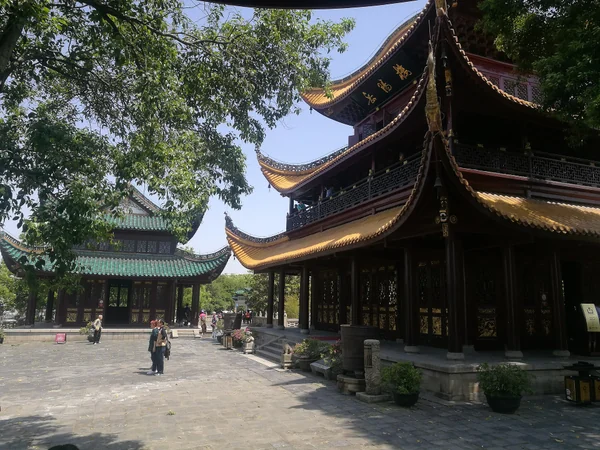
The tower's timber frame, three levels and distinctive roof create a compact silhouette. It has been repaired and rebuilt over its long history, so visitors should use on-site dating for specific components. Couplets and inscriptions inside show how later generations continued to reinterpret the place.
Allow time for the lakeside setting and weather conditions. Haze, rain or high water can change the view that the literature encourages visitors to imagine.
The Pavillion of Price Teng (Tengwang Pavilion)
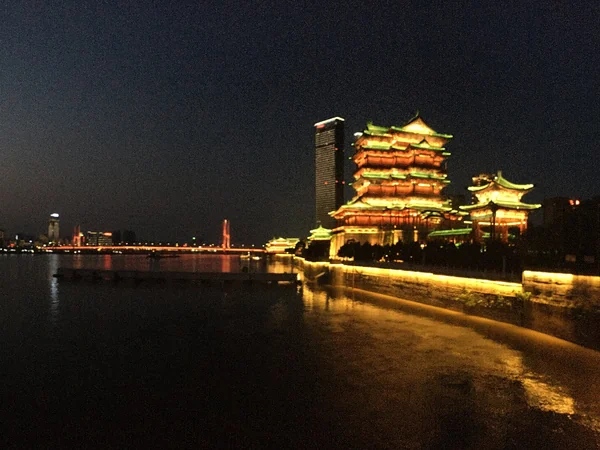
The Pavilion of Prince Teng, or
Tengwang Pavilion, stands beside the Gan River in
Nanchang. It is traditionally grouped with the other great towers south of
the Yangtze River through literary geography rather than because all three share one design.
The riverfront location, broad terraces and ceremonial image make it visually different from the more compact Yueyang Tower.
Prince Teng Li Yuanying sponsored the original pavilion in the 7th century after being appointed to the Nanchang area. Wang Bo's celebrated “Preface to the Pavilion of Prince Teng” later gave the site enduring literary status. The text, patron and building should be distinguished: the current pavilion is not the original seventh-century structure.
Tengwang Pavilion was repeatedly damaged and rebuilt. The present large reconstruction interprets historic architectural forms while serving as a museum and major urban landmark.
Approach from the riverfront to understand the building's scale, then use the interior displays to compare earlier representations. Current floor access, performances and evening lighting should be checked locally.
Glazed tiles, layered eaves, red columns and surrounding terraces create a formal silhouette. These features express a modern reconstruction of a historic landmark, not a claim that every visible component is ancient.
Penglai Pagoda
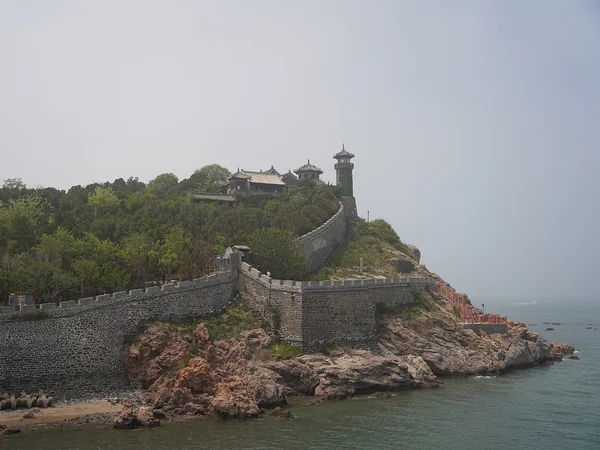
Penglai Pavilion, 蓬莱阁, is a coastal complex on the Shandong Peninsula. Despite the old page heading “Penglai Pagoda,” ge is better translated here as pavilion, and the site contains several halls and religious buildings rather than one pagoda.
The elevated position above the Bohai and Yellow Sea region connects the complex with maritime defense, Daoist ideas of immortal islands and the phenomenon of coastal mirages. Present buildings and restored areas represent different dates, so a single founding year should not be assigned to the whole visible complex.
Penglai is the geographical outlier in this four-site list. It works best in a Shandong coastal itinerary rather than being forced into the Wuhan–Yueyang–Nanchang route.
Legends of the Penglai immortal realm drew emperors, writers and pilgrims to the coast, but legend should be separated from documented building history. Use the
Shandong guide to plan the regional route and confirm current access to the coastal walls and pavilions.


 Ask a Question