Your China & Yunnan Travel Experts


 Ask a Question
Chinese tea is commonly organized into six processing categories: green, yellow, dark, white, oolong and black tea. In Chinese terminology, hong cha—literally “red tea”—corresponds to what English speakers usually call black tea, while hei cha means dark, post-fermented tea. These categories describe processing, not a simple scale from weak to strong.
Green Tea
Brew green tea with attention to leaf tenderness and vessel size. Cooler water or shorter contact may suit delicate leaves; taste and adjust instead of following one universal number. Tea is a beverage, not a treatment, and medical or weight-loss claims require reliable evidence.
Green tea leaves in a glass
Black Tea
Chinese black tea is fully oxidized before drying, producing copper-colored liquor and flavors that may suggest malt, fruit, honey or cocoa. It is distinct from dark tea, which involves microbial fermentation or post-fermentation after initial processing. Yunnan Dianhong Examples include Keemun from Anhui, Dianhong from Yunnan and Lapsang Souchong from Fujian. Smoked Lapsang styles are only one part of the category; many Chinese black teas are unsmoked.
Black tea can tolerate hotter water than many green teas, but leaf grade and brewing ratio still matter. For travel purchases, compare dry aroma, infused leaf and a complete tasting rather than judging only color.
Chinese black tea infusion
Oolong Tea
Tieguanyin, Wuyi rock tea and Phoenix Dancong illustrate this diversity. Origin alone does not guarantee quality, and Dancong aroma names describe production traditions rather than added perfume in well-made examples.
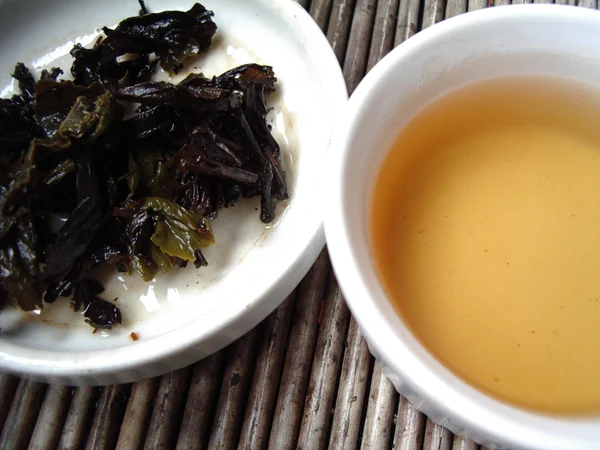
Oolong leaves prepared for repeated infusions
White Tea
Age can change some white teas, but “older” is not automatically better. Storage must be clean and dry, and unsupported health claims should not determine a purchase.
White tea buds and leaves

Yellow tea infusion

Compressed Pu'er tea cake
Jasmine tea is commonly made by scenting finished tea leaves repeatedly with fresh blossoms, then separating much of the flower material. Quality depends on base tea, flowers and technique, not the number of visible petals.

Jasmine flowers used to scent tea
Leicha and Oil Tea
These regional preparations are foods or drinks built around tea and other ingredients, not additional processing categories alongside the six principal teas. They are best understood through the communities that prepare them.
Lei Cha Lei cha is associated with Hakka and other regional traditions and may grind tea with herbs, seeds, nuts or grains. Recipes vary considerably. Ask about peanuts, sesame and other allergens before tasting.
A bowl of regional lei cha
Oil Tea Oil tea traditions in Guangxi and neighboring areas may fry or pound tea before boiling it with ingredients and serving it alongside snacks. The taste can be savory and robust. For a destination context, compare Sanjiang tea with a Guilin tea-picking activity, confirming season and ingredients first.

Regional oil tea served with snacks