Your China & Yunnan Travel Experts

 Ask a Question
Reviewed August 28, 2026. The Yuan period (1271–1368) changed the scale and geography of Muslim life in China. Mongol expansion connected East Asia more directly with Central and West Asia, and the empire moved soldiers, artisans, administrators, scholars and merchants across long distances. Some came voluntarily and others under coercion, so “migration” should not be presented as one uniform experience.
Yuan institutions classified many people from Central and West Asia within the broad administrative category semu. The term was not a synonym for Muslim: it included people of different origins and religions. Likewise, Muslims served in many occupations and did not form one political class.
Muslim officials, astronomers, physicians and financial specialists worked within Yuan government and urban life. Jamal al-Din's astronomical instruments and calendar work are often cited examples of knowledge exchange. Such individual careers demonstrate mobility, but they do not justify claims that Muslims controlled the empire's administration. Yuan service depended on imperial patronage, administrative rank and personal networks, and officials identified as semu could compete with one another as readily as with other groups. Biographical records reveal notable careers more clearly than the lives of ordinary families, so elite visibility must not be mistaken for population-wide privilege.
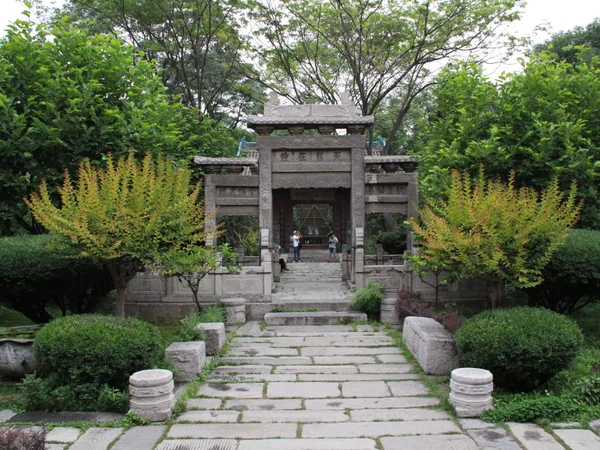
Communities grew in Dadu (Beijing), Xi'an, Quanzhou, Hangzhou and other commercial centres. Mosques, cemeteries and inscriptions marked permanent settlement, while travelers such as Ibn Battuta described Muslim networks in Chinese ports. Travel accounts are valuable eyewitness sources but still require comparison with local archaeology and Chinese records. A traveler's route, vocabulary and audience shaped what he noticed, while an inscription may record a donor rather than the whole congregation. Agreement among a dated stone, an excavated context and a written record provides a stronger basis for a local chronology than any one source alone.
The Great Mosque of Xi'an illustrates layered history rather than an untouched Yuan monument. Its courtyards, steles and prayer hall contain work from successive periods. A foundation claim, a dated stele and the current timber fabric can each refer to a different century. Visitors should look for repair inscriptions and compare the orientation and function of the prayer hall with the surrounding Chinese building vocabulary, instead of assigning the whole complex to the earliest date on a sign. For a regional contrast, the Xinjiang Muslim guide explains why communities farther west followed different linguistic and political histories.
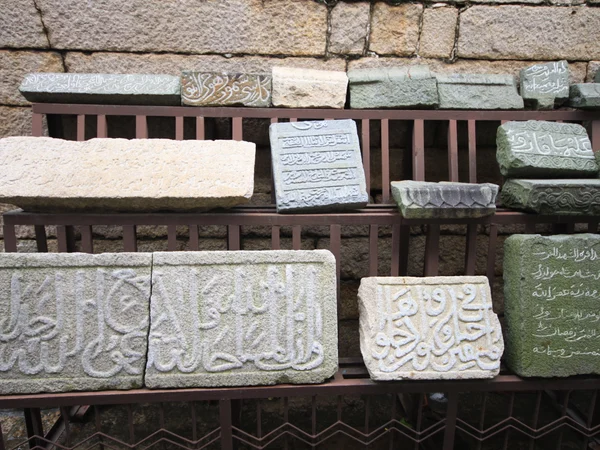
Quanzhou's Qingjing Mosque and Islamic tombstones preserve strong maritime connections. Their Arabic inscriptions and stone construction differ from later timber compounds inland. The real replacement photographs show surviving fabric instead of a battle illustration that had no direct relationship to the paragraph.
By the late Yuan, Muslim families could be found across many provinces, but their density, legal position and social networks varied. Intermarriage and Chinese-language use increased in some places. “Huihui” appeared in sources with shifting meanings, so it should not be treated as identical to the modern officially defined Hui ethnic category.
The Yuan legacy was therefore demographic, institutional and cultural. It broadened the number of communities and intensified cross-regional links, while leaving no single architecture, language or occupation shared by all Muslims in China.
The Ming dynasty (1368–1644) ended Mongol rule but did not end Muslim life. Communities already rooted in China continued to serve in armies, trade, scholarship and local administration. Greater use of Chinese names and language reflected long-term localization, not the disappearance of religious belief.
Founding-era military histories name commanders of many backgrounds, but later popular lists often assign Muslim identity without reliable evidence. A careful guide avoids turning uncertain biographies into proof of religious policy. It instead follows documented institutions, inscriptions and writings.
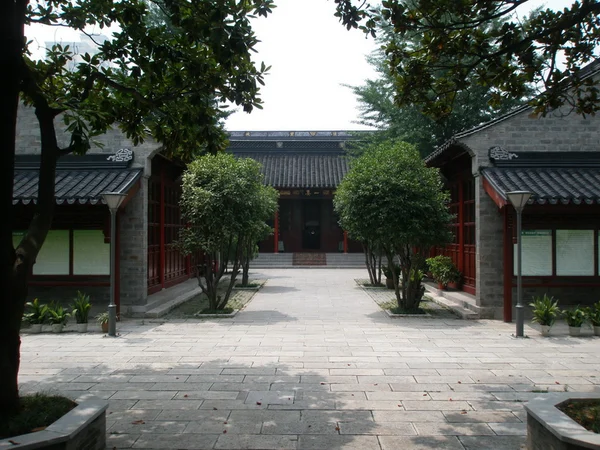
Ming restrictions on overseas movement changed some international contacts, while tribute missions and licensed trade continued. Maritime links did not simply stop. Quanzhou's earlier prominence declined relative to other ports, and Muslim communities adapted to new political and commercial conditions. The balance between official prohibition, licensed exchange and informal trade shifted over time. This matters for Muslim history because reduced visibility in a particular port record does not prove the disappearance of a congregation; families could turn toward regional commerce, local officeholding or inland kinship networks.
Zheng He, born into a Muslim family in Yunnan, led seven state voyages between 1405 and 1433. His career belongs to Ming maritime history and to the complex story of identity at court. It is safer to describe his background and documented patronage than to claim that every voyage was a mission to spread Islam.
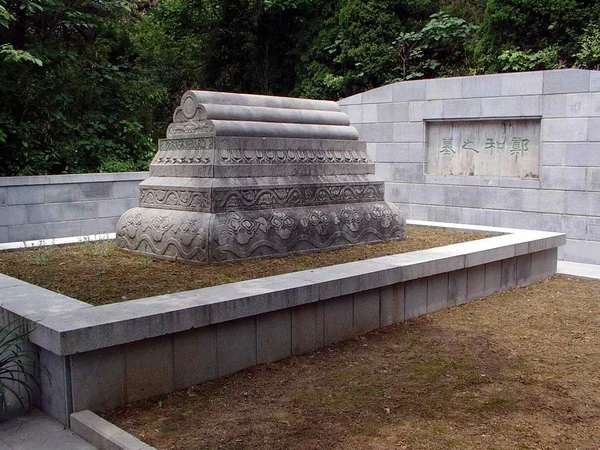
Jingjue Mosque in Nanjing is associated with Zheng He's support and successive rebuilding. The surviving hall is a real place-specific image, while his tomb memorial provides a second material reference. Visitors should confirm access and remember that memorial architecture may postdate the person it commemorates.
Chinese-style mosque compounds became more prominent in many inland cities. Axial courtyards, timber halls and tiled roofs followed local building practice, while qibla orientation, Arabic inscriptions and the prayer hall expressed Islamic function. Construction was shaped by available craftspeople, urban plots, donor resources and repeated repair, so visual similarity to a temple does not mean the spaces served the same ritual purpose. Nor did stone mosques in maritime cities cease to be part of Chinese history simply because their masonry referenced western Indian Ocean traditions. Compare the Ming Great Wall guide for a different example of how surviving structures contain many building phases.
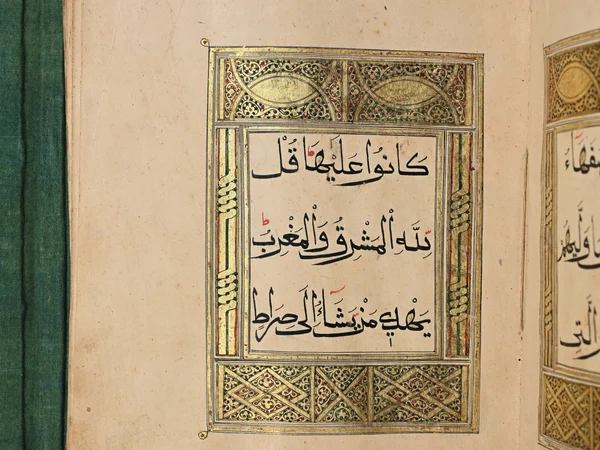
Mosque-based education transmitted Arabic, Persian and Islamic texts. The organized pedagogical tradition later known as jingtang jiaoyu developed over time and is especially associated with late-Ming and Qing scholarship. It should not be described as one school system created by a single emperor. Teachers and students relied on particular textual lineages, oral explanation and locally maintained study communities. Chinese annotations and specialized transliteration practices helped learners approach foreign-language works, but evidence for curriculum and terminology is uneven across regions and dates.
Translation and Chinese-language scholarship also deepened. The earliest surviving Chinese Qurans are associated with established Sunni communities, while late-Ming and early-Qing authors later produced the Han Kitab. The manuscript photograph is a real museum object, not a generic stock image, and its seventeenth–eighteenth-century date is stated rather than forced into an earlier century.
Nanjing, Xi'an, Beijing and Yunnan each preserve different traces of the period. The Muslim-friendly Beijing guide gives practical context for living mosques in the capital; use it for access planning, not as a source for Ming-wide population claims.
Claims that the Ming either fully favored or fully isolated Muslims are both too simple. Policy changed by reign and issue, while community experience depended on locality, occupation and relations with officials. Religious continuity existed alongside cultural adaptation and tighter state control.
For travelers, read a mosque as a sequence: congregation history, documented repairs, surviving building fabric and current worship. Look for dated steles and museum labels, verify photography rules, and never enter a prayer space solely because a heritage ticket grants access to the outer compound.
Across Yuan and Ming rule, Islam became more deeply rooted in Chinese cities and families while retaining connections with wider Muslim worlds. The most credible narrative is neither foreign enclave nor total assimilation, but a changing network of communities shaped by empire, trade, scholarship and local life.
From $ 1226
From $ 2183