Your China & Yunnan Travel Experts

 Ask a Question
Mount Everest stands on the China–Nepal border and has two standard expedition approaches: the North Col–Northeast Ridge from Tibet and the South Col–Southeast Ridge from Nepal. This Mount Everest guide describes them for planning context, not as route instructions. Both require advanced high-altitude experience, a permitted expedition, specialist equipment and professional leadership.
Calling one side “easy” is misleading. The south route has the moving Khumbu Icefall and steep Lhotse Face; the north route involves long exposure at extreme altitude and technical steps high on the Northeast Ridge. Weather, route condition, crowding, rescue options and a climber's preparation change the risk from season to season.
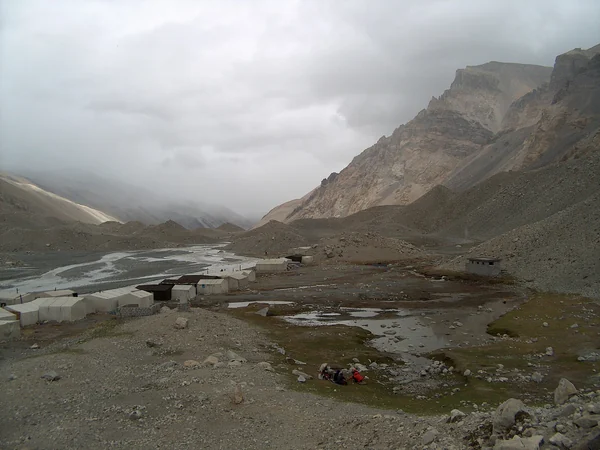
The north route begins in Tibet and proceeds from expedition base camp toward the East Rongbuk Glacier, Advanced Base Camp, the North Col and the Northeast Ridge. Access above the public visitor area is controlled separately; a sightseeing Tibet itinerary does not authorize entry onto the climbing route. Review the distinction in the Everest permit guide.
A road can bring expedition logistics close to the north-side base-camp zone, but that convenience does not reduce the hazards above it. Climbers spend prolonged time at high camps, face severe wind and cold, and cannot assume rapid helicopter evacuation from the upper mountain. Descent and rescue plans must be expedition-specific.
Expedition literature often describes several progressively higher camps between base camp and the Northeast Ridge. Camp names, locations and elevations vary by operator, year and route condition, so a historical six-camp diagram should not be treated as a current GPS plan. The North Col and high ridge are useful geographic reference points; the expedition leader's approved route is the operational authority.
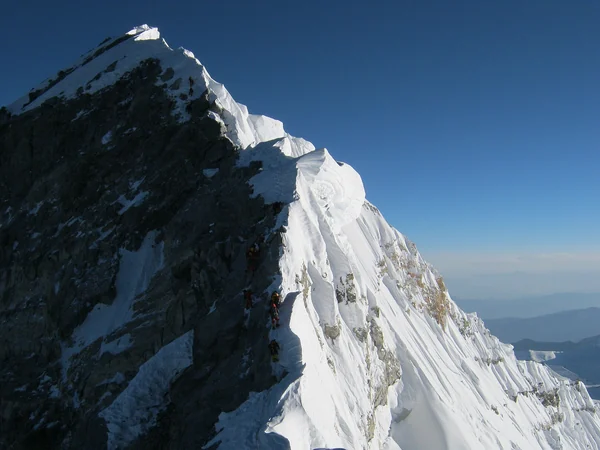
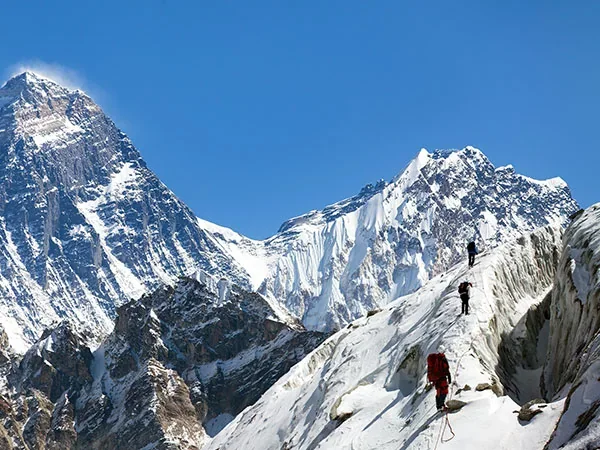
The final ridge contains exposed traverses and rock steps at extreme altitude. Fixed ropes or ladders can change between seasons, and their presence never converts the route into a protected trail. Teams must be able to turn around when weather, oxygen, time or member condition falls outside the agreed safety plan.
The south route begins in Nepal's Khumbu and moves from base camp through the Khumbu Icefall toward the Western Cwm, Lhotse Face, South Col and Southeast Ridge. The approach is reached on foot through the Everest region; it is operationally and legally separate from a Tibet-side journey.
Its most recognizable hazards include movement in the icefall, crevasses, avalanche exposure, steep fixed-rope sections and congestion near limited passages. Helicopter support may operate at lower elevations in Nepal under suitable conditions, but upper-mountain evacuation remains difficult and weather-dependent.
Route choice belongs inside a complete expedition assessment: prior ascents, technical competence, health screening, team systems, current permits, weather services, rescue plan and operator record. Build those foundations before the training and logistics decisions in the Everest preparation guide.
15 Days Expedition to Mt. Everest Base Camp
Beijing, Xian, Lhasa, Shigatse, Tingri, Mt. Everest, Shanghai
From $ 1637
From $ 3179