Your China & Yunnan Travel Experts

 Ask a Question
Early Mount Everest expeditions were not a simple sequence of failures before success. Between 1921 and 1952, teams mapped unknown approaches, tested oxygen equipment, learned how people responded above 8,000 metres and identified routes from both Tibet and Nepal. This page focuses on those preparatory decades; the broader chronology continues in the Everest expedition history.
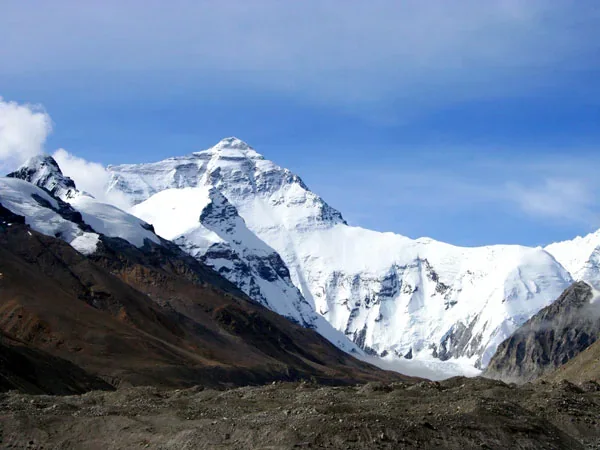
In 1921, the first British reconnaissance approached through Tibet because Nepal was then closed to foreign expeditions. Surveyors and climbers explored the Rongbuk valleys, photographed the mountain and reached the North Col area. The expedition's enduring achievement was geographic knowledge: it established a workable northern approach rather than making a serious summit bid.
The 1922 expedition returned with a summit objective. George Finch and Geoffrey Bruce used supplemental oxygen on a high attempt, demonstrating that the equipment could improve performance despite its weight and unreliability. Another party reached higher without oxygen, but the expedition ended after an avalanche killed seven Himalayan porters.
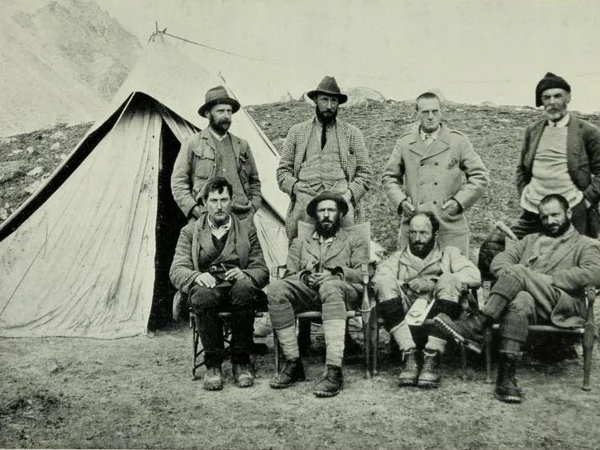
That 1922 disaster is central to the history, not a footnote. Early accounts often emphasized visiting climbers while under-recording the labor, judgment and losses of Tibetan, Nepali and other Himalayan workers who made the expeditions possible.
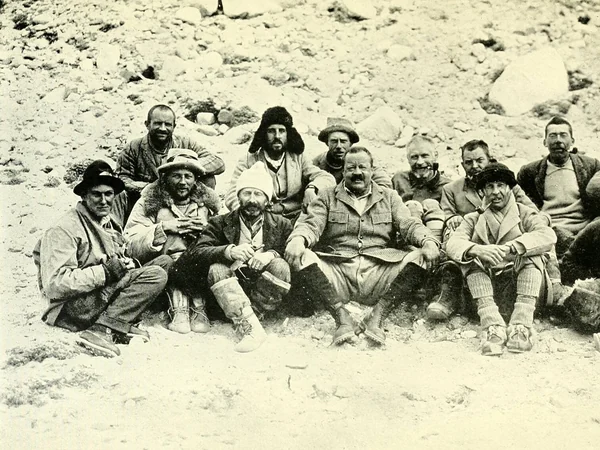
In 1924, teams again used the North Col and Northeast Ridge. Edward Norton reached roughly 8,570 metres without bottled oxygen, a height record for the period, before turning back. His line toward the Great Couloir later became important in discussions of north-face climbing.
George Mallory and Andrew Irvine left their high camp for the summit on 8 June 1924 and did not return. Noel Odell saw them high on the ridge before cloud obscured the view, but the observation did not establish whether they reached the summit.
Mallory's body was found in 1999; Irvine has not been conclusively located in a way that resolves the central question. Without decisive evidence, the 1924 attempt should be described as an enduring historical mystery rather than an unconfirmed first ascent.
Further British expeditions in 1933 repeated the northern approach. Climbers investigated the ridge and traverses beneath it but were stopped by altitude, weather and route difficulty. The work refined knowledge of the North Col system even without a summit.
A small 1935 reconnaissance led by Eric Shipton emphasized mobility and exploration. It also included Tenzing Norgay on his first Everest expedition, beginning a long connection that culminated eighteen years later.
The 1936 and 1938 expeditions encountered difficult snow and monsoon influence. Their limited progress reinforced a practical lesson: a known line on a map does not make the mountain operationally predictable.
Expeditions of this era depended on large support groups, animal transport and long journeys across the plateau. Modern road access can hide how much of the early challenge lay in simply reaching and supplying the mountain.
Photography, surveying and meteorological observations were part of the expeditions as well as climbing. The Royal Geographical Society now holds the official image archive for nine British expeditions between 1921 and 1953, preserving evidence beyond summit narratives.
Reading the archive critically also means recognizing colonial access, naming practices and unequal credit. “British expedition” identifies the organizing institution; it does not mean British climbers accomplished the work alone.
By the late 1930s, political conditions and the Second World War interrupted attempts. When Everest exploration resumed, access through Nepal shifted attention to the south side and changed the route problem.
These northern expeditions explain the North Col and Northeast Ridge tradition described in the Mount Everest planning hub, but their camp locations and equipment should not be treated as current route instructions.
In 1947, Canadian-born engineer Earl Denman entered Tibet without authorization with Tenzing Norgay and Ang Dawa Sherpa. They attempted the northern route but retreated in poor conditions. It was a small private venture, not an approved national expedition, and is best understood as evidence of personal ambition rather than a model for responsible access.
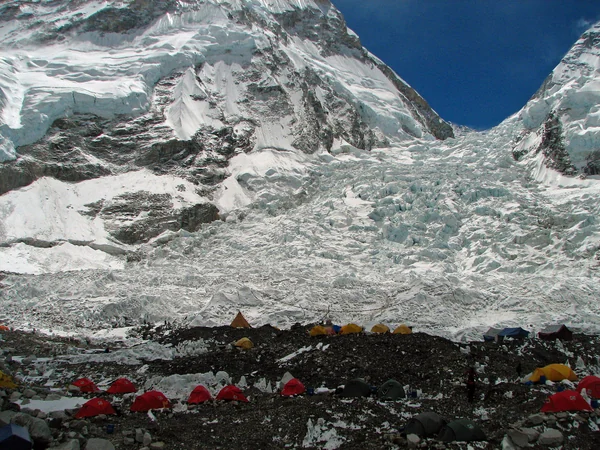
In 1950, the opening of Nepal allowed a British–American reconnaissance including Charles Houston and Bill Tilman to examine the southern approach. Their party entered the Khumbu, viewed the icefall and helped establish that the Western Cwm and Southeast Ridge might offer a route, although they did not launch a summit attempt.
Swiss teams made two important attempts in 1952. In spring, Raymond Lambert and Tenzing Norgay climbed high on the Southeast Ridge before exhaustion and limited supplies forced retreat. Their progress proved the South Col route was viable and supplied recent experience for the next year.
A second Swiss attempt in autumn faced severe cold and wind. The accumulated route knowledge then informed the 1953 British expedition, when Tenzing Norgay and Edmund Hillary made the first confirmed ascent. Their story is covered in the first Everest summit guide.
From $ 1637
From $ 3179