Your China & Yunnan Travel Experts


 Ask a Question
Qiao's Courtyard Houses, Qi County
Qiao's Courtyard Houses (also known as Zai Zhong Tang in Chinese) is located in Qiaojiabao Village, Qi County, Shanxi Province. It is a traditional residential architecture of northern Han Chinese, and also a castle-like building. The courtyard was shaped in Chinese character ‘囍', meaning “Double Happiness” in English. It is a lucky word in Chinese. With a total area of 10,642 square meters, the courtyard is divided into six large compounds, 20 small yards and 313 rooms. The construction area is about 4,175 square meters. The Courtyard is the residential compound of well-known financier Qiao Zhiyong (乔致庸, 1818-1907), who was the most famous member of the Qiao family.
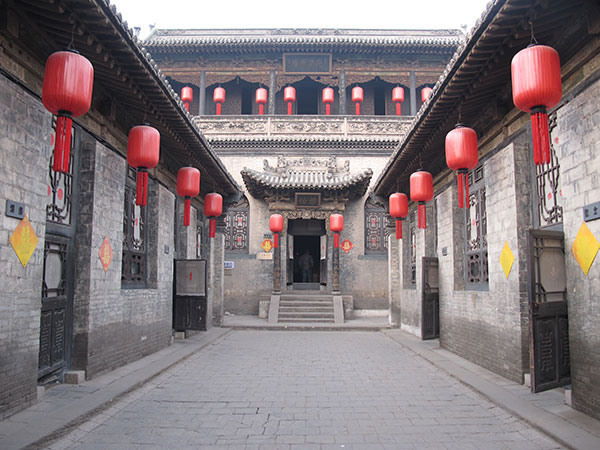
Qu's Courtyard Houses, Qi County
Located to the north of Dongdajie Road in the east of Qi County, Qu's Courtyard Houses (Courtyard of the Qu Family) is the residence of Qu Yuanzhen, who is an outstanding businessman of Shanxi Province and came from a prestigious family between the late Qing Dynasty and the early period of Republic of China. The history of it can dates back to nearly 300 years ago. The entire building complex covers a total area 23,628 square meters, of which only 7,500 square meters has been open to the public. It is divided into 8 large compounds, 19 small yards and 240 rooms. The whole compound looks a castle, magnificent, majestic and stately. What's more, the stone balustrade with fine carvings, courtyard-style hall, decorated archway homes and the stage house are four unique features of Courtyard of the Qu Family. The courtyard is a cconcentration of Chinese Traditional Culture elements and profound artistic heritage, showing high cultural artistic value.
Wang's Courtyard Houses, Lingshi County
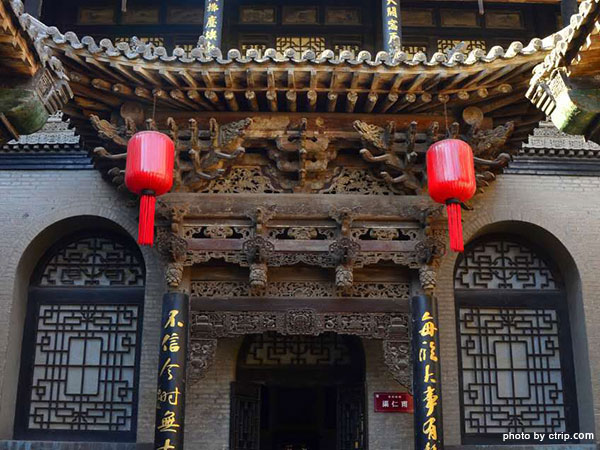
Wang's Courtyard Houses is sited in Lingshi County, Shanxi Province, only 35 kilometers from the Ancient City of Pingyao. It was recognized as a UNESCO World Cultural Heritage Site. Besides being the largest and the best preserved architecture collections in Shangxi Province, it is also the largest residential architecture collections throughout China. Wang Family Courtyard was the private residence of Wang Lan and is four times larger than Qiao Family Courtyard, with 123 courtyards and 1118 houses in an antique flavor. It has been said that it is the first folk house in China, the Forbidden City in Shanxi Province and the imperial palace in folk residence.
Cao's Courtyard Houses, Taigu County
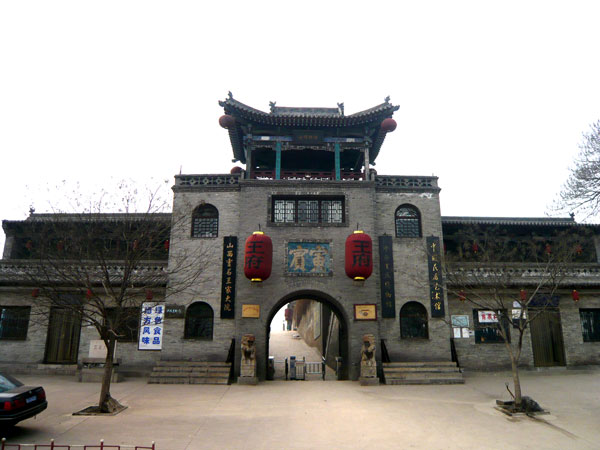
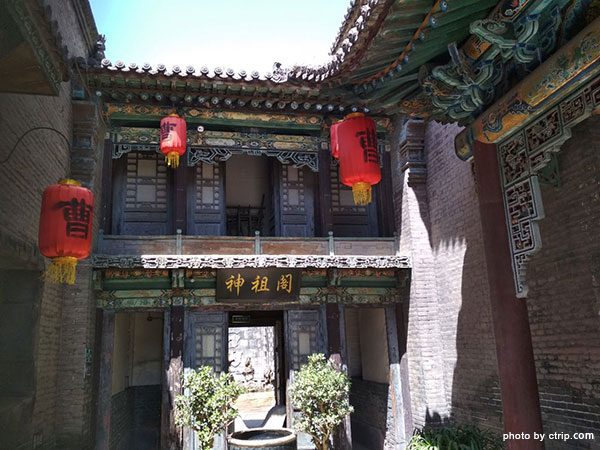
Cao's Courtyard Houses (Qiao Jia Dayuan) is located in Taigu County, Jinzhong City, Shanxi. It used to be the residence of the wealthy merchant Cao's family, whose patriarch made his fortune from selling bean curd. The compound dates from the Qing dynasty, and occupies a two-acre lot. The overall layout of the courtyard is shaped like the Chinese character‘寿', meaning longevity in English.
Kong Xiangxi's Former Residence, Taigu County
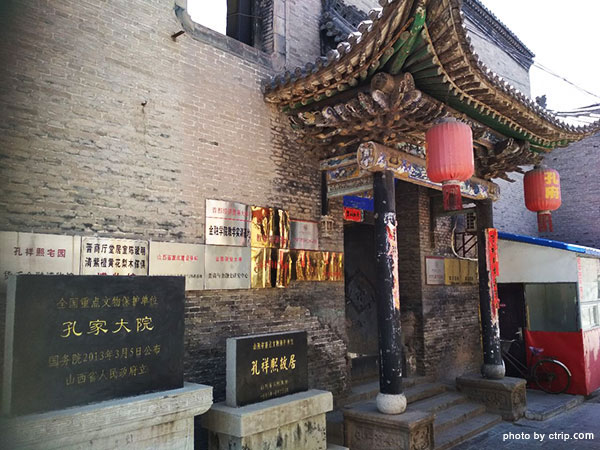
Kung House is located in Taigu County, Shanxi Province. It is the largest and best preserved house in a mid-Qing Dynasty architectural style. The residence is 91 meters long and 69 meters wide, with a total area of 6325 square meters. Existing positive hospital, hospital kitchen, study hospital, the stage house, Mexican courtyard, garden and part of the west of the East Garden damaged. It consists of several sets of compounds arranged horizontally, and each set of compound are divided into a plurality of courtyards along the axial direction.
The above buildings are some unique traditional courtyard houses in Shanxi. Each of them has their own features. They are worthy visiting if you are interested in learning more Chinese traditional architecture style and Chinese commercial development in Ming and Qing Dynasties.