Your China & Yunnan Travel Experts

 Ask a Question
Papermaking was one of several technologies that transformed record keeping, administration, religion and commerce across Eurasia. Chinese traditions associate Cai Lun with improvements reported to the Han court in the early second century, but archaeological paper predates that account; he should not be described as the sole inventor. Paper moved through artisans, states, religious communities and trade networks over time. Explore related cargo in the Silk Road goods guide, consider later collecting in the foreign exploration guide, and place the process within the history of the Silk Road.
Papermaking knowledge traveled through several channels rather than one dramatic event. Evidence from manuscripts, excavated fragments and production sites shows gradual adoption and local adaptation across Central Asia and beyond. The Silk Road linked places where paper was made, used, copied and traded. Finds from sites around Loulan in Xinjiang help scholars study early paper, but exact dates and production origins depend on archaeological context. Manuscripts from Turpan and Dunhuang appear in several languages and religious traditions, demonstrating paper's role in multicultural communities rather than proving that every sheet was made locally.
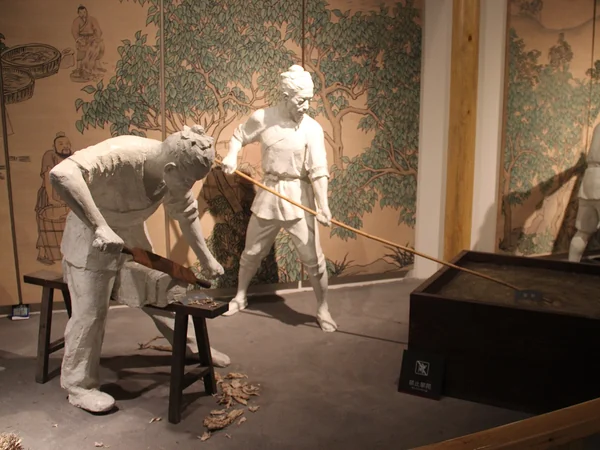
The spread westward supported administration, scholarship, commerce and religious transmission, yet it did not follow a single uninterrupted route. Papermaking centers used available fibers, water, skills and markets. Raw material mattered: producers could adapt bark, hemp, rags and other fibers to local conditions, while clean water and repeated beating, lifting, pressing and drying shaped the finished sheet. A museum demonstration is therefore useful when it explains each stage instead of presenting an undated craft scene. The Tang dynasty
defeat near the Talas River in 751 is often presented as the moment Chinese prisoners introduced papermaking to the Islamic world. That story is influential but too simple to carry the entire explanation; knowledge may have moved through multiple contacts, and production histories require regional evidence. Early paper discoveries near Xian are important to the technology's history, but labels such as “the earliest paper” can change with new finds and dating methods. In museums, read the excavation location, material analysis and date range before repeating a superlative. Silk Road networks accelerated the movement of paper, texts and production knowledge. For travelers, Dunhuang manuscripts and papermaking displays are best understood together: one shows what communities recorded, while the other explains the labor behind the writing surface. Notice page format, ruling, repairs, ink and reuse; a humble document may reveal taxation or private correspondence more clearly than an ornate religious text. Digital reproductions can help when the original is too fragile for permanent display, so verify which objects are actually on view. Conservation lighting may be deliberately low, and a facsimile can be the responsible display choice rather than evidence that the collection lacks originals. Silk Road
From $ 3510
From $ 3061

From $ 3683


