Your China & Yunnan Travel Experts

 Ask a Question
The Silk Road was not one paved highway between China and Rome. It was a changing network of land and sea routes used by many societies over many centuries. The term became common in modern scholarship long after the routes operated. “Silk Roads” is often more accurate because it acknowledges branches, seasons and regional relay trade. Correcting the misconceptions below makes a trip more meaningful: travelers can connect an object or monument to a dated place instead of repeating a universal caravan story.
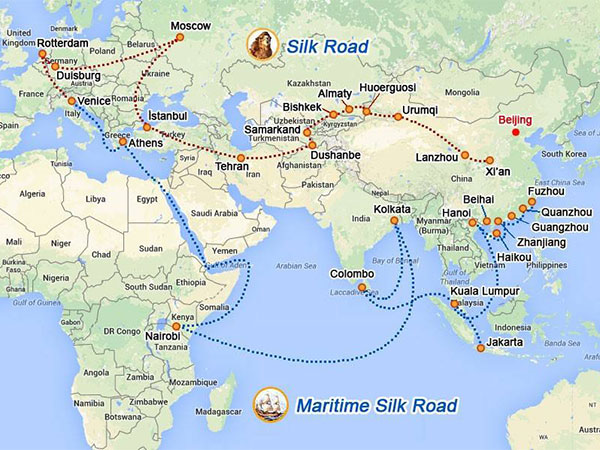
Maps often draw a bold line for clarity, but travelers used northern and southern oasis branches around the Taklamakan, steppe routes, mountain passes and maritime connections. The Silk Road routes in China show why water and political control changed the practical path. Misconception 2: Silk Was the Only Important Commodity Silk traveled widely because it was valuable and portable, yet horses, glass, metals, ceramics, paper, aromatics, medicines and food plants also moved. The exact mix varied by period and market. Misconception 3: Merchants Usually Crossed the Whole Continent Most exchange operated through regional stages. Goods could change owner, pack animal, language and transport mode several times. An imported object does not identify one end-to-end traveler. Misconception 4: The Han Dynasty Created Exchange from Nothing Earlier steppe, jade and regional trade already connected communities. Han missions and frontier expansion from the late second century BCE strengthened direct court knowledge and access to existing Central Asian networks.
Misconception 5: East and West Were Two Simple, Separate Worlds Central Asian oasis and steppe societies were active participants, not empty space between two endpoints. Sogdian, Turkic, Persian, Indian and other communities shaped trade, translation and urban life. Misconception 6: Every Cultural Similarity Proves Direct Contact
Ideas and artistic forms could pass through several societies and acquire new meanings. Dating, provenance and local context are necessary before claiming that one object copied another distant culture. Misconception 7: The Silk Road Had One Golden Age Different branches flourished under different political and economic conditions. Han and Tang history is important, but maritime and regional routes remained significant in other periods. Misconception 8: The Silk Roads Suddenly Closed War, environmental change, new markets and maritime shipping altered particular corridors at different times. There was no universal closing date.
Misconception 9: Every Site on a Tour Belongs to the Same Century A modern itinerary may combine a Han pass, Tang caves and a Ming fortress. That route is practical for visitors, but the monuments require separate timelines. Misconception 10: A Modern Project Re-creates the Ancient Network

Begin with date and location. Ask whether the evidence is an excavated object, a contemporary document, a later story or a modern reconstruction. Check provenance. A museum object with a find location and archaeological layer supports a stronger conclusion than an image detached from its catalog. Distinguish possibility from proof. Similar motifs may reflect contact, parallel development or later collecting.
Use the Silk Road facts guide for a concise evidence framework and the Silk Road significance guide for the larger historical value.
Read route maps as models. They simplify seasonal detours, political borders and local roads.
At heritage sites, compare the excavated original, restoration and tourist reconstruction rather than treating them as equivalent.
When information may change—tickets, open caves, transport or access—confirm it with the current site or operator. A careful interpretation is not less exciting. It reveals the real complexity of people who translated, negotiated and adapted across connected regions. The best Silk Road story links evidence to decisions: which places to visit, what a museum object demonstrates and what remains uncertain.
From $ 3510
From $ 3061

From $ 3683