Your China & Yunnan Travel Experts

 Ask a Question
 Reviewed August 27, 2026. Bon is a living indigenous religious tradition of Tibet, not a vanished “pre-Buddhist superstition” and not simply a branch of Tibetan Buddhism. The word can refer both to older Tibetan ritual traditions and to Yungdrung Bon, the organized monastic tradition that took recognizable form from about the eleventh century. Followers understand their teachings through a sacred history centered on Tonpa Shenrab Miwo and Zhangzhung; historians study those accounts alongside manuscripts, art, archaeology and later institutional records. Keeping religious tradition and modern historical method distinct makes the subject clearer without dismissing either one.
Bon communities maintain monasteries, teachers, lay practice, philosophical study, ritual arts and extensive textual collections. Practices differ by lineage, monastery, household and region, so a traveler should be cautious with color-coded period labels or sweeping descriptions such as “magic” and “nature worship.” Those phrases often compress different periods and practices into a hierarchy that practitioners themselves may not use. Bon includes ethical teaching, cosmology, meditation, monastic discipline, divination and healing rites, funerary and protective rituals, pilgrimage, offerings and relationships with local deities; no single ritual defines the tradition.
For trip planning, the useful distinction is practical: Bon sites are active sacred places with their own history and etiquette. Direction of circumambulation may differ from that at nearby Buddhist sites, photography rules are local, and private rites are not performances. Ask the guide or entrance staff before following a route. Readers who want the broader political and archaeological timeline can first review the Tibet history guide; it separates imperial dates and material evidence from later religious biographies.
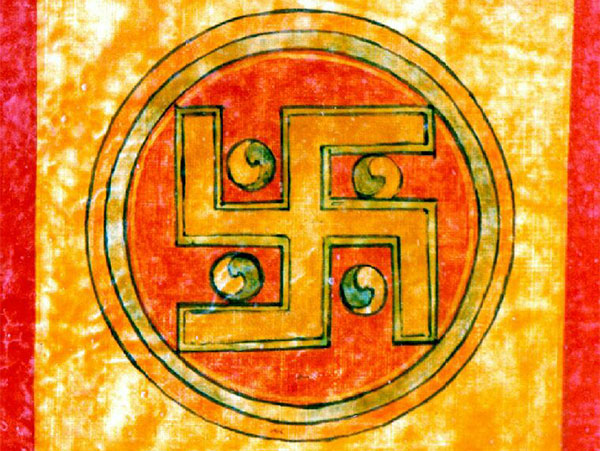
Bon sacred histories identify Tonpa Shenrab Miwo as the founding teacher and associate the origin of the teachings with Olmo Lung Ring and Zhangzhung. These names carry theological and cultural meaning. They should not be converted into an exact modern birthplace or a confidently dated biography unless a source explains which traditional chronology it follows. The frequently repeated claim that Shenrab was born in 1917 BCE is a devotional chronology, not a date established by contemporary inscription or archaeology.
The Tibetan Empire of the seventh to ninth centuries provides firmer historical context. Court records and later histories refer to ritual specialists and to changing relations among imperial authority, local cults and newly sponsored Buddhism. Buddhism expanded through royal patronage, translation and monastic foundations, but that process was neither immediate nor uniform. Older ritual knowledge continued, and later Bon and Buddhist communities developed in sustained contact rather than in sealed cultural worlds.
Why this matters on a journey: a visitor may encounter a Bon object in a museum, a family practice, a village shrine or an active monastery. The date of the building is not necessarily the date of the tradition, and a rebuilt hall can still support continuous religious life. Ask “How is this place used today?” and “Which lineage or community cares for it?” before asking whether it is older than Buddhism.
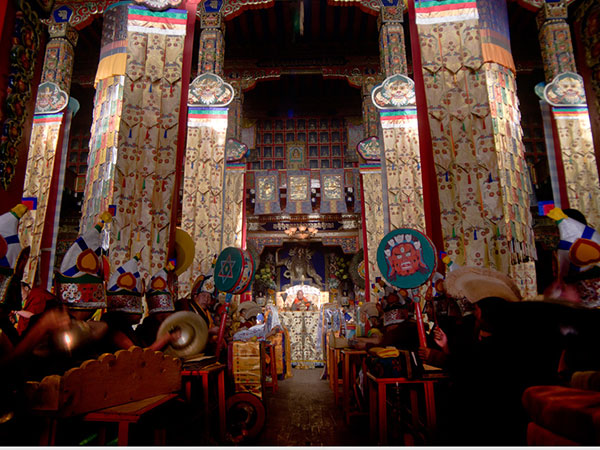
Bon teachings encompass cosmology, ethics, ritual, meditation and philosophy. Relationships among human communities, local deities and the natural world are important, but “Bon worships every object in nature” is an outsider's simplification. Mountains, lakes and territorial deities can have specific histories and ritual roles. Offerings or protective rites should be described by the community's own explanation, not translated automatically as fear of spirits.

Bon is practiced today by monastic and lay communities. Its institutions have changed through migration, rebuilding, education and modern media, but change does not make the tradition inauthentic. Nor should every Tibetan custom be labeled Bon: prayer flags, household rites, local deities and pilgrimage practices may have layered histories and are interpreted differently by different communities. Reliable interpretation names the place, date, lineage and speaker instead of turning cultural exchange into a claim that two religions have “mixed into one.”
At a Bon monastery or shrine, follow the route used locally; some Bon communities circumambulate counterclockwise, but visitors should never assume that direction at every site. Remove hats where requested, keep voices low, do not touch texts, statues, murals or ritual instruments, and ask before photographing interiors, practitioners or ceremonies. Heritage buildings also have uneven floors, steep steps and smoke or butter-lamp residue, so plan a slow visit. The Tibetan architecture guide helps distinguish religious function, material and later restoration without treating every colorful building as timeless.
A trustworthy Bon visit leaves room for living voices. Use the site's official label, a qualified local guide, museum scholarship and a practitioner's explanation together; note when they answer different questions. Do not request access to private rituals, funerals or restricted rooms, and do not stage prayer objects for a photograph. For more context on assembly halls, chapels, courtyards and conservation, continue with the Tibetan monastery and temple architecture guide. This page is cultural orientation, not religious instruction, and local rules always take priority.