Your China & Yunnan Travel Experts

 Ask a Question
Reviewed August 27, 2026. Tibetan architecture is not one fixed look. It is a family of building traditions shaped by altitude, climate, available materials, religious use, local craft and centuries of rebuilding. A stone village house, a monastic assembly hall, a fortified palace, a farm courtyard and a nomadic tent solve different problems. Flat roofs are common in the relatively dry central plateau because they provide working and drying space, while roof form, drainage and timber use vary in wetter valleys and forested districts. Thick walls of stone, rammed earth or sun-dried earth can moderate temperature, and timber frames support floors, roofs, balconies and richly painted interiors. Openings are often carefully placed for sun, ventilation and protection, but it is inaccurate to claim that every Tibetan building faces south, uses the same inward wall angle or follows a universal earthquake formula.
Materials explain much of the visual character. White mineral wash, red or ochre bands, dark window surrounds, woven valances and painted timber are not interchangeable decoration; color, motif and placement may indicate building type, patronage or religious meaning. Maintenance is continuous because ultraviolet light, wind, freeze-thaw cycles, rain and daily use all affect exposed surfaces. A repaired wall or renewed roof does not automatically make a place inauthentic. Heritage specialists examine layout, fabric, construction sequence, craftsmanship, documentation and continuity of use. UNESCO describes the Lhasa ensemble as three distinct components—Potala Palace, Jokhang Temple and Norbulingka—whose palace-fort, temple and garden-residence forms embody different functions and periods. Use the Tibetan monastery and temple architecture guide to read religious layouts without assuming every monastery follows the same plan.
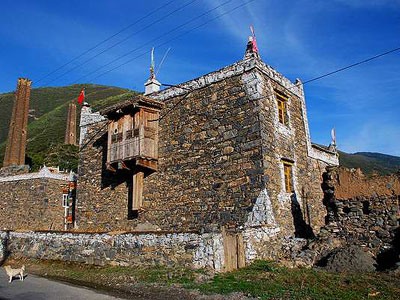
Domestic architecture deserves equal attention. Traditional houses may organize kitchens, family rooms, storage, livestock areas, courtyards, terraces and household shrines according to livelihood and region. Urban Lhasa, agricultural valleys, Himalayan borderlands and pastoral areas do not share one floor plan. The retained first photograph shows a real stone-and-earth house with timber-framed windows; it illustrates one building, not a template for the whole plateau. The traditional Tibetan houses guide compares common elements while keeping those regional differences visible.
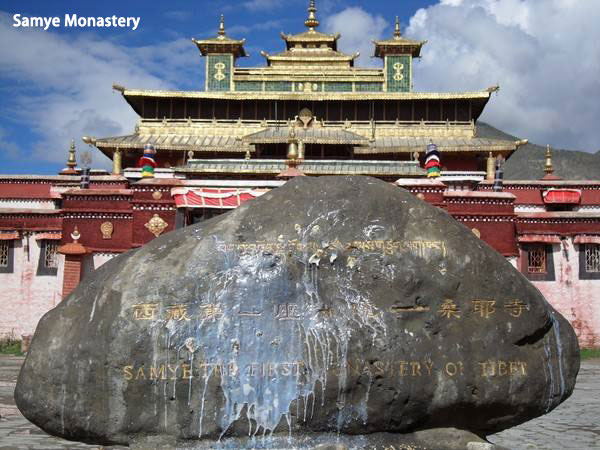
Religious buildings are layered records. A monastery can contain an assembly hall, chapels, colleges, monks' quarters, kitchens, printing rooms, courtyards, stupas and later additions. The orientation of a route may reflect ritual movement as well as terrain. Samye is historically significant for the early institutional development of Buddhism in Tibet, while Jokhang, Sakya, Tashilhunpo, Sera, Drepung and many other sites have different dates, lineages, plans and restoration histories. The retained Samye photograph accurately shows an entrance building and an inscribed stone, but a caption cannot establish which fabric is original. On site, compare the official label, conservation information and a qualified guide's explanation before attaching a date to a wall or mural.
Visit as a guest, not as a surveyor of exotic scenery. Active temples and family homes have privacy boundaries. Follow the posted route, remove hats where requested, walk clockwise where local practice requires it, keep voices low and never photograph a person, ritual or interior simply because another visitor did. Flash, tripods, drones, leaning on painted timber and touching murals can damage heritage or disrupt worship. Opening areas and photography rules change, so confirm them at the entrance. At altitude, allow time for stairs and uneven thresholds; historic buildings may have steep ladders, dark passages and limited step-free access.
Good interpretation connects construction to living skills. Carpenters, masons, painters, metalworkers, textile makers and conservation teams all contribute to the building readers see today. The Tibetan handcrafts guide explains several related materials and techniques. Ask whether a displayed component is historic, restored, newly made or a modern adaptation. That small discipline produces a more trustworthy visit than calling every colorful building ancient, purely religious or unchanged.