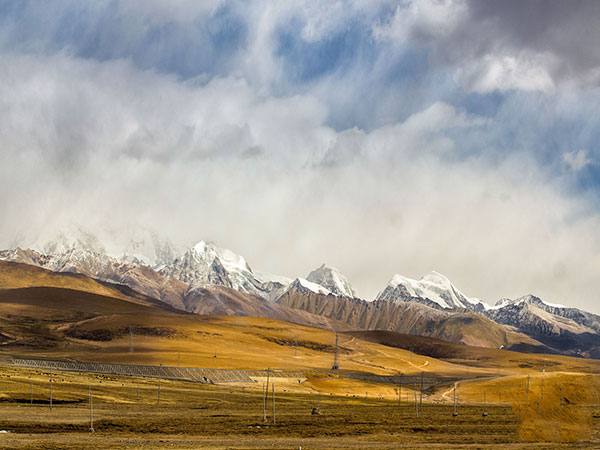
Reviewed: August 27, 2026. Autumn usually brings clearer, drier intervals to many established Tibet routes, but it is not one uniform season. September can retain summer rain, October cools quickly, and November can feel wintry at elevation. If your dates begin earlier, compare the
Tibet summer weather guide, then check the current forecast for every overnight stop.
Tibet Weather in Autumn: Climate and Travel Planning
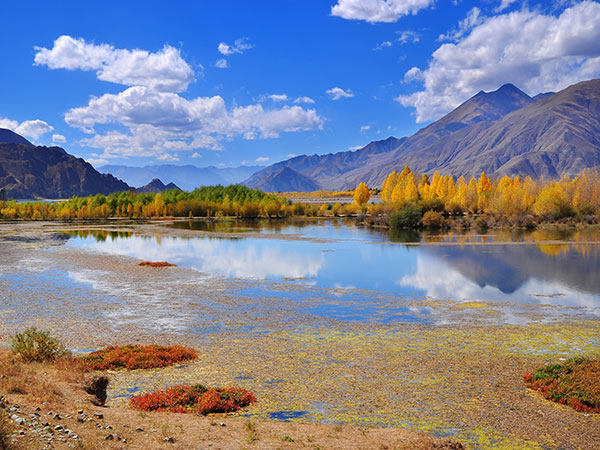
September through November is generally treated as autumn in Tibet . The useful planning distinction is elevation: Lhasa and some lower valleys may have comfortable sunlit afternoons while Namtso, high passes, western Tibet and Everest-region roads can be much colder, windier or icy. September is usually the softest transition from the wet season; October often brings sharper night cooling; by November, remote highland logistics may resemble winter. A blue-sky photograph is a landscape reference, not a promise for a particular date.
Use the Tibet climate guide for regional context. The table below preserves the page's legacy Lhasa planning figures, corrects precipitation to millimetres and should not be read as a current forecast or an average for the whole autonomous region. Weather normals describe typical conditions; operational decisions require current meteorological, road and scenic-area notices.
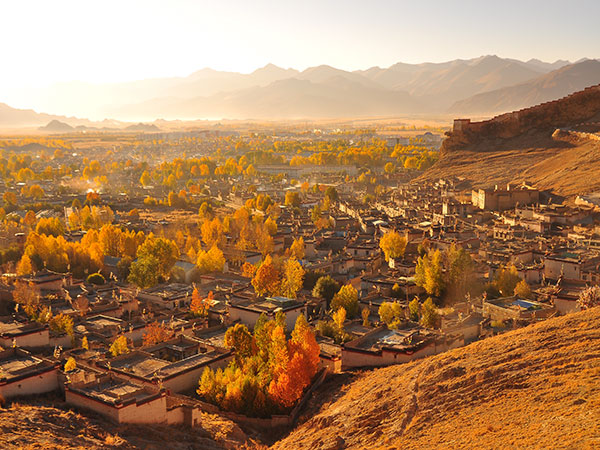
Autumn can suit Lhasa heritage walks, Shigatse and selected Nyingchi valleys. Forest and village color depends on altitude, species and the year's weather; never guarantee a peak-foliage date. Use an extra night in Lhasa before a higher road day, and keep a museum, monastery or neighborhood walk ready when visibility is poor. Everest-region viewpoints need permit, road and weather confirmation, while community photography requires permission and respect for working land, livestock routes and religious spaces.
Legacy Lhasa Climate Snapshot for Autumn (planning reference only)
|
Month
|
Sep
|
Oct
|
Nov
|
|
Average temperature (°C)
|
12.8
|
8.1
|
2.2
|
|
Precipitation (mm)
|
58.3
|
10.2
|
1.7
|
|
Days with precipitation
|
10.0
|
2.3
|
0.4
|
What to Wear in Tibet in Autumn
1. Build a three-layer system: a moisture-managing base, a warm mid-layer and a wind-resistant outer layer. Carry the warm layer even on a bright Lhasa afternoon because shade, sunset and exposed viewpoints can feel substantially colder. A small daypack is more useful than leaving insulation in a vehicle that may not remain nearby.
2. For Lhasa, Shannan and lower Nyingchi valleys, combine long trousers and a light daytime layer with a warmer coat for morning and evening. Add sunglasses, broad-spectrum sunscreen and lip protection; altitude increases UV exposure even when the air feels cool. A scarf or neck gaiter helps with dry wind without forcing you into a heavy coat at midday.
3. Nagqu, Ngari and high road corridors require winter-capable insulation, gloves, a warm hat and footwear with grip. Do not infer pass conditions from a city forecast, and confirm that accommodation, heating, meals, fuel and authorized transport are operating before leaving the main route. Long distances make an apparently small delay more consequential than it would be in a city.
4. For Namtso or Everest-region itineraries, pack for freezing temperatures and rapid wind changes. Stay only within the authorized itinerary, avoid unmarked lake ice or slopes, and let current closure and road notices determine whether an overnight or viewpoint visit proceeds. Carry water, snacks and required medicines in the heated passenger area rather than inaccessible luggage.
Autumn Route, Health and Booking Checks
1. Dry-feeling air does not prevent dehydration or sunburn. Drink normally, use moisturizer and lip balm, and avoid using excessive water intake as an altitude-illness treatment.
2. Plan the first 24–48 hours lightly after rapid arrival at altitude. Fitness does not remove altitude risk; stop ascending if symptoms develop and seek medical help or descend urgently for worsening breathlessness at rest, confusion, loss of coordination or other severe symptoms.
3. Holiday demand varies by year. Confirm the current National Day and Mid-Autumn Festival calendar, train inventory, timed-entry rules and hotel terms rather than repeating an old crowd or price forecast. Compare cancellation deadlines with permit processing and avoid a non-refundable same-day flight connection after a long plateau road.
4. Late-autumn travelers should continue with the
Tibet winter weather guide. Snow, ice, wind and shorter daylight can affect road corridors before cities feel fully wintry, so keep one buffer day around the most exposed transfer.
5. International visitors should verify current Tibet travel documents and organized-tour requirements before buying non-refundable transport. Use an authorized operator, carry the itinerary and identification requested for checkpoints, and treat access to border or protected areas as dynamic. Keep digital and paper copies where permitted, but never publish a permit image containing personal data.
Suggested Autumn Route: Central Tibet with Lhasa and Shigatse Allow acclimatization time and keep any Namtso or Everest-region extension conditional on current permits, roads and weather.

 Ask a Question