Reviewed: August 27, 2026. Summer is the main travel season on many established Tibet routes, but it is also the wetter season and not a guarantee of clear mountain views. Compare the
Tibet spring weather guide for early-season conditions, then check current warnings for every road and scenic area.
Tibet combines high plateaus, river valleys, alpine lakes and forested southeast districts, so one “summer temperature” is not useful for an entire itinerary.
Lhasa may have mild afternoons while passes and high lakes remain cold and windy; southeast valleys can be wetter, and long road transfers can cross several weather zones in one day. June often feels different from peak-rainfall July or August, yet individual storms matter more than monthly labels. Wildlife sightings, flowering grasslands and unobstructed peaks are possibilities, not products that can be guaranteed.
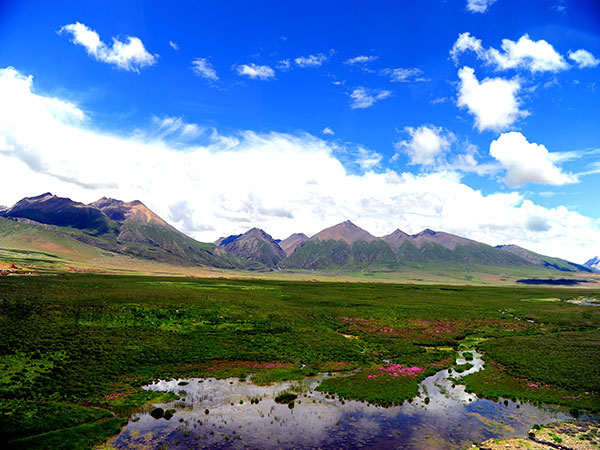
Tibet Weather in Summer: Climate and Travel Planning
June through August often brings the warmest conditions of the year in inhabited valleys, strong ultraviolet exposure and a pronounced day–night range. Sunlit comfort can change quickly in cloud, wind or rain, so keep insulation and a waterproof layer accessible rather than packed under luggage. A trip that combines Lhasa, Shigatse and Nyingchi needs separate forecasts, because aspect, elevation and the southeast moisture gradient create different daily decisions.
The table below preserves legacy Lhasa-style monthly figures as a planning snapshot. It is not a current forecast and does not represent Nyingchi, Ngari, Nagqu, Everest-region roads or high lakes; use local forecasts and official warnings for those places.
Legacy Lhasa Climate Snapshot for Summer (June–August; planning reference only)
|
Month
|
Jun
|
Jul
|
Aug
|
|
Average temperature (°C)
|
15.5
|
15.3
|
14.5
|
|
Precipitation (mm)
|
72.3
|
119.4
|
122.6
|
|
Days with precipitation
|
9.6
|
14.8
|
15.3
|
Summer Rain and Road Conditions
Much of Tibet's annual precipitation falls during the warmer months, with substantial local variation. Rain may be concentrated in showers or at night on some days, but daytime rain also occurs; never build a transfer around the claim that it only rains after dark.
Heavy rain and thunderstorms can raise debris-flow, landslide, rockfall, lightning and road-closure risk. Avoid riverbanks, low areas, exposed ridges and steep slopes during warnings, follow traffic control, and do not enter an undeveloped shortcut when a main road is delayed. After rain, a road may reopen with one-way control or long queues, so maintain food, water and time margins without pressuring the driver.
Rapid arrival in Lhasa still creates altitude risk even in mild weather. Plan a light first day, avoid alcohol and strenuous exercise at first, do not ascend higher while symptomatic, and seek urgent medical assessment for worsening breathlessness at rest, confusion or loss of coordination.
Use the
Tibet climate guide for the regional pattern, then refresh the route with short-range forecasts, official road information and the operating notices of each scenic area. Build a buffer before flights or trains rather than assuming a delayed mountain road will reopen on schedule. Keep the authorized operator informed when weather requires a route change, because permits and hotel locations may limit improvisation.
Tips for Traveling in Tibet in Summer
1. Pack breathable long sleeves, long trousers, a warm mid-layer and a waterproof outer layer. A sunny Lhasa forecast does not cover a high pass or pre-dawn viewpoint, and wet clothing can become a cold-weather problem quickly. Carry one dry change in the day vehicle rather than sending every layer ahead with large luggage.
2. Use broad-spectrum sunscreen, UV-protective sunglasses, a brimmed hat and lip protection. Follow product directions and seek shade where available; cool air and cloud do not reliably indicate low ultraviolet exposure.
3. Carry rain protection for people, documents and electronics. Use footwear with grip, keep away from flooded crossings, and let the driver or authority—not a fixed itinerary—decide whether a storm-affected road is safe. Do not stand under isolated trees or on exposed summits during thunder.
4. Hydrate normally and eat regular meals, but do not present water, fruit or supplements as cures for altitude illness. Travelers with heart, lung, sleep or other significant medical conditions should seek individualized pre-travel advice.
Summer demand, permit processing and timed-entry inventory can change. Confirm all restricted-area documents and first-party bookings early; if traveling into the drier shoulder season, continue with the Tibet autumn weather guide. Keep copies of required documents secure, compare cancellation terms, and do not publish permit images containing personal data.

 Ask a Question