Your China & Yunnan Travel Experts

 Ask a Question
Reviewed August 27, 2026. Tibetan arts and culture are living, regionally varied practices rather than a single historic style. Rock images, murals, manuscripts, thangka paintings, sculpture, metalwork, woodcarving, carpets, woven aprons, clothing, masks, music, dance and oral performance were created for different religious, domestic, civic and commercial settings. Some objects are used in worship, some carry family or regional identity, some are made for performance, and others are contemporary works for collectors. Date, material, maker, community and original function matter more than a generic label such as “Tibetan art.”
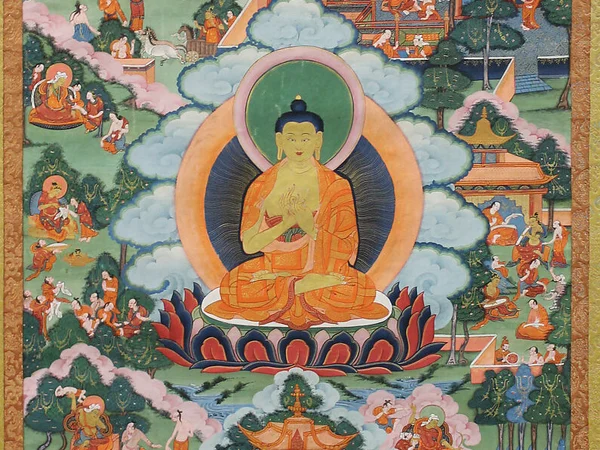
Thangka is a useful example. A thangka is a portable painted or textile image, commonly mounted as a scroll, but subject, materials and ritual role vary. Artists traditionally work within iconographic and proportional systems while making skilled decisions about drawing, pigments, shading, landscape and textile mounting. A museum image can help readers study technique, yet an active shrine object should not be treated as décor. The new card photograph is a real nineteenth-century Tibetan thangka from The Metropolitan Museum of Art's Open Access collection; it replaces a flat digital illustration so the page shows an actual documented object. Its central Buddha and surrounding narrative scenes belong to that specific work and do not summarize every thangka tradition. Read the Tibetan thangka guide before visiting a workshop or buying a painting.
Performance adds another dimension. Tibetan opera, often called Ache Lhamo, combines singing, narration, movement, masks, costume and stories transmitted through particular troupes and communities. A staged visitor excerpt is not the same as a full festival performance. The Tibetan opera guide explains what to listen and look for without reducing the form to colorful costumes. At monasteries and festivals, confirm whether photography is permitted, avoid blocking participants and do not interrupt a ritual or performance for a posed image.
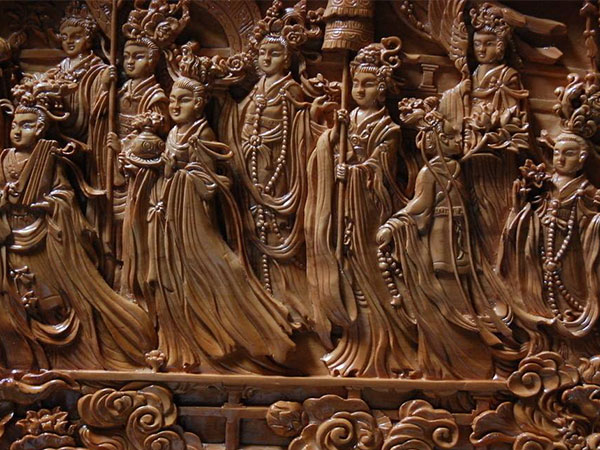
Craft knowledge is embedded in materials. Carpet weaving, wool and yak-hair textiles, carved and painted wood, metal vessels, jewelry, incense making, clay work and architectural ornament reflect different local resources and markets. The retained carving photograph shows a real relief with Buddhist figures and decorative motifs; it belongs beside a discussion of carving, not beside a claim about all Tibetan crafts. Names transliterated from Tibetan can vary, and English spellings of places or techniques are not always standardized. When a workshop makes a historical claim, ask for the object's documented date, maker and provenance rather than relying on an antique-looking finish.
Buy responsibly. A new handmade object should be described honestly as new, and a reproduction should not be sold as an antique. Export rules can apply to cultural property, wildlife products and protected materials. Avoid unidentified bone, ivory, coral, fur or other animal-derived components; a seller's assurance is not a legal permit. Obtain a detailed receipt, keep maker information and check current customs and cultural-property requirements before purchase. Supporting a transparent workshop or cooperative is more valuable than chasing an unverified “rare” object.
Clothing is also contextual. Chuba forms, aprons, hats, jewelry and festival dress vary by region, age, occasion, occupation and community, while everyday clothing continues to change. Do not ask a person to become a costume prop. The Tibetan clothing guide gives a starting vocabulary, but consent and local explanation remain essential. A strong cultural visit leaves time for a museum label, a demonstration, a conversation and the maker's own account. It distinguishes sacred from decorative, historic from contemporary and community practice from tourism staging—precisely the distinctions that make the experience more memorable and trustworthy.