Your China & Yunnan Travel Experts

 Ask a Question
Tibetan customs are living, local practices rather than a fixed list of exotic rules. Lhasa, a farming valley, a northern pastoral community and an eastern Tibetan town may share language or religious references while differing in food, dress, greeting style and festival rhythm. Age, family practice and urban life matter too. Start with ordinary courtesy: greet people before asking for help, use both hands when giving or receiving an important object, wait to be shown where to sit and do not photograph someone without consent. A few Tibetan words can show care, but Mandarin is also widely used; our Tibetan language guide gives a modest starting point without pretending that one phrase fits every dialect. In homes or teahouses, accept hospitality graciously and state allergies or alcohol preferences clearly. You do not need to finish something unsafe to be polite. For meals, learn what tsampa and butter tea are before turning them into a dare; the Tibetan food guide explains ingredients and altitude-friendly choices. Avoid claims that all Tibetans behave, believe or celebrate in the same way. The most reliable guide in a social situation is the person hosting you.
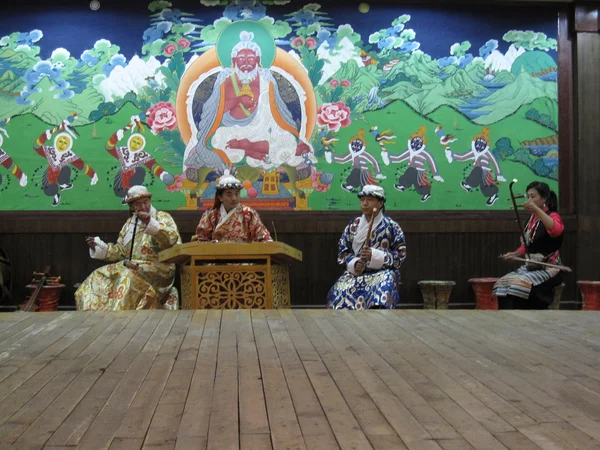
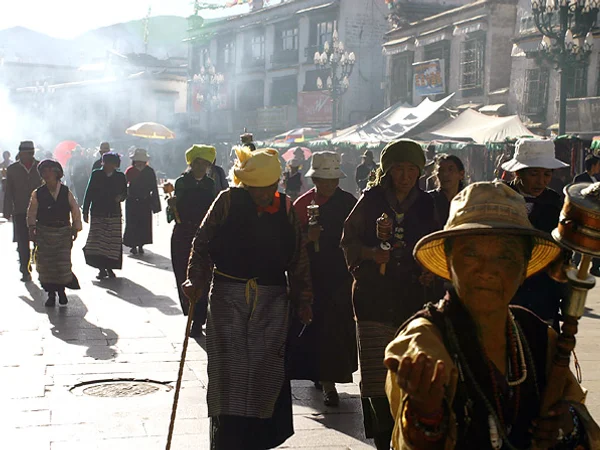
Religious and public customs require more attention. Walk around sacred objects or on a kora route in the direction followed by local pilgrims unless site staff directs otherwise. Do not touch murals, statues, scriptures or ritual objects, step over offerings, imitate prostration for a joke, or interrupt worship for a photograph. Hats, cameras and interior access rules vary by monastery; posted instructions and custodians take priority over old web advice. Tibetan calendars combine religious observance, seasonal work and regional festival dates, so an English calendar date can shift from year to year. Confirm the current program through local authorities or organizers and use our Tibet festival planner for routing, not as a guarantee that every event is open to visitors. UNESCO describes Tibetan opera as a composite tradition of song, dance, storytelling, chant, acrobatics and religious performance, often staged in public squares, temples or theatres. Watch from the audience area and ask before entering backstage. When a host offers tea or a small gift, receive it with both hands and follow their pace; it is better to ask a sincere question than to perform a gesture copied from a video. Bargaining belongs in some markets, not in every workshop or religious setting. Children are not tourist subjects and require a parent or guardian's consent for a portrait. If a guide translates a conversation, speak to the person rather than only to the guide, and allow time for a complete answer. Avoid broad questions that ask one individual to explain every Tibetan belief or custom. Funeral practices are especially private and vary by family, place and religious advice. Never seek out a burial site as a spectacle, publish directions, fly a drone or photograph a ceremony without explicit permission. Respect sometimes means leaving the camera packed.