Your China & Yunnan Travel Experts

 Ask a Question
The Silk Road was a changing network linking China with Central Asia and regions farther west. Its Chinese heritage survives in imperial capitals, frontier forts, oasis cities, caves, manuscripts and objects—not in a single 7,000-kilometer monument. Compare locations through the Silk Road destination guide, check common claims in the Silk Road facts guide, and use the story of Loulan oasis to understand why some settlements declined.
The sites below belong to different dynasties and functions. Read each one for what it can actually demonstrate: Qin imperial organization in Xian, Buddhist patronage at Dunhuang, Ming frontier defense at Jiayuguan, and oasis urbanism around Turpan.
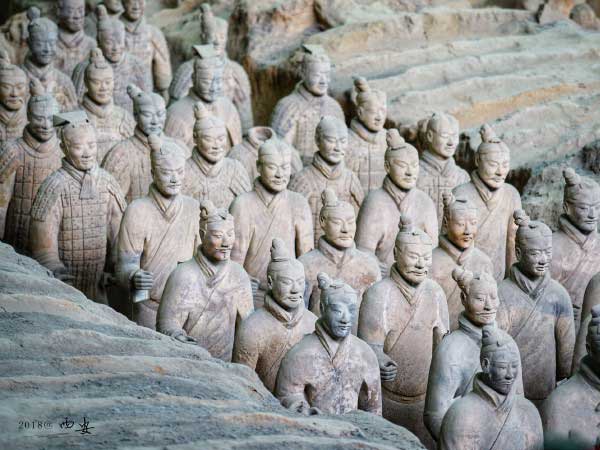
The Terracotta Warriors near Xian represent the armies created for the mausoleum of Qin Shi Huang , China's first emperor. The pits and mausoleum complex date to the Qin period and therefore precede the flourishing Han Silk Road. Their relevance is contextual: they show the scale, craft organization and political power of an early unified empire.
UNESCO lists the Mausoleum of the First Qin Emperor as a World Heritage property. At the museum, compare excavation pits, conservation areas and individual figures rather than treating the site as a quick photo stop.
The figures vary in posture, equipment and facial treatment, but avoid the popular claim that every face is a portrait of a named soldier. Archaeological interpretation continues, and the unexcavated mausoleum mound should not be described as an open tomb. Relevant itinerary examples: Xian heritage tour and
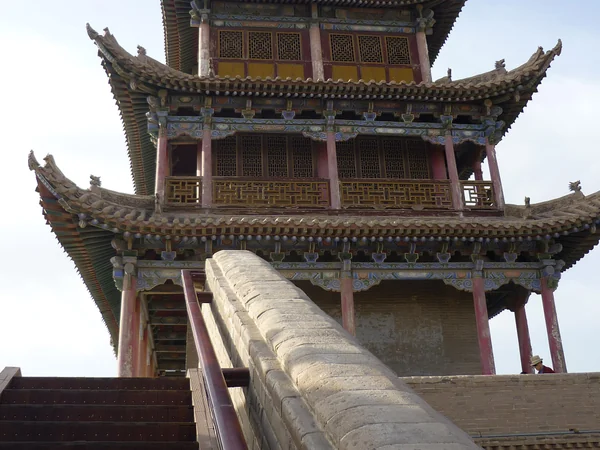
Gansu contains several distinct Silk Road landscapes: the Yellow River hub around Lanzhou, the Hexi Corridor, the western pass zone and Dunhuang's oasis environment. Dunhuang stood near route divisions around the Taklamakan and developed as a center of trade, religion and administration.
The Mogao Caves preserve murals, sculpture and manuscripts created under changing patrons over roughly a millennium. Their value lies in the combination of Buddhist art, donor history, languages and depictions of everyday activity. Current ticket products, cave access and photography rules should be confirmed before travel.
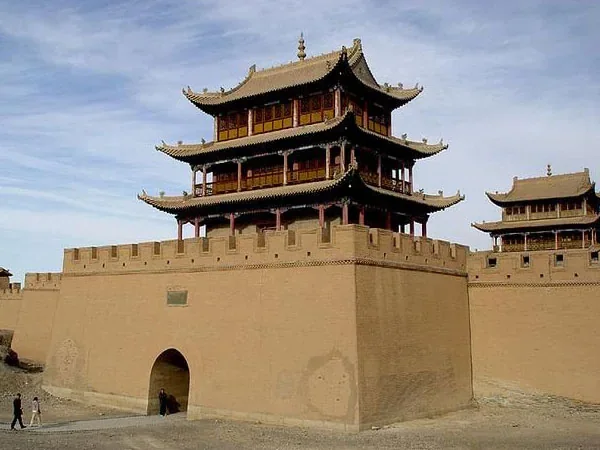
Jiayuguan Pass is a major Ming Great Wall complex at the western end of the Hexi Corridor. It is later than the Han opening of Silk Road exchange, so present it as evidence of Ming frontier organization rather than the “end” of every ancient route.
Relevant Gansu itinerary examples: Dunhuang heritage tour and extended Silk Road route
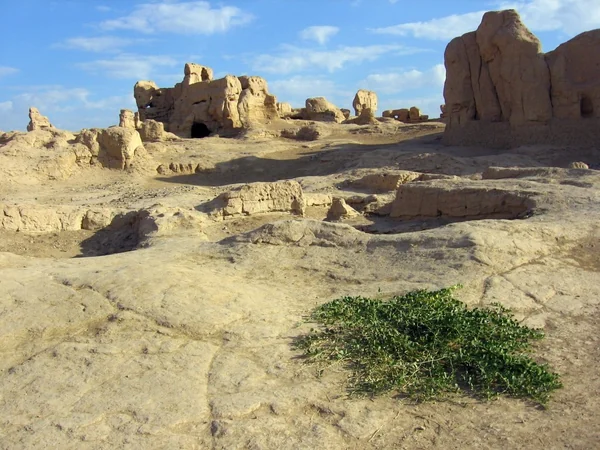
Xinjiang contains oasis cities that linked agricultural settlements with desert crossings and mountain routes. Its heritage is diverse and should not be summarized as one commercial hub.
Jiaohe Ancient City occupies a defensible plateau near Turpan . Its earthen ruins reveal streets, residential areas, religious buildings and administrative functions shaped by an arid environment. Walk only on authorized paths because erosion and visitor pressure can damage the site.
Gaochang Ancient City was another important oasis center southeast of Turpan . Its surviving walls and building foundations belong to multiple historical phases. Xuanzang's association helps explain the Buddhist travel network, but the ruins also reflect local government, agriculture and urban life.
Relevant Xinjiang itinerary examples: Turpan and Urumqi route and Xinjiang discovery tour
From $ 3510
From $ 3061

From $ 3683