Reviewed August 27, 2026. Tibetan New Year, or Losar, marks the beginning of the Tibetan calendar year and is a major season of renewal, family gathering and religious observance. It is not one uniform fifteen-day performance. Households, monasteries and Tibetan communities across the Himalayan region follow related but distinct customs, and the most private parts of the celebration are not visitor activities.
Tibet and the wider Himalayan cultural region share the word Losar, but dates, foods, ritual sequences and public events differ by community. A responsible guide names the place and tradition instead of presenting one family's custom as a rule for all Tibetans.
When Is Tibetan New Year?
Losar begins on the first day of the first month in the relevant Tibetan calendar. The Gregorian date moves, usually falling in winter or early spring, and it may coincide with the Chinese Lunar New Year in some years but not in others. Use the date published for the destination and year you will visit.
Tibetan calendars combine lunar months with solar calculations and add leap adjustments. Different Himalayan communities and calendrical lineages can reckon New Year at different times. For planning, use the calendar issued for the destination and community rather than pretending that one simple conversion formula covers every regional Losar.
Do not assume identical dates from an airline promotion, an undated search result or another Himalayan community's festival notice. The principal Losar season is often described as fifteen days, with especially important observances at the beginning and on the fifteenth day. In practice, family visits, monastery rites and public holidays have their own schedules. Confirm closures, transport and attraction hours separately.
Origins and Historical Context of Losar
Losar means “new year” in Tibetan. Some popular stories connect it with ancient winter or harvest rites, while the Tibetan calendrical systems used today developed through long interaction among Tibetan, Indian and Chinese astronomical and astrological traditions. The calendar associated with the 1027 Kalachakra cycle is historically important, but it did not create every New Year custom at once. Museum scholarship and living community accounts both show that Losar has changed across regions and periods.
How Losar Is Celebrated
Before Losar: cleaning and renewal
Preparing the home
Households may clean, settle practical tasks, prepare festive clothing, refresh shrine offerings and make food for relatives or guests. A chemar bo—a decorated container commonly filled with roasted barley flour and grain—can be part of New Year greetings. Names, ingredients and display customs vary. The Tibetan clothing guide explains why regional, occasion and maker matter more than labeling every festive garment “traditional dress.” Do not touch a household shrine or move an offering for a photograph. Khapse and festive foods
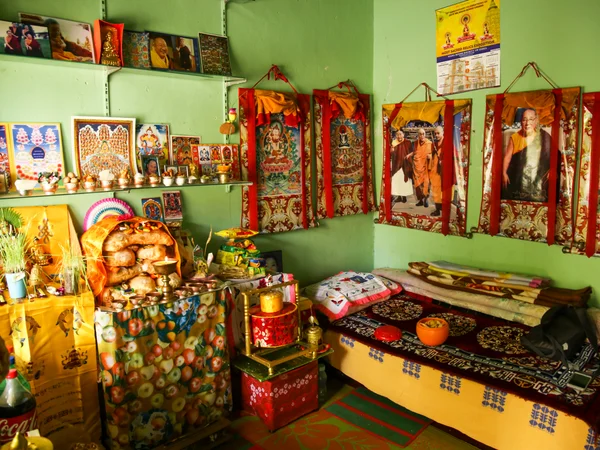
Khapse are fried pastries made in many shapes for Losar and other special occasions. The replacement photograph shows a real Tibetan home prayer room in Bylakuppe, India, where the photographer was served khapse; it documents one diaspora household, not a universal interior. Our Tibetan food guide explains tsampa, butter tea and regional dishes without calling every Tibetan meal a festival food.
Families may also prepare sweet rice, breads, meat dishes, butter tea or chang according to local and household practice. Travelers with allergies should ask about flour, dairy, nuts and cooking oil rather than relying on an English name. Alcohol is not appropriate for every guest, and refusing politely is better than performing a custom you do not understand.
New Year's Eve and Gutor
Guthuk and clearing the old year
Some Tibetan communities eat guthuk, a noodle soup associated with the end of the old year. Dough pieces may contain symbolic items used in a playful reading of character. The meanings are social and humorous, not scientific personality tests. Do not copy a household ritual from a travel article or surprise hosts with unsafe hidden objects; participate only when invited and let the family explain its version.
The first day of Losar
The day may begin with washing, new or clean clothing, household offerings, greetings and special food. Tashi delek is a familiar auspicious greeting, but speaking a memorized phrase does not create permission to enter a home, photograph a shrine or interrupt prayer. Follow your host's lead and keep visits unhurried.
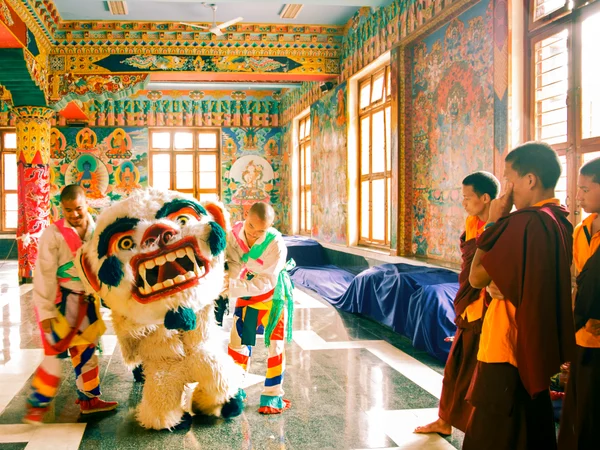
Monastery observances can include prayers, sacred readings, music, masked dance, offerings and butter lamps according to the institution and date. The replacement first photograph shows monks preparing for a Losar cultural gathering at Namdroling Monastery in India. It is a real diaspora setting and is labeled accordingly; it should not be misrepresented as a Lhasa street scene.
Public celebrations may include song, dance or organized performances, while most family time remains private. Photography policies differ between a public stage, a monastery courtyard and a shrine room. Ask before recording, avoid flash and long lenses during worship, and never treat children, monastics or dressed participants as props.
The second day and later visits
Visits among relatives and neighbors may continue over several days, with gifts, scarves, food and greetings shaped by each household. A visitor should not hand out khatas, money or alcohol without guidance. The Tibetan customs guide offers a broader framework for consent, greetings and photography.
Respect and privacy
Old travel descriptions sometimes turn teasing, gift exchange or gendered household roles into fixed “games.” Those claims can stereotype living families and have been removed. Ask what your hosts actually do, accept a closed door or declined photograph immediately, and do not post a private celebration without permission.
Community events later in the season may include performances, sport or outdoor gatherings. These are scheduled activities, not daily fixtures. Book only after the operator identifies the year, venue and organizer; keep a normal sightseeing plan in case the event is private, full, postponed or changed.
Possible public activities:
- Monastery prayers, butter-lamp offerings or masked dance when the institution announces public access
- Family and community greetings, shared meals and neighborhood gatherings by invitation
- Public music, dance, wrestling or horse-racing programs where an official local schedule confirms them
- Verify the current date, venue, access rule and photography policy before travel. Build in altitude acclimatization, respect household privacy and describe the community shown in any photograph accurately.

 Ask a Question