Your China & Yunnan Travel Experts

 Ask a Question
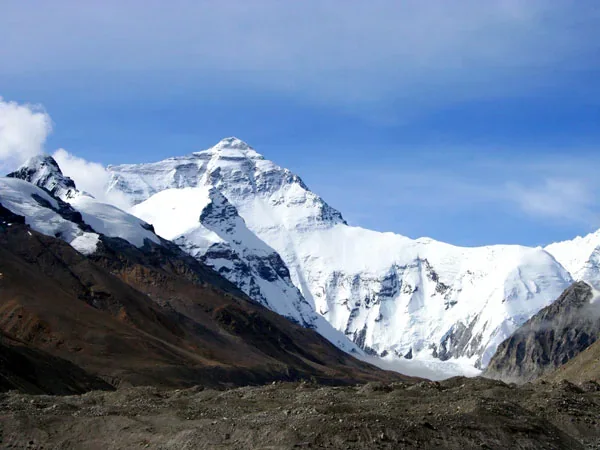
The First Confirmed Ascent of Mount Everest
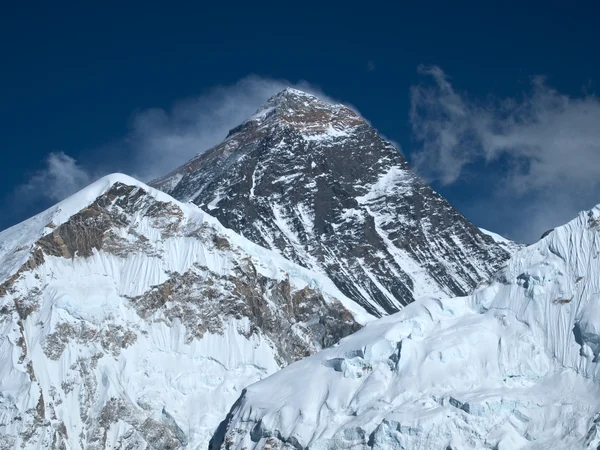
“First confirmed” is the precise description. It recognizes the documentary record for 1953 without pretending that every question about the 1924 disappearance of George Mallory and Andrew Irvine has been settled. This distinction matters because a summit claim requires evidence of reaching the top, not merely reaching a high point on the route. It also prevents a familiar storytelling error: celebrating one or two famous names while erasing surveyors, Sherpa climbers, porters, cooks, radio staff and earlier teams whose route knowledge made the attempt possible.
Mallory and Irvine: What Is Known and Unknown
Mallory and Irvine were last seen high on Everest's Northeast Ridge on June 8, 1924. The observation did not establish that they reached the summit, and neither climber returned. Mallory's body was found in 1999, but the missing camera and the absence of conclusive summit evidence leave the outcome unresolved. It is therefore inaccurate to state either that they definitely summited or that they definitely did not.
The 1924 climb remains historically important because it shows the ambition, risk and incomplete evidence of the early reconnaissance era. The sighting was made through cloud at a distance, and later discoveries have not produced a summit photograph or another conclusive record. Readers who want that context without turning uncertainty into fact can compare the routes and evidence in our guide to early Everest expeditions.
On the accepted historical record, Hillary and Tenzing were the first people proven to have stood on the summit and returned. Photographs, expedition reports, the climbers' accounts and the team's safe descent support the claim.
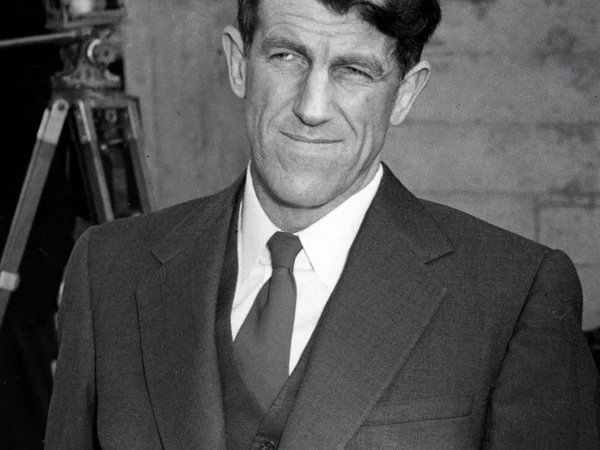
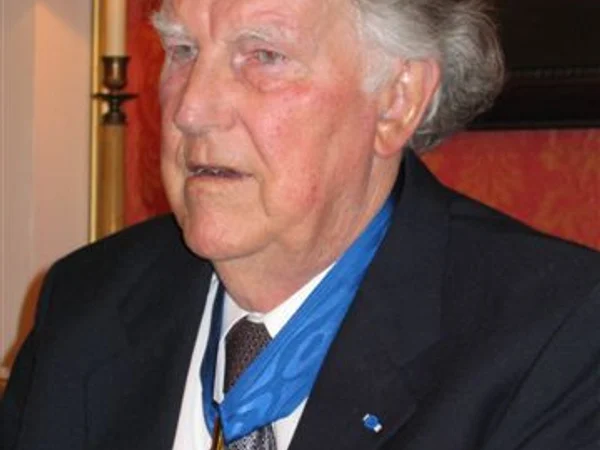
Edmund Hillary (1919–2008)
Hillary grew up in New Zealand and developed as a climber in the Southern Alps before joining British Himalayan expeditions. He worked as a beekeeper, which allowed seasonal climbing, and gained Himalayan experience before 1953. He was not an isolated adventurer who simply “conquered” a mountain; his Everest work depended on route preparation, load carrying, weather judgment, oxygen systems and trust within the expedition.
His technical strengths included moving efficiently on snow and ice and solving problems under pressure. On summit day he cut steps on steep terrain and climbed a difficult rock-and-ice obstacle later known as the Hillary Step, while remaining roped to Tenzing.
The pair reached the summit together. Hillary later rejected attempts to create a rivalry over who placed a foot on the final point first, emphasizing their partnership. Tenzing likewise described the summit as a shared achievement.
After Everest, Hillary joined further expeditions and reached the South Pole overland with the Commonwealth Trans-Antarctic Expedition in 1958. His long association with Himalayan communities also included support for schools, clinics and bridges through the Himalayan Trust. These later actions are relevant to his legacy but should not be used to reduce Tenzing's contribution in 1953.
New Zealand commemorated Hillary nationally after his death in 2008. Reliable biographies should use his documented expeditions and community work rather than repeating inflated claims that he climbed every major Himalayan peak.
Tenzing Norgay (c. 1914–1986)
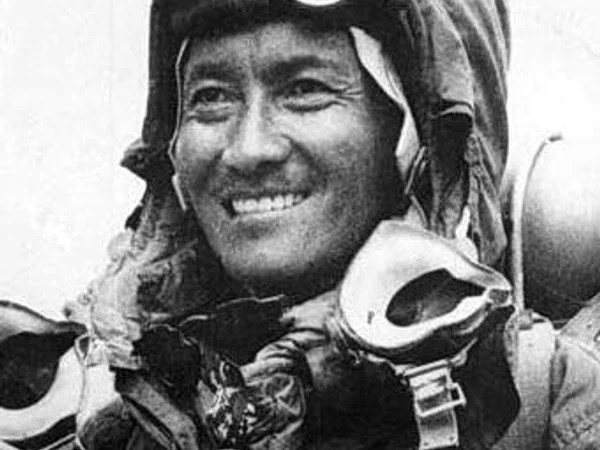
Tenzing was one of the most experienced high-altitude mountaineers of his generation. He had taken part in several Everest attempts before 1953 and had already climbed very high on the mountain with Raymond Lambert during the 1952 Swiss expedition. Calling him only a “guide” obscures his role as a skilled expedition member, sirdar and summit climber. The word “Sherpa” names an ethnic community as well as being used for an expedition occupation; it should not be treated as a synonym for anonymous porter.
His exact birthplace and birth date have been reported differently in biographical sources, so a careful account avoids false precision. What is well established is his Sherpa identity, Himalayan upbringing, mountaineering career based in Darjeeling and extensive Everest experience.
For the 1953 British expedition, Tenzing served as sirdar of the Sherpa team and was selected for the second summit pair with Hillary. Their relationship depended on shared pace, mutual confidence and complementary experience. Careful editing should retain each climber's correct name and avoid errors propagated through copied web accounts.
After the ascent, Tenzing became an international public figure and later directed field training at the Himalayan Mountaineering Institute in Darjeeling. He died in 1986. His legacy is central to understanding how Himalayan expertise made twentieth-century expeditions possible.
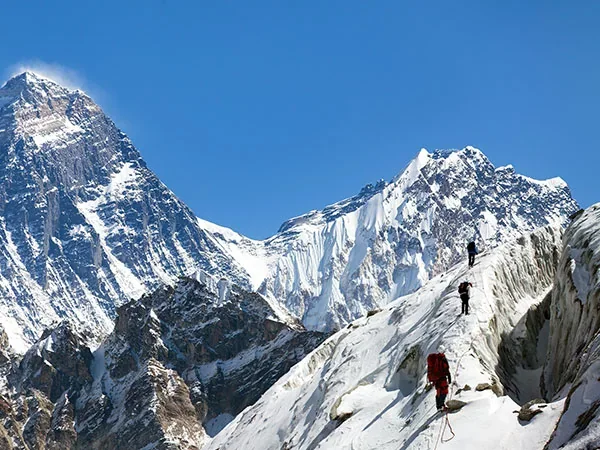
John Hunt led a team that established camps, carried supplies through the Khumbu Icefall and Western Cwm, fixed the route and tested oxygen equipment. Charles Evans and Tom Bourdillon made the first summit attempt on May 26, reached the South Summit and turned back. That decision preserved their lives and left a prepared route for the next pair.
Hillary and Tenzing moved to Camp IX at roughly 8,500 metres with support from George Lowe, Alfred Gregory and Ang Nyima. On May 29 they climbed the Southeast Ridge, negotiated the step below the summit and spent only about 15 minutes at the top. Tenzing left offerings; Hillary photographed Tenzing and the surrounding terrain. They then descended to rejoin the team.
Mountaineering records are not established by a dramatic sighting alone. A credible account considers the route, time, summit evidence, independent witnesses and safe return. The 1953 record satisfies those standards. Modern visitors should not treat the story as a climbing plan: Everest requires permits, specialist operators, extensive experience, weather forecasting, waste management and an emergency system. Even base-camp travel needs gradual acclimatization and current medical advice. Turnaround decisions are part of success; a summit never makes descent optional.
The news reached Britain shortly before the coronation of Queen Elizabeth II. Hillary and Hunt were knighted, while Tenzing received the George Medal. The unequal honors reflected the institutions of their time; a modern account should name both climbers with equal prominence. Continue with the first woman to summit Everest to see how access and representation changed in the next generation.
From $ 1637
From $ 3179